AGP-Free Broiler: Probiotic Application Guide for Maximum Performance
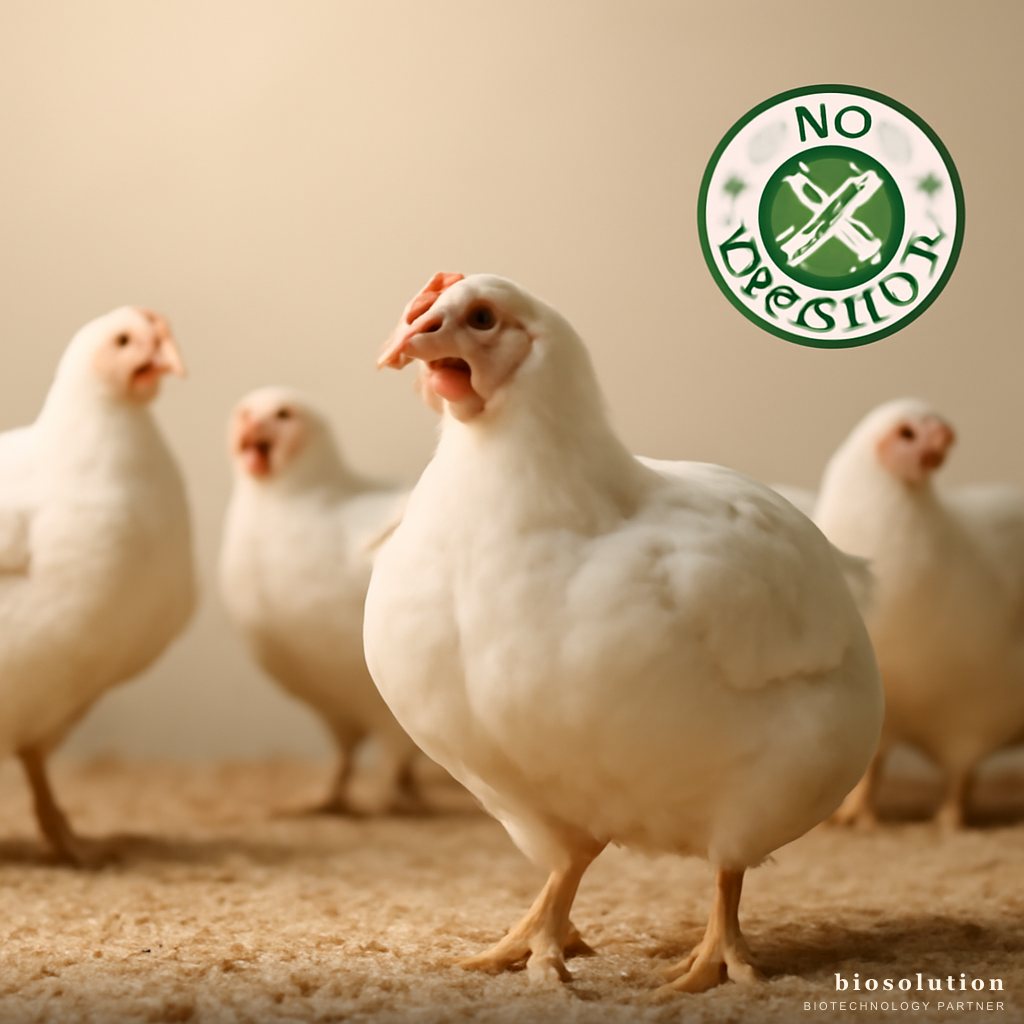
The Indonesian poultry industry is transforming towards antibiotic-free (AGP-free) farming systems. Consumer demand for safe, healthy, and residue-free chicken meat is growing stronger. On the other hand, technical performance such as FCR and ADG must be maintained. AGP-free broiler is no longer just a trend, but a necessity. However, how can we replace the role of AGP without sacrificing productivity? The answer lies in optimal gut health management through probiotics. This article will technically discuss how to apply Biosolution's Broiler Probiotic Formula—via drinking water, feed, or drench—so that you, broiler integrators, can achieve maximum results.
Why Probiotics Are Key in AGP-Free Programs?
Antibiotic growth promoters (AGP) have been used for years to suppress pathogenic bacteria in the digestive tract and improve feed efficiency. However, AGP withdrawal is often followed by decreased performance, increased mortality, and outbreaks of enteric diseases such as necrotic enteritis. This is where probiotics play a role as a functional replacement.
Probiotics work through several synergistic mechanisms:
- Competitive exclusion: Probiotic bacteria compete with pathogens for nutrients and adhesion sites on the intestinal wall. By dominating the intestinal surface, probiotics prevent pathogens such as E. coli, Salmonella, and Clostridium from attaching and multiplying.
- Lactic acid production: Lactobacillus acidophilus produces lactic acid which lowers intestinal pH. This acidic environment is unfavorable for Gram-negative pathogenic bacteria, thus suppressing their population.
- Enzyme and antimicrobial secretion: Bacillus subtilis and Bacillus coagulans produce digestive enzymes (amylase, protease, lipase) that improve feed digestibility. Additionally, they also produce antimicrobial peptides (bacteriocins) that directly kill pathogens.
- Immunomodulation: Probiotics stimulate the production of mucosal IgA and immune cells in the gut, strengthening the chicken's natural defenses against infection.
Through these mechanisms, probiotics not only suppress pathogens but also improve nutrient absorption, reflected in improved FCR and ADG. Data from various studies show that using probiotics in AGP-free programs can improve FCR by 8–12% and increase ADG by 5–10% in broilers.
Broiler Probiotic Formula: Composition and Advantages
Biosolution's Broiler Probiotic Formula is specifically designed for broilers with three superior strains:
Lactobacillus acidophilus
This lactic acid bacterium strain is the main probiotic that works quickly in the small intestine. L. acidophilus ferments carbohydrates into lactic acid, lowers intestinal pH, and creates an environment unfavorable for pathogens. Additionally, it also produces hydrogen peroxide and bacteriocins with antibacterial properties.
Bacillus subtilis
B. subtilis is a spore-forming bacterium resistant to high temperatures, mechanical pressure, and acidic stomach conditions. Its advantage lies in its ability to produce large amounts of extracellular digestive enzymes, thus helping break down difficult-to-digest feed components such as complex carbohydrates, proteins, and fats. Furthermore, B. subtilis also produces subtilisin and surfactin active against Gram-positive pathogens.
Bacillus coagulans
B. coagulans is a thermophilic (heat-resistant) spore-forming bacterium. Its specialty is its ability to survive the feed pelleting process (temperatures of 80–90°C) without significant loss of viability. B. coagulans also produces lactic acid and has antimicrobial activity against Clostridium perfringens, the main cause of necrotic enteritis.
The combination of these three strains provides a synergistic effect: L. acidophilus works quickly in the small intestine, B. subtilis provides digestive enzymes and protection throughout the digestive tract, while B. coagulans ensures probiotic stability in feed and activity in the large intestine.
Application Methods: Drinking Water vs Feed vs Drench
One advantage of the Broiler Probiotic Formula is its application flexibility. Here are technical guidelines for each method:
Application via Drinking Water
This method is the easiest and fastest, suitable for chickens of all ages. The recommended dosage is 1 ml per liter of drinking water. Frequency of administration:
- Starter period (days 1–14): Give daily, as during this phase the chicken's digestive system is still vulnerable and requires rapid probiotic colonization.
- Grower–finisher period (days 15–35): 3 times a week (e.g., Monday, Wednesday, Friday) is sufficient to maintain probiotic populations.
The best time is in the morning after feeding, as chickens tend to drink more after eating, allowing probiotics to reach the gut along with feed.
Application steps:
- Calculate the total volume of drinking water that chickens will consume in one day (average 2–3 times feed weight).
- Prepare a stock probiotic solution in a header tank at a ratio of 1 ml probiotic per liter of water.
- Ensure drinking water is clean and chlorine-free (chlorine can reduce probiotic viability). If using chlorinated water, let the water run for 1–2 hours or use vitamin C to neutralize chlorine.
- Provide the probiotic solution for 4–6 hours per day, then replace with plain water.
Application via Feed
This method is ideal for farms already using pellet or crumble feed. The recommended dosage is 2 ml per kg of feed. Since the probiotic is liquid, application can be done by:
- Top dressing: Spray the probiotic onto the feed surface in the feeder just before feeding. Mix thoroughly to ensure even distribution.
- Mixing in mixer: If the feed mill has facilities, the probiotic can be mixed into the feed at the final mixing stage (after pelleting). Because Bacillus coagulans and B. subtilis are spore-forming, they are resistant to pelleting temperatures.
Frequency: Same as drinking water, daily during starter, 3 times a week during grower–finisher.
Note: If using commercial feed that already contains probiotics or antimicrobials, consult with Biosolution technicians for dosage adjustment.
Drench Application (Direct Oral)
The drench method is typically used for sick chickens or at the start for DOC (Day Old Chicken) to ensure each chicken receives a probiotic dose. The drench dose is 0.5–1 ml per bird (depending on age) using a drench gun or syringe without needle.
Advantages of drench:
- Ensures each chicken receives probiotics directly, especially for DOC that may not have drunk enough.
- Effective for chickens with reduced appetite/drinking due to stress or illness.
Application steps:
- Prepare the probiotic solution according to the dose (0.5 ml/bird for DOC, 1 ml/bird for adult chickens).
- Fill the drench gun with the solution.
- Hold the chicken with its head slightly upright, insert the tip of the drench gun into the side of the beak, and spray slowly into the mouth. Ensure the chicken swallows before releasing.
Drenching is usually done on the first day (DOC) or during vaccination to reduce stress.
Tips for a Successful AGP-Free Program with Probiotics
To ensure the AGP-free broiler program runs optimally, consider the following:
- Housing management: Ensure litter remains dry, ventilation is good, and stocking density meets standards. Probiotics work optimally in a clean environment.
- Water quality: Drinking water must be clean, pH neutral, and free from bacterial contamination. Perform routine sanitation of tanks and water lines.
- Quality feed: Use feed with appropriate protein and energy levels, and free from mold or mycotoxin contaminants.
- Application consistency: Do not miss probiotic administration schedules, especially during the starter period. Consistency is key to successful probiotic colonization.
- Performance monitoring: Record FCR, ADG, mortality, and fecal scores regularly. Improvements are usually seen within the first 1–2 cycles.
Conclusion
Probiotics have proven to be an effective solution to replace AGP in broiler rearing. Biosolution's Broiler Probiotic Formula, with a combination of Lactobacillus acidophilus, Bacillus subtilis, and Bacillus coagulans, offers application flexibility via drinking water, feed, or drench. With proper dosage and consistency, you can improve FCR by up to 12%, increase ADG by 10%, and suppress mortality below 3% without antibiotic residues. Want to learn more about how this probiotic can be integrated into your farm management? Contact the Biosolution team for a free consultation and see how this product can help you achieve optimal AGP-free broiler performance.