AGP-Free Broilers: Choose the Right Probiotic for Maximum Performance
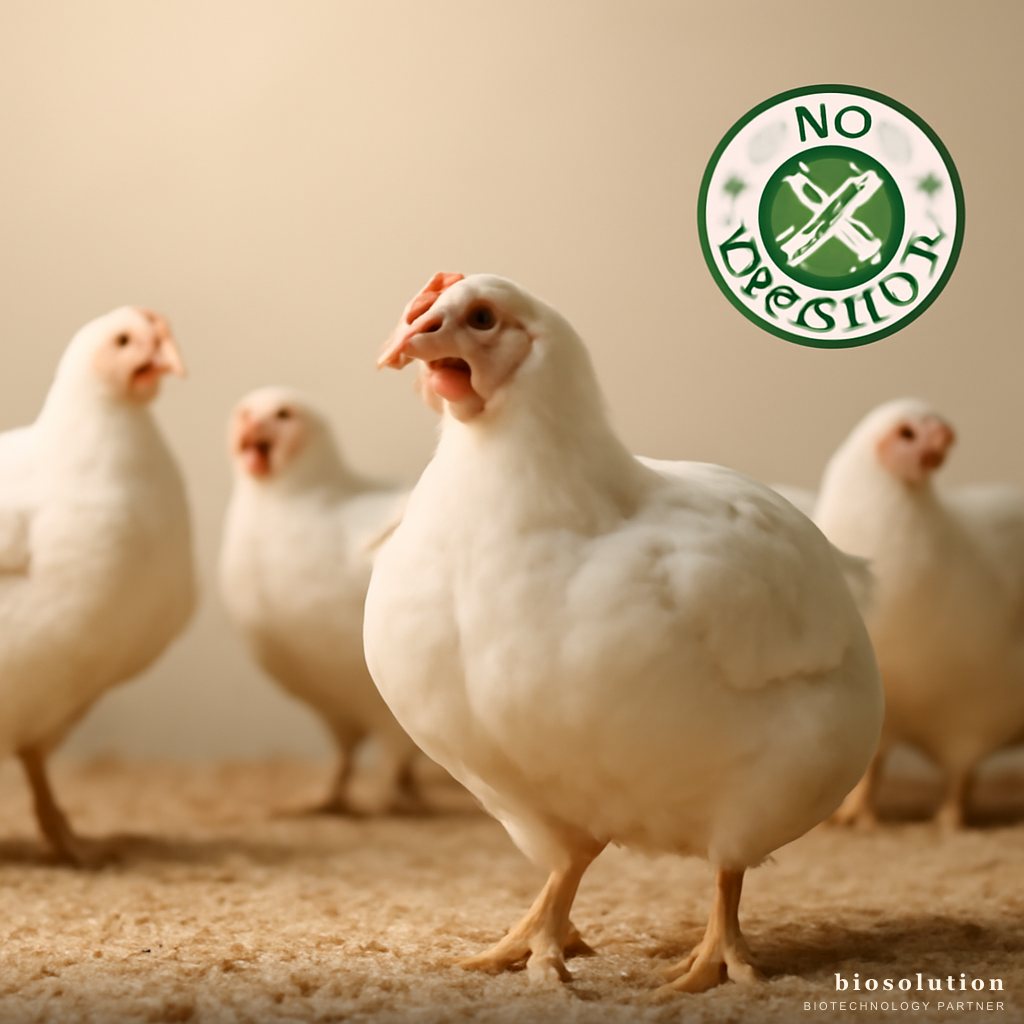
The Indonesian broiler industry is transforming towards an AGP-free broiler system (Antibiotic Growth Promoter-free). Regulatory pressure and consumer demand for residue-free meat are driving integrators to seek effective AGP alternatives. Probiotics have become a top choice, but not all products are the same. Choosing the right probiotic requires a deep understanding of strains, mechanisms of action, and certifications. This article will explore the scientific criteria for selecting probiotics for antibiotic-free broilers, referencing product data from Biosolution's Broiler Probiotic Formula.
Why AGP Must Be Abandoned?
The use of antibiotics as growth promoters (AGP) has been banned in many countries due to antimicrobial resistance. In Indonesia, the Ministry of Agriculture through Regulation No. 14/2017 prohibits AGP in feed. Consequently, broiler performance may decline without an appropriate replacement strategy. Probiotics offer a science-based solution that leaves no residue and is safe for consumers.
Criteria for Superior Probiotic Strains for Broilers
Probiotic strains used must meet several criteria: (1) ability to survive in the digestive tract, (2) production of antimicrobial compounds, (3) immune modulation, and (4) compatibility with feed production processes. Based on Biosolution's Broiler Probiotic Formula data, there are three main strains:
Lactobacillus acidophilus – Reliable Lactic Acid Bacterium
L. acidophilus produces lactic acid, which lowers intestinal pH, thereby inhibiting the growth of pathogenic bacteria such as E. coli and Salmonella. This strain also competes exclusively with pathogens for nutrients and adhesion sites on the intestinal mucosa. In broilers, administration of L. acidophilus has been shown to reduce the incidence of colibacillosis and increase body weight.
Bacillus subtilis – Enzyme Producer and Biocontrol Agent
B. subtilis is a spore-forming bacterium that produces digestive enzymes such as protease, amylase, and lipase, thereby improving feed digestibility. Additionally, B. subtilis produces antimicrobial compounds (subtilosin, subtilin) that suppress Clostridium perfringens, the cause of necrotic enteritis. Its use in pelleted feed is very practical because its spores are heat-resistant.
Bacillus coagulans – Heat-Resistant Spores for Pelleted Feed
B. coagulans has a unique advantage: it can form spores that withstand high temperatures (up to 90°C), making it stable during pelleting. This strain also produces L-lactic acid and has immunomodulatory effects. The combination of B. coagulans with L. acidophilus and B. subtilis provides synergy in maintaining intestinal microbiota balance.
Mechanisms of Probiotics in Supporting AGP-Free Broilers
Probiotics work through several complementary mechanisms:
- Competitive exclusion: Probiotic bacteria compete with pathogens for nutrients and adhesion receptors on the intestinal wall. By dominating the intestinal surface, pathogens cannot attach and are excreted in feces.
- Organic acid production: Lactic acid and acetic acid lower intestinal pH, creating an unfavorable environment for Gram-negative bacteria such as Salmonella and E. coli.
- Digestive enzymes: Bacillus spp. produce enzymes that break down carbohydrates, proteins, and fats, thereby improving feed digestibility and feed efficiency (FCR).
- Immunomodulation: Probiotics stimulate the production of secretory IgA in the intestinal mucosa, enhancing local immune responses against pathogens.
Based on product data, the combination of these three strains in the Broiler Probiotic Formula can improve FCR by 8–12% and ADG by 5–10%, and reduce mortality below 3% during a 35-day rearing period.
Certifications to Consider
Probiotics for broilers must have certifications from relevant authorities, such as:
- Certification from the Ministry of Agriculture: The product must be registered as a feed additive or feed supplement.
- MUI Halal Certification: Ensures the halal status of raw materials and production processes.
- ISO 22000 or GMP Certification: Ensures consistent quality and food safety.
Ensure that the chosen probiotic product has undergone scientific efficacy and safety trials. Biosolution, for example, has conducted trials on thousands of broilers and published the results.
Effective Probiotic Application Methods
For probiotics to work optimally, application must be precise. Based on product recommendations:
- Via drinking water: 1 ml/L of drinking water, given daily during the starter period (0-14 days), then 3 times per week during the grower-finisher period (15-35 days).
- Via feed: 2 ml/kg of feed, mix thoroughly before feeding.
- Best time: In the morning after feeding, so that probiotics come into direct contact with feed and the intestines.
Consistency of application is crucial. Do not stop probiotic administration when chickens are sick, as that is precisely when probiotics help strengthen immunity.
Case Study: FCR Improvement and Pathogen Suppression
In field trials, the use of Biosolution's Broiler Probiotic Formula on 10,000 Cobb 500 broilers showed:
- FCR 1.55 at 35 days (vs. control 1.70)
- ADG 58 g/day (vs. control 52 g/day)
- Mortality 2.1% (vs. control 4.5%)
- No antibiotic residues in meat (tested by accredited laboratory)
These data confirm that probiotics can replace AGP without sacrificing performance.
Conclusion
The selection of probiotics for AGP-free broilers should be based on superior strain criteria, clear mechanisms of action, and credible certifications. Biosolution's Broiler Probiotic Formula, with its combination of Lactobacillus acidophilus, Bacillus subtilis, and Bacillus coagulans, offers a scientifically proven solution to improve FCR, ADG, and suppress pathogens without residues. For optimal results, consult our technical team via WhatsApp or see product details on the product page.
FAQ
Is it safe to give probiotics every day?
Yes, probiotics are safe to give daily, especially during the starter period. During the grower-finisher period, frequency can be reduced to 3 times per week. The recommended dosage is 1 ml/L of drinking water or 2 ml/kg of feed. Store probiotics in a cool, dry place.
How can I tell if probiotics are working?
Indicators of probiotic success include improved FCR, increased daily weight gain, reduced mortality, and firmer feces. Additionally, laboratory tests can show decreased populations of E. coli and Salmonella in the intestines.
Can probiotics be combined with vaccines?
Yes, probiotics can be given together with vaccines and may even enhance vaccine response. However, avoid concurrent administration with antibiotics, as antibiotics can kill probiotic bacteria. If antibiotics are necessary, allow a minimum 2-hour interval.
How long does it take to see results?
Performance improvement is usually seen within the first 1-2 weeks of use. In broilers, optimal effects are observed at the end of the rearing period (day 35) with better FCR and body weight.
Do probiotics leave residues in meat?
No. Probiotics are live microorganisms that do not leave harmful residues. Chicken meat raised with probiotics is safe for consumption and free from antibiotic residues.