7 Common Probiotic Mistakes for Newcastle Disease in Broilers
Newcastle Disease (ND) remains a scourge for broiler farmers in Indonesia. This viral disease causes huge economic losses, from high mortality to reduced production performance. Although vaccination is the primary step, gut health management through probiotics is now recognized as an effective supporting strategy. Unfortunately, many farmers make fatal mistakes when applying probiotics for newcastle disease ND ayam. As a result, the potential of probiotics is not maximized, and can even be counterproductive. This article thoroughly discusses these 7 common mistakes and how Biosolution's solution can help you.
1. Choosing the Wrong Probiotic Strain
Not all good bacteria are the same. For broilers, strains scientifically proven to colonize the poultry gut and provide immunomodulatory effects are crucial. The first mistake is using probiotics with strains not specific to poultry or not resistant to the conditions of the chicken's digestive tract.
Biosolution's Broiler Probiotic Formula contains three superior strains:
- Lactobacillus acidophilus: the main lactic acid bacterium that lowers gut pH, suppresses pathogens like E. coli and Salmonella.
- Bacillus subtilis: produces digestive enzymes (protease, amylase, cellulase) that improve feed digestibility and act as a biocontrol.
- Bacillus coagulans: heat-resistant spores, compatible with pellet feed production and survive passage through the stomach.
All three work synergistically through competitive exclusion, nutrient competition, and gut adhesion, as well as stimulation of mucosal IgA which strengthens local immunity against ND virus.
2. Incorrect Dosage and Frequency
Probiotics are not a one-time medicine. To get protective effects against ND, consistency is very important. Many farmers give probiotics only when chickens are sick or with arbitrary doses.
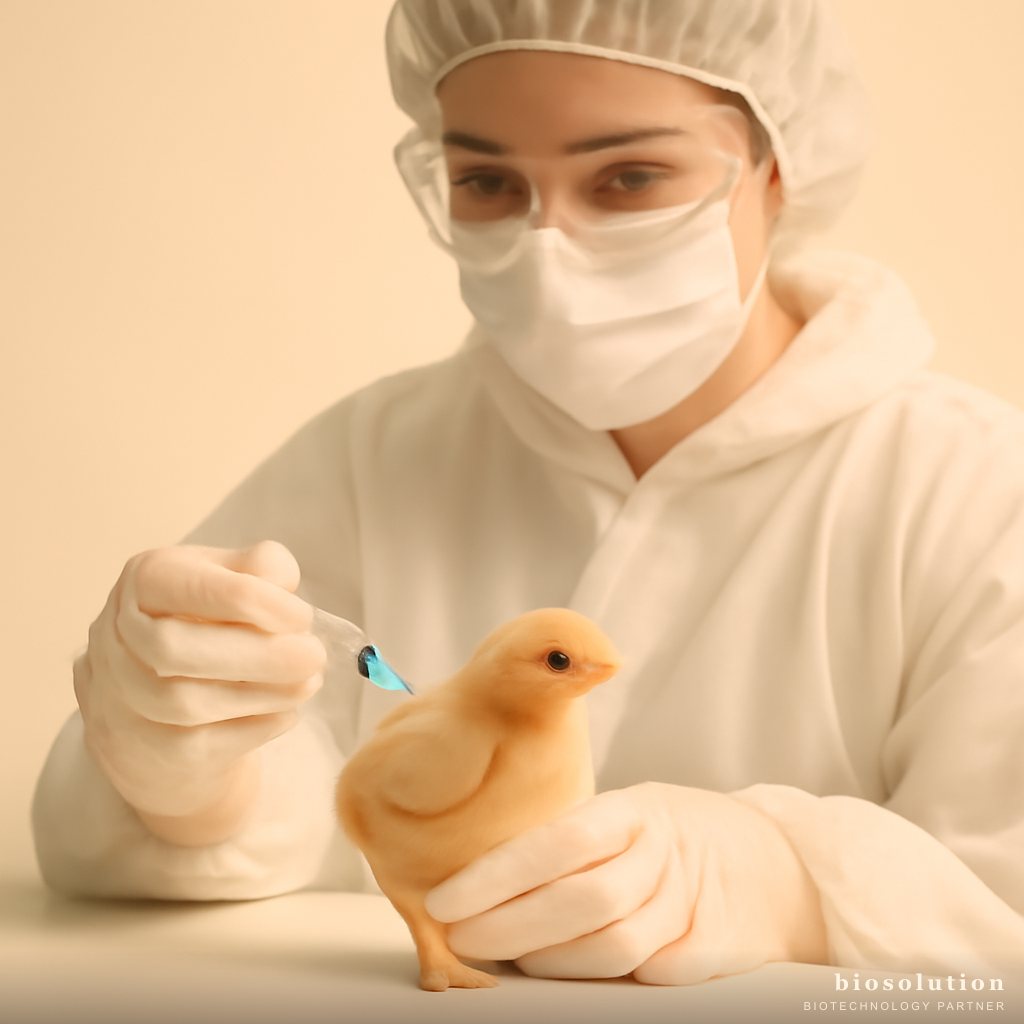
Based on product data, the correct dose is 1 ml/L of drinking water or 2 ml/kg of feed. Frequency: daily during the starter period (0-14 days), then 3 times a week during the grower-finisher period. The best time is in the morning after feeding, so probiotic bacteria can compete effectively with pathogens.
Incorrect dosage can lead to poor colonization, making the immunomodulatory effect against ND suboptimal. Follow the application instructions diligently.
3. Ignoring Drinking Water Quality
Drinking water is the carrier medium for probiotics. If the water contains high chlorine, heavy metals, or other contaminants, probiotics can die before reaching the chicken's gut. This mistake is often overlooked by farmers.
Ensure drinking water is clean, chlorine-free (can be left for 24 hours or use vitamin C neutralizer), and has neutral pH. Biosolution recommends using well water or settled tap water. Do not mix probiotics with medications or disinfectants at the same time.
4. Not Considering Timing Related to ND Vaccination
Probiotics and ND vaccination must be scheduled properly. Some farmers give probiotics at the same time as vaccination, which can interfere with the vaccine response if the probiotics contain live bacteria that compete.
General rule: allow a gap of at least 24-48 hours between probiotic administration and ND vaccination (via drinking water or eye drops). Probiotics can be given 2-3 days before vaccination to prepare mucosal immunity, then continued after vaccination to strengthen the immune response. Consult with a veterinarian or Biosolution's technical team for the right schedule.
5. Storing Probiotics Incorrectly
Probiotics are living organisms. Incorrect storage can drastically reduce bacterial viability. Many farmers store probiotics in hot places or exposed to direct sunlight.
Store the product in a cool (4-8°C) and dry place. For spore products like Bacillus coagulans, room temperature is still tolerable, but it should still be kept away from extreme heat. Once opened, use within 30 days. Do not freeze, as ice crystals can damage bacterial cell walls.
6. Not Integrating with Feed Management and Biosecurity
Probiotics are not a single solution. Without good feed management and strict biosecurity, the effectiveness of probiotics in preventing ND will be reduced. Feed containing antinutrients or mold can disrupt gut balance.
Ensure feed is of high quality, free from mycotoxins, and contains enough fiber as a natural prebiotic. Biosecurity such as disinfection of the coop, access restriction, and vector control are also vital. Probiotics work optimally in a clean and controlled environment.
7. Stopping Probiotics When Chickens Appear Healthy
This is the most common mistake. Farmers stop probiotics as soon as they see chickens active and with good appetite. In fact, protection against ND requires stable colonization of probiotics in the gut. Once administration is stopped, the population of good bacteria decreases, and a gap for pathogens including ND virus opens.
Probiotics should be given throughout the production cycle. In the starter period, daily frequency builds the initial population. In the grower-finisher period, frequency of 3 times/week maintains balance. Thus, mucosal immunity is maintained and ND risk is minimized.
Benefits of Proper Probiotic Use for ND
If the 7 mistakes above are avoided, probiotics can provide real results. Based on product data, Biosolution's Broiler Probiotic Formula can:
- Improve FCR by 8-12%
- Accelerate ADG by 5-10%
- Suppress E. coli, Salmonella, and Clostridium
- Reduce antibiotic needs (AGP-free)
- Target mortality below 3% in 35 days
- Ensure 0% antibiotic residue in meat
The immunomodulatory mechanism through stimulation of mucosal IgA makes chickens more resistant to ND virus attack. Coupled with competitive exclusion and lactic acid production, the gut environment becomes unfavorable for pathogens.
Conclusion
Prevention of newcastle disease ND ayam cannot rely solely on vaccination. Probiotics are a powerful weapon if used correctly. Avoid the 7 mistakes above: choose the right strain, correct dosage, quality drinking water, schedule with vaccination, store properly, integrate with feed management and biosecurity, and give consistently. Biosolution's Broiler Probiotic Formula, with a combination of Lactobacillus acidophilus, Bacillus subtilis, and Bacillus coagulans, is the right solution for broiler farmers who want high productivity and healthy chickens free from ND. For further consultation, contact Biosolution's technical team via WhatsApp or see the product details on the product page.
FAQ
1. Can probiotics replace ND vaccination? No. Probiotics are a supporting supplement, not a vaccine replacement. Vaccination is still mandatory to provide specific immunity against ND virus. Probiotics strengthen non-specific immunity and help optimize the vaccine response.
2. When is the best time to give probiotics to broilers? Morning after feeding is ideal. At that time, the chicken's digestive tract is empty and ready to receive probiotics, so the bacteria can compete effectively with pathogens.
3. Is it safe to mix probiotics with antibiotics? It is best not to mix them directly. If chickens must be treated with antibiotics, allow a gap of at least 2 hours. Antibiotics can kill probiotic bacteria. After antibiotic therapy is complete, increase the probiotic dose to restore gut flora.
4. How long does it take to see the effect of probiotics on ND? Immunomodulatory effects usually start to be seen after 5-7 days of regular administration. However, optimal protection requires stable colonization, so administration throughout the cycle (35 days) is highly recommended.
5. Are Biosolution probiotics resistant to pellet feed? Yes. The formula contains Bacillus coagulans which forms heat-resistant spores, so they survive the pelleting process. Other strains are also formulated to survive in feed. Ensure storage as recommended.