Feed Mycotoxin Binder MOS: Cost Comparison of Antibiotics vs Probiotics for Feed Mills & Integrators
Mycotoxins in animal feed pose a serious threat to productivity and animal health. Feed mills and integrators are required to choose effective yet economical mycotoxin binder solutions. Among various options, mycotoxin binders based on Saccharomyces cerevisiae cell wall (MOS and β-glucan) are increasingly popular. This article explores the cost comparison between using feed mycotoxin binder MOS with antibiotics and probiotics, based on scientific data and industry experience.
Why Are Mycotoxins a Critical Problem in Animal Feed?
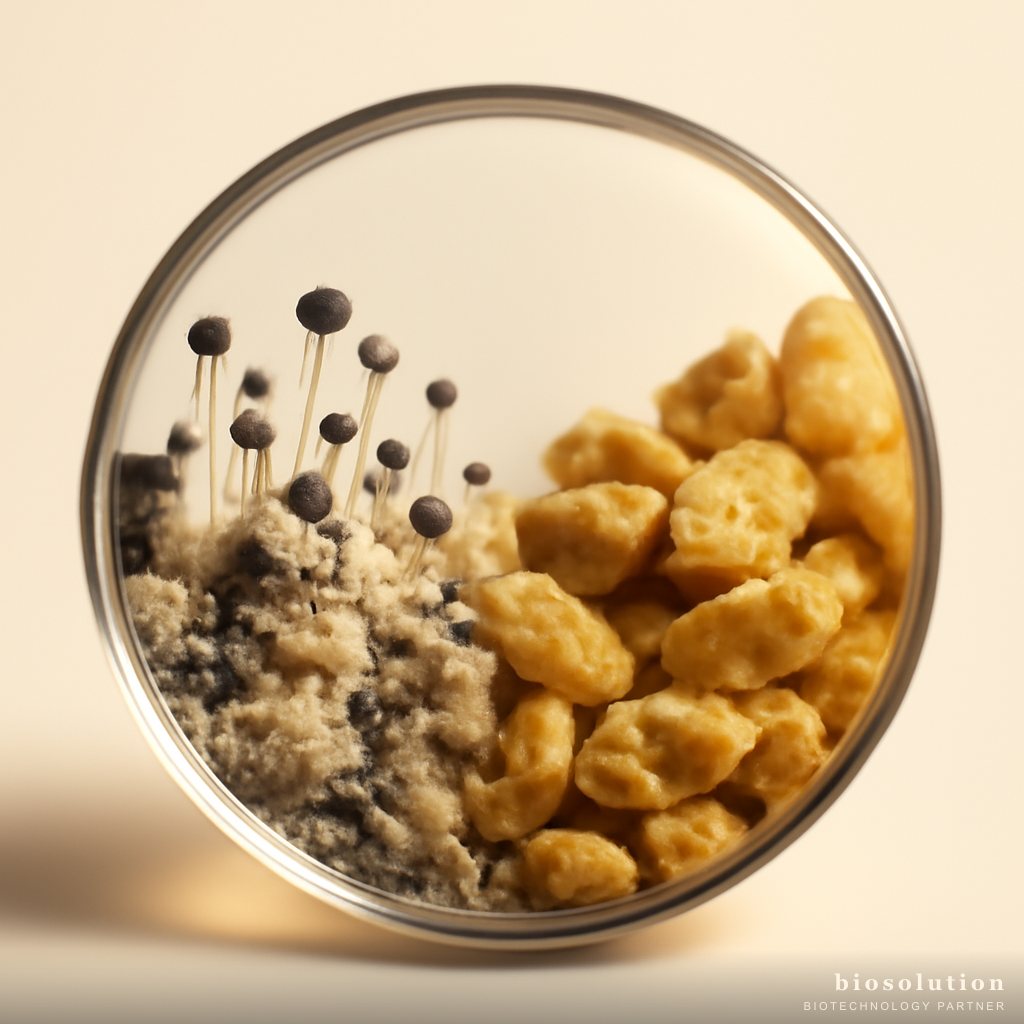
Mycotoxins are toxic compounds produced by fungi such as Aspergillus, Fusarium, and Penicillium. Contamination occurs in feed raw materials, especially corn, soybean meal, and rice bran. In Indonesia with a humid tropical climate, mycotoxin risk is high year-round. Impacts include decreased appetite, immune disruption, liver damage, and reduced reproductive performance. Economic losses due to mycotoxins are estimated at billions of rupiah per year for the livestock industry.
Feed mills and integrators need measurable mitigation strategies. Sub-therapeutic antibiotics have been used to address mycotoxin impacts, but global regulations are tightening. Alternatives such as probiotics and organic mycotoxin binders (MOS) offer safer and more sustainable solutions.
Mechanism of Action of Feed Mycotoxin Binder MOS: How Does It Bind Toxins?
Saccharomyces cerevisiae cell wall contains mannan-oligosaccharides (MOS) and β-glucan. This structure can bind various mycotoxins such as aflatoxin, ochratoxin, and zearalenone through hydrophobic and electrostatic bonds. Unlike inorganic adsorbents (e.g., bentonite) that only bind certain toxins, MOS has a broad spectrum and does not bind essential nutrients. The recommended dosage of Biosolution products is 1–2 kg per ton of feed, mixed during blending. At this dosage, binding effectiveness reaches 80–90% for aflatoxin B1.
Comparison with Antibiotics
Antibiotics work systemically, killing pathogenic bacteria stimulated by mycotoxins, but do not directly bind toxins. Consequently, antibiotic residues can accumulate in meat and milk, and trigger resistance. Antibiotic cost per ton of feed varies, averaging IDR 15,000–25,000, but long-term side effects actually increase production costs.
Comparison with Probiotics
Probiotics (e.g., Lactobacillus acidophilus) improve gut microflora balance and enhance immunity. However, probiotics do not directly bind mycotoxins. Some strains can metabolize toxins, but effectiveness depends on gut conditions. Probiotic cost per ton of feed is around IDR 10,000–20,000. Combining MOS with probiotics is synergistic: MOS binds toxins, probiotics restore the gut.
Cost Analysis: Mycotoxin Binder MOS vs Antibiotics vs Probiotics
For feed mills and integrators, cost calculation includes not only price per kilogram but also impact on animal performance. The following comparison is based on industry data and literature studies:
| Parameter | MOS (S. cerevisiae cell wall) | Sub-therapeutic Antibiotics | Probiotics (Lactobacillus) |
|---|---|---|---|
| Price per kg | IDR 50,000–80,000 | IDR 30,000–60,000 | IDR 40,000–70,000 |
| Dosage per ton feed | 1–2 kg | 0.5–1 kg | 0.5–1 kg |
| Cost per ton feed | IDR 50,000–160,000 | IDR 15,000–60,000 | IDR 20,000–70,000 |
| Mycotoxin binding effectiveness | 80–90% | Indirect | 30–50% (degradation) |
| Impact on FCR | Decrease 3–5% | Decrease 2–4% (resistance risk) | Decrease 2–3% |
| End product safety | Safe, residue-free | Residue & resistance | Safe |
Although MOS cost per ton is higher, its direct effect on toxins reduces losses from production decline. Studies show that losses due to aflatoxin can reach IDR 200,000 per ton of feed (weight loss, poor feed conversion). With MOS, these losses can be reduced by up to 70%. Compare with antibiotics that only suppress secondary infections but do not reduce toxins.
Case Study: Efficiency of MOS Use in Feed During Rainy Season
A feed mill in West Java reported that using Mycotoxin Binder Feed Formula during the rainy season (humidity >85%) maintained stable broiler performance. Before using MOS, mortality due to aflatoxicosis reached 5% per cycle. After applying 2 kg/ton of feed, mortality dropped to <1% and FCR improved by 4%. The additional cost of MOS of IDR 120,000 per ton was lower than losses from mortality and weight loss, which reached IDR 250,000 per ton.
Recommended Integration Strategy: MOS + Probiotics for Feed Mills
The best approach is not to choose one, but to integrate MOS with probiotics. MOS binds mycotoxins in the digestive tract, while probiotics restore gut villi and enhance immunity. The combination cost is around IDR 150,000–200,000 per ton of feed, but provides double protection. For feed mills seeking a practical solution, the Mycotoxin Binder Feed Formula from Biosolution already contains MOS and β-glucan from Saccharomyces cerevisiae cell wall, ready to mix at a dosage of 1–2 kg/ton.
Conclusion
Feed mycotoxin binder MOS offers a more effective and safer solution compared to antibiotics, although the cost per ton is higher. However, when calculated based on prevented losses, MOS is actually more economical. Probiotics are a good complement but cannot replace the toxin-binding function. Feed mills and integrators are advised to conduct a cost-benefit analysis based on their own animal performance data. For more information on dosage and application, contact the Biosolution technical team via WhatsApp.
FAQ
What is feed mycotoxin binder MOS?
Feed mycotoxin binder MOS is a compound derived from the cell wall of Saccharomyces cerevisiae (mannan-oligosaccharides and β-glucans) that can bind various mycotoxins in the animal digestive tract, thereby preventing toxin absorption into the body.
How much does MOS cost per ton of feed?
The cost of using MOS is around IDR 50,000–160,000 per ton of feed, depending on dosage (1–2 kg/ton) and product price. As a comparison, losses due to mycotoxins can reach IDR 200,000 per ton, so MOS remains profitable.
Is MOS better than antibiotics for addressing mycotoxins?
Yes, MOS directly binds mycotoxins, while antibiotics only address secondary infections. MOS also leaves no residue and does not trigger antibiotic resistance, making it safer in the long term.
Can MOS be combined with probiotics?
Certainly. The combination of MOS and probiotics is synergistic: MOS binds toxins, probiotics improve gut health. This is the best strategy for feed mills aiming for optimal performance.
Where can I buy MOS mycotoxin binder products?
The Mycotoxin Binder Feed Formula product is available at Biosolution. For consultation and ordering, contact us via WhatsApp or visit the product page.