Feedlot Beef Cattle Probiotic for ADG and FCR: A Case Study of an Intensive Feedlot Integrator
In the feedlot industry, average daily gain (ADG) and feed conversion ratio (FCR) are two key metrics that determine profitability. The higher the ADG and the lower the FCR, the more efficient the operation. However, achieving optimal performance in feedlot beef cattle is often hindered by digestive disorders such as subclinical acidosis due to high-concentrate diets. This is where feedlot beef cattle probiotics for ADG and FCR come into play as a solution increasingly adopted by large-scale integrators. This article presents a real case study of a feedlot integrator in East Java that applied the Beef Cattle Probiotic Formula from Biosolution and successfully recorded an ADG increase of up to 10% and an FCR improvement of 6% in one fattening cycle.
Common Challenges in Intensive Feedlots: Subclinical Acidosis and Performance Fluctuations
Intensive feedlots rely on diets with a high proportion of concentrate (60-80%) to stimulate growth. Unfortunately, this condition triggers excessive lactic acid production in the rumen, lowers pH, and causes subclinical acidosis. Symptoms are not always obvious—cattle may still eat, but appetite decreases, rumen wall inflammation (rumenitis) occurs, and nutrient absorption is impaired. The impact is directly seen in stagnant ADG and inflated FCR.
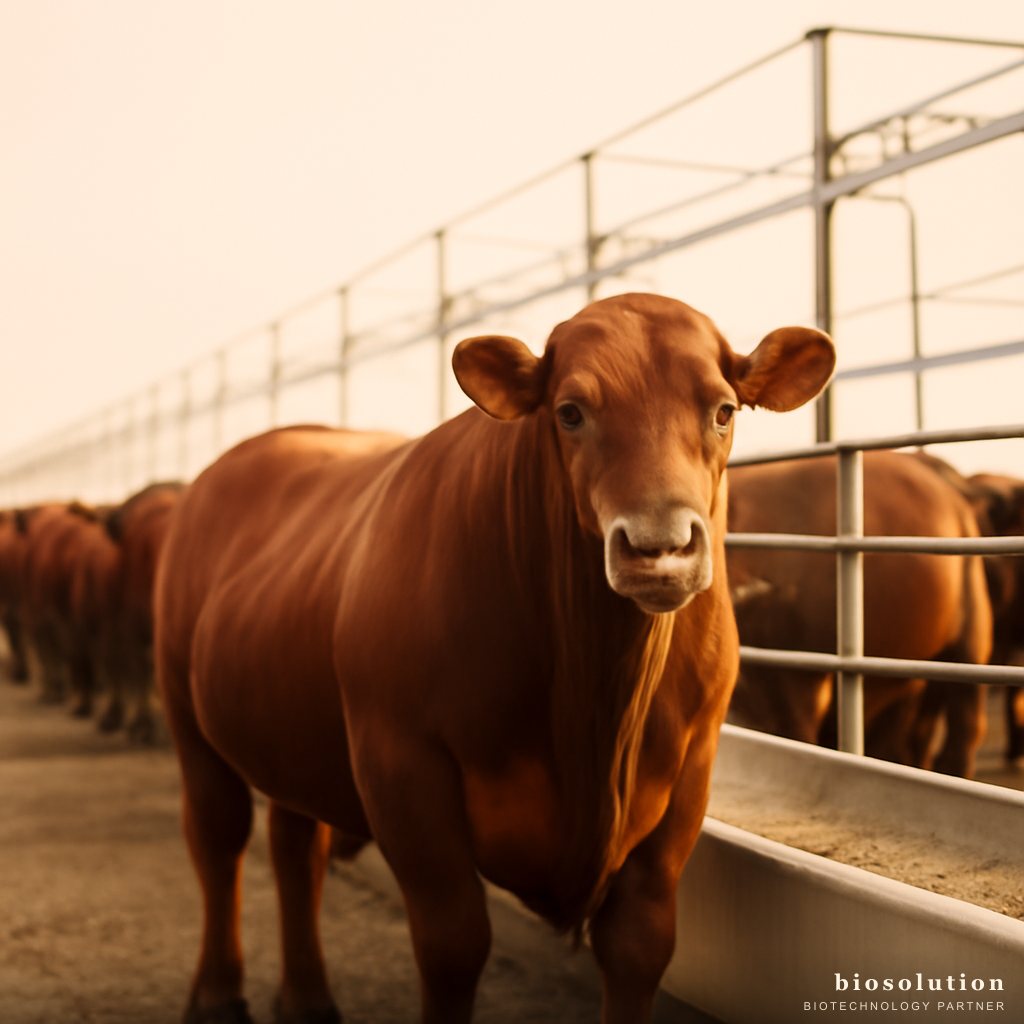
The integrator subject of this case study manages 5,000 beef cattle with a total mixed ration (TMR) system based on corn and soybean meal. Before intervention, their average ADG was around 1.1 kg/day, while FCR reached 7.5:1. Feed costs accounted for 70% of total production costs, so even a 0.5-point improvement in FCR significantly impacts margins.
Beef Cattle Probiotic Formula: Synergy of Three Superior Microbial Strains
Biosolution developed the Beef Cattle Probiotic Formula containing three strains of lactic acid bacteria and enzyme-forming spores, each with a specific role:
- Lactobacillus acidophilus: This strain is known to stabilize rumen pH by producing lactic acid in controlled amounts and stimulating the growth of cellulolytic bacteria. In feedlot cattle, L. acidophilus helps prevent drastic pH drops after concentrate consumption.
- Bacillus coagulans: As a spore-forming bacterium, B. coagulans produces amylase, protease, and lipase enzymes that help digest complex carbohydrates, proteins, and fats. These enzymes increase nutrient availability and improve feed digestibility.
- Bacillus megaterium: This strain excels in mineral solubilization, especially phosphorus, thereby enhancing the absorption of calcium and phosphorus, which are important for bone growth and energy metabolism.
These three strains are formulated at a dose of 25 ml per head per day, mixed into the morning concentrate. Daily routine application ensures a stable population of beneficial microbes in the rumen.
Case Study: Application in a 5,000-Head Feedlot Integrator
The integrator decided to test the Beef Cattle Probiotic Formula on 500 Simmental crossbred cattle (PO-Simental) in the fattening phase (initial weight 350 kg) for 90 days. The control group (500 head) received standard feed without probiotics. Monitored parameters included ADG, FCR, feed intake, fecal score, and acidosis incidence.
Application Method
Probiotics were given every morning via drench or mixed into the concentrate. A dose of 25 ml per head was dissolved in 200 ml of water before mixing into the feed. No feed formula changes were made during the trial.
Performance Results
After 90 days, the probiotic group showed:
- ADG: Average 1.21 kg/day, up 10% compared to control (1.1 kg/day).
- FCR: 7.05:1, improved by 6% from 7.5:1.
- Feed intake: Stable, no decrease in appetite.
- Fecal score: More consistent (score 2-3), indicating better digestion.
- Acidosis incidence: Decreased by 40% based on fecal scores and clinical signs.
The feedlot manager reported that probiotic-fed cattle appeared more active, had shinier coats, and more stable appetites. The FCR improvement equated to feed savings of approximately 0.45 kg per kg of weight gain. Economically, with feed price at IDR 4,000 per kg, savings reached IDR 1,800 per kg of weight gain.
Scientific Mechanisms Behind ADG and FCR Improvement
This performance improvement can be explained through three main mechanisms:
- Rumen pH stabilization: Lactobacillus acidophilus helps maintain rumen pH above 6.0, so cellulolytic bacterial activity remains optimal. Crude fiber can be digested more efficiently, producing more volatile fatty acids (VFAs) as an energy source.
- Extracellular enzyme production: Bacillus coagulans produces digestive enzymes that complement the cattle's endogenous enzymes. Amylase breaks down starch, protease increases amino acid availability, and lipase aids fat absorption. As a result, feed-to-meat conversion is more efficient.
- Mineral solubilization: Bacillus megaterium releases phosphorus bound in phytate, allowing cattle to absorb more minerals. Phosphorus is essential for energy metabolism and protein synthesis, supporting muscle growth.
These three mechanisms work synergistically, not only improving FCR but also increasing ADG without additional feed intake.
Comparison with Other Commercial Probiotics
On the market, many beef cattle probiotics contain only one or two strains, or use Saccharomyces cerevisiae (yeast) which focuses more on pH stabilization. The Beef Cattle Probiotic Formula from Biosolution excels due to its combination of three strains with complementary functions. Bacillus coagulans and Bacillus megaterium also form spores that are resistant to high temperatures and low pH, ensuring better viability during storage and in the digestive tract.
Recommendations for Large-Scale Feedlots
Based on this case study, feedlot integrators are advised to:
- Start with a trial on 10-20% of the population to observe individual responses.
- Administer probiotics consistently every day, ideally in the morning feed.
- Monitor fecal scores and appetite as early indicators of improvement.
- Combine with good feed management, such as gradual concentrate transition.
For optimal results, probiotics can be integrated with other rumen health programs, such as buffers or natural additives.
Conclusion
Feedlot beef cattle probiotics for ADG and FCR have proven effective in this case study. The Beef Cattle Probiotic Formula from Biosolution successfully increased ADG by 10% and improved FCR by 6% in intensive feedlot cattle, while also suppressing subclinical acidosis. The synergy of Lactobacillus acidophilus, Bacillus coagulans, and Bacillus megaterium provides a comprehensive solution for feed efficiency and growth. For integrators looking to optimize livestock performance, this product is worth considering as part of a daily nutrition strategy.
Want to learn more about how probiotics can be applied in your feedlot? Free consultation with our technical team or see the Beef Cattle Probiotic Formula product.
FAQ
1. How long does it take to see ADG improvement after using probiotics? Answer: Generally, improvement starts to be seen after 2-4 weeks of routine use. In the case study above, ADG increase was recorded from the first month, with optimal results achieved after 90 days. However, response may vary depending on initial cattle condition and feed management.
2. Is this probiotic safe to give together with antibiotics or dewormers? Answer: Yes, it is safe. The Beef Cattle Probiotic Formula contains spore-forming bacteria that are resistant to digestive tract conditions. However, it is advisable to allow a 2-3 hour interval between probiotic administration and oral antibiotics to maximize effectiveness. Consult a veterinarian for proper scheduling.
3. Does the 25 ml per head per day dose apply to all body weights? Answer: The 25 ml dose is designed for adult beef cattle weighing 300-500 kg. For cattle under 300 kg, the dose can be reduced to 15-20 ml. Conversely, cattle over 500 kg still use 25 ml. Be sure to adjust the dose based on technical recommendations.
4. How should probiotics be stored to remain effective? Answer: Store in a cool, dry place, away from direct sunlight. Ideal storage temperature is 15-30°C. After opening, use within 30 days. Do not freeze or store at temperatures above 40°C as it may reduce spore viability.
5. Can this probiotic be mixed with concentrate feed containing urea? Answer: Yes, because the bacteria in the probiotic are tolerant to urea. However, ensure the mixture is even and feed immediately after mixing. Avoid mixing with feed containing high-dose antibiotics or other antimicrobial agents at the same time.