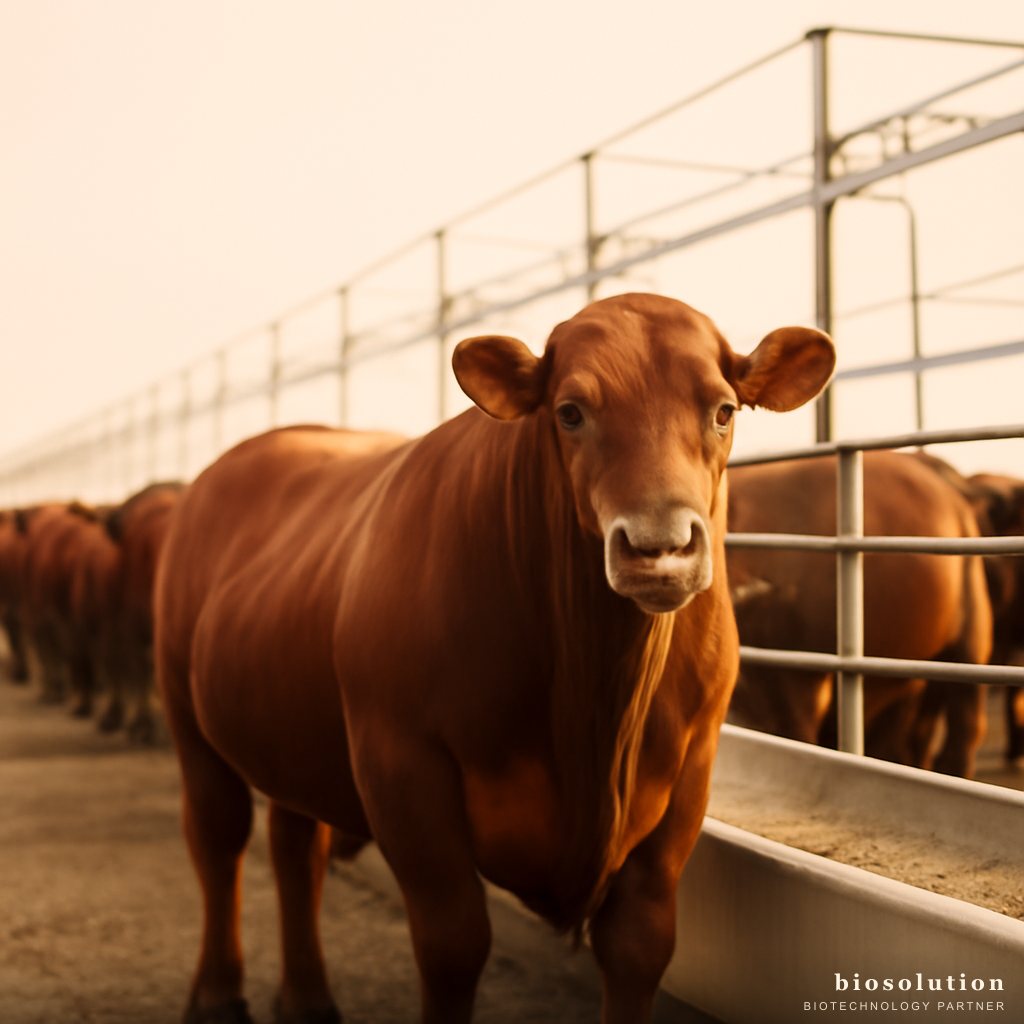
Feedlot Beef Cattle Probiotics for ADG: 7 Common Mistakes to Avoid
Feedlot beef cattle probiotics for ADG (Average Daily Gain) and FCR (Feed Conversion Ratio) have become a mainstay for many farmers to improve production efficiency. However, many fail to experience optimal benefits due to errors in application. This article reviews the seven most common mistakes when using probiotics for feedlot beef cattle, and how Biosolution's Beef Cattle Probiotic Formula can be the right solution.
1. Not Understanding the Mechanism of Action of Probiotics
Probiotics are not just good bacteria; each strain has a specific role. For example, Lactobacillus acidophilus helps stabilize rumen pH, preventing subclinical acidosis often caused by high-concentrate feed. Bacillus coagulans produces digestive enzymes like amylase and protease, improving feed digestibility. Meanwhile, Bacillus megaterium plays a role in mineral solubilization, increasing the availability of phosphorus and calcium. Without understanding these mechanisms, farmers tend to choose probiotics arbitrarily, thus missing the target.
2. Incorrect Dosage and Frequency
The second mistake is giving an inappropriate dosage. Feedlot beef cattle probiotic products like Beef Cattle Probiotic Formula have a recommended dosage of 25 ml per head per day, given every day in the morning. Excessive dosage is not always better; it can cause digestive upset. Conversely, too low a dosage does not sufficiently affect the rumen microbial population. Frequency of administration is also crucial: probiotics must be given consistently every day to maintain beneficial bacterial colonies.
3. Ignoring Feed and Environmental Management
Probiotics are not a substitute for good feed management. If the feed is unbalanced or of poor quality, probiotics will not work optimally. For example, too low crude fiber content can reduce the effectiveness of Bacillus coagulans. Dirty pen environments and heat stress also lower probiotic response. Ensure quality feed, clean water availability, and good pen ventilation. Probiotics work synergistically with good management, not as an instant solution.
4. Choosing Strains Not Suitable for the Purpose
Not all probiotic strains are suitable for feedlot beef cattle. Good strains must be resistant to low rumen pH and cattle body temperature. Lactobacillus acidophilus and Bacillus coagulans are examples of proven strains. Avoid probiotics containing pathogenic bacteria or unstable strains. The product Intensive Feedlot Cattle Probiotic Formula is specially formulated with superior strains for feedlot conditions.
5. Not Paying Attention to Administration Time
The timing of probiotic administration affects bacterial colonization. Ideally, it should be given in the morning when cattle wake up and before the main feeding. This gives probiotics a chance to interact with feed and rumen microbes. If given simultaneously with antibiotics or dewormers, effectiveness may decrease. Allow a minimum of 2-3 hours between probiotic and medication administration.
6. Not Monitoring and Evaluating
Without data, it is difficult to assess probiotic effectiveness. Farmers often neglect to record ADG and FCR before and after use. Ideally, conduct a trial on a homogeneous group of cattle, record daily body weight, feed intake, and health condition. With data, you can adjust dosage or strain if results do not meet targets. Biosolution provides monitoring guides to help farmers.
7. Stopping Too Early or Being Inconsistent
Probiotics take time to build up beneficial bacterial populations in the rumen. Do not stop after 1-2 weeks if results are not yet visible. Positive effects such as 8-12% ADG improvement and 5-8% FCR improvement are usually seen after 4-6 weeks of regular use. Consistency is key. If stopped, beneficial bacterial populations will decline and subclinical acidosis may return.
How to Properly Use Feedlot Beef Cattle Probiotics
For optimal results, follow these steps:
- Choose a probiotic with proven strains such as Lactobacillus acidophilus, Bacillus coagulans, and Bacillus megaterium.
- Give a dose of 25 ml per head per day, mixed into concentrate or drench.
- Administer every day in the morning, before the main feeding.
- Ensure quality feed and good pen management.
- Monitor ADG and FCR periodically.
The Beef Cattle Probiotic Formula product from Biosolution is designed to meet the needs of feedlot beef cattle. With three superior strains, this product helps increase ADG, improve FCR, and reduce the risk of subclinical acidosis. For more information, consult our team via WhatsApp.
Conclusion
Feedlot beef cattle probiotics for ADG and FCR are powerful tools if used correctly. Avoid the seven mistakes above: understand the mechanism of action, adhere to dosage, pay attention to feed management, choose the right strain, schedule administration time, monitor, and be consistent. With the right approach, probiotics can help achieve better ADG and FCR targets and increase the profitability of your farm.
FAQ
1. How long does it take to see results from probiotics in feedlot beef cattle?
Positive effects are usually seen after 4-6 weeks of regular use. ADG improvement of 8-12% and FCR improvement of 5-8% can be achieved if dosage and frequency are correct.
2. Is it safe to give probiotics together with antibiotics?
It is best to allow a 2-3 hour gap between probiotic and antibiotic administration to avoid reduced effectiveness. Consult a veterinarian for proper scheduling.
3. Can probiotics be used for sick cattle?
Probiotics are more effective as prevention. In sick cattle, probiotics can aid recovery but should be combined with treatment according to diagnosis.
4. What is the difference between liquid and powder probiotics for beef cattle?
Liquid probiotics are generally easier to mix and absorb but require proper storage. Powder probiotics are more stable but need to be dissolved. Choose according to ease of application on your farm.
5. How to store probiotics correctly?
Store probiotics in a cool, dry place, away from direct sunlight. Ideal storage temperature is 4-8°C for liquid probiotics, while powder can be stored at room temperature. Pay attention to the expiration date.