KUB Free-Range Chicken Probiotic: Integrator Case Study
KUB (Kampung Unggul Balitbangtan) free-range chicken farmers often face challenges: high mortality in chicks, fluctuating appetite, and delayed harvest. However, an integrator in West Java turned things around by consistently applying KUB free-range chicken probiotic. Results: mortality dropped drastically, harvest weight increased, and harvest time was 7-10 days faster. How? This article thoroughly examines the case study, complete with the scientific mechanism behind the probiotic formula used.
Overview of KUB Free-Range Chickens and Free-Range System
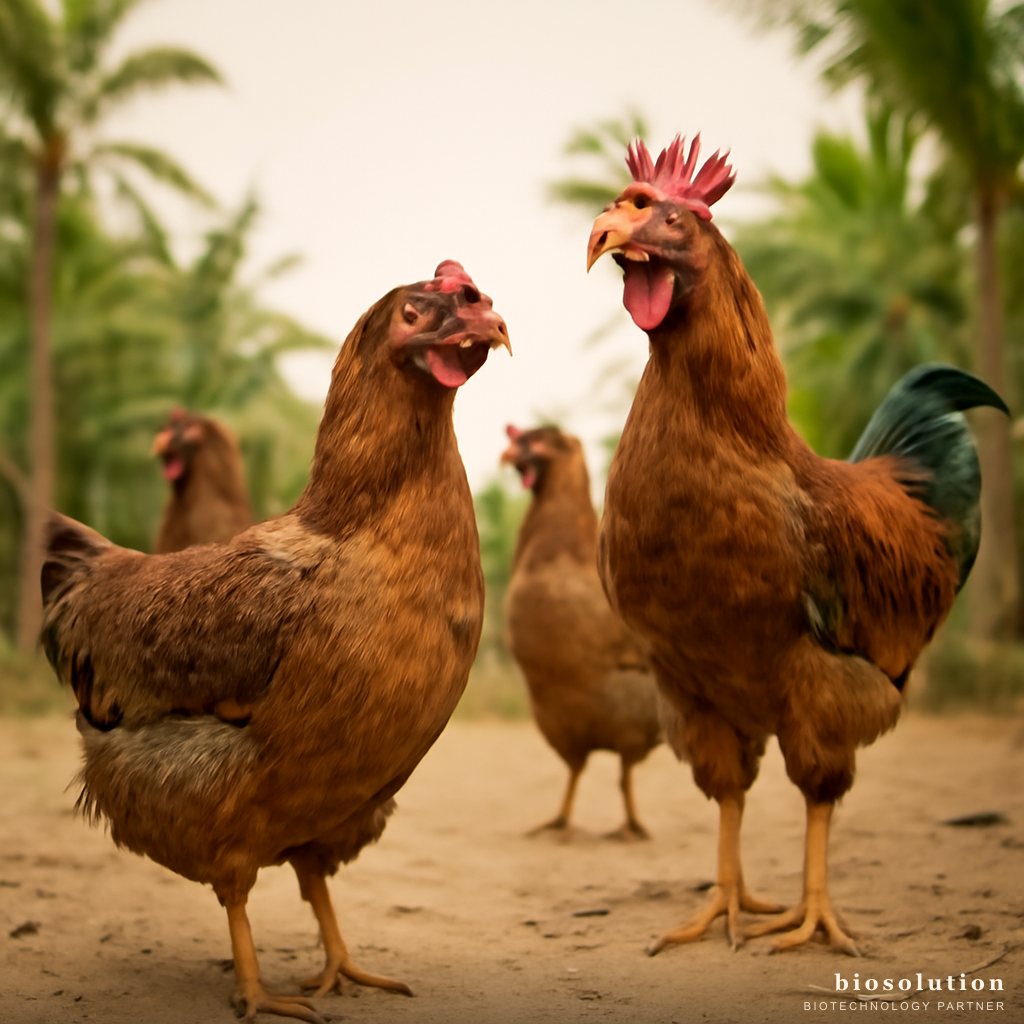
KUB free-range chickens are the result of genetic selection by Balitbangtan, with higher production potential than ordinary free-range chickens. However, this potential can only be achieved with optimal management, especially in the free-range system. The free-range system provides freedom of movement and access to natural feed, but also increases the risk of pathogen exposure from the environment. This is where probiotics become crucial: balancing the gastrointestinal microflora, enhancing immunity, and aiding nutrient absorption.
Case Study: KUB Free-Range Chicken Integrator in West Java
An integrator with a population of 5,000 KUB free-range chickens faced classic problems: chick mortality reached 15%, low appetite in week 3, and harvest weight (70 days) averaged only 0.8 kg. After consulting with the Biosolution technical team, they decided to regularly apply the KUB Free-Range Chicken Probiotic Formula. This formula contains two superior bacterial strains that work synergistically:
- Lactobacillus acidophilus: Produces lactic acid, suppresses the growth of pathogenic bacteria such as Salmonella and E. coli, and increases intestinal acidity for better mineral absorption.
- Bacillus subtilis: Produces protease, amylase, and cellulase enzymes that help digest fibrous feed, and produces antimicrobial compounds (bacitracin, subtilin) that protect the gut from infection.
Application was via drinking water at a dose of 1 ml per liter of water, 3 times a week in the morning. Results began to show in the second week: appetite increased, feces were firmer, and chickens were more active. By week 4, mortality dropped to 3%, and at harvest on day 65 (5 days earlier), average weight reached 1.1 kg. Net profit increased by 25% due to feed efficiency and reduced medication costs.
Mechanism of the KUB Free-Range Chicken Probiotic Formula
Lactobacillus acidophilus: Lactic Acid and Anti-Pathogen
Lactobacillus acidophilus is a lactic acid bacterium naturally inhabiting the poultry digestive tract. When given exogenously, it:
- Lowers gut pH through lactic acid production, inhibiting the growth of gram-negative pathogenic bacteria.
- Competes with pathogens for attachment sites and nutrients.
- Stimulates IgA (immunoglobulin A) production in the gut mucosa, enhancing local immunity.
Bacillus subtilis: Enzymes and Biocontrol
Bacillus subtilis is a spore-forming bacterium resistant to heat and extreme environmental conditions. Its roles include:
- Producing extracellular enzymes that break down starch, protein, and crude fiber, making nutrients more absorbable.
- Producing peptide antibiotics (e.g., subtilin) that are bactericidal against certain pathogens.
- Enhancing macrophage phagocytosis activity, strengthening immune response.
The combination of these two strains creates synergy: L. acidophilus creates an acidic environment favored by B. subtilis, while B. subtilis produces enzymes that help L. acidophilus obtain nutrients. As a result, beneficial gut bacteria increase, pathogens are suppressed, and chicken health is maintained.
Measurable Benefits for KUB Free-Range Chickens
Accelerated Harvest Time
With probiotics, feed efficiency improves because B. subtilis enzymes help digest the abundant fiber in natural feed from the free-range system. Chickens reach slaughter weight faster, on average 5-10 days earlier.
Increased Disease Resistance
Probiotics stimulate non-specific and specific immunity. In the case study, disease incidence such as pullorum and colibacillosis dropped drastically. No routine antibiotics were needed, making the product safer for consumption.
Reduced Chick Mortality
The first week is critical. L. acidophilus helps establish gut microflora early, preventing diarrhea and dehydration. Mortality dropped from 15% to 3%.
Improved Appetite
The combination of lactic acid and enzymes stimulates appetite. Chickens eat more eagerly, feces appear normal, and growth is uniform.
Proper Application for Optimal Results
Based on technical guidelines and the integrator's experience, here are the steps for applying the KUB Free-Range Chicken Probiotic Formula:
- Dosage: 1 ml per liter of drinking water, given 3 times a week (Monday, Wednesday, Friday) in the morning.
- Water preparation: Ensure water is clean and chlorine-free. Chlorine can kill probiotic bacteria. Let well water sit for 24 hours.
- Mixing: Stir thoroughly in the drinking water tank. Use within 2 hours to maintain bacterial viability.
- Duration: Start from day one (DOC) until harvest. During stress periods (vaccination, extreme weather), frequency can be increased to 5 consecutive days.
- Storage: Store in a cool place (4-8°C) after opening. Use within 30 days.
Important: Do not mix probiotics with medications or disinfectants at the same time. Allow at least a 2-hour interval.
FAQ about KUB Free-Range Chicken Probiotics
Are probiotics safe for KUB free-range chickens?
Very safe. Probiotics contain beneficial bacteria natural to the poultry digestive tract. No residues, so meat and eggs are safe for consumption. In fact, probiotics reduce the need for antibiotics, making the product healthier.
How long until results are seen after probiotic administration?
Generally, changes in appetite and feces are seen within 3-5 days. Significant mortality reduction occurs in the first week. Growth and harvest weight are optimal after 4-6 weeks of regular use.
Can probiotics be given together with vaccination?
Yes, but allow a 1-2 day interval after vaccination to avoid competition. Probiotics can be given before vaccination to strengthen immune response, but consult a technician for a specific schedule.
Should the dosage be adjusted for rainy or dry seasons?
During the rainy season, disease risk increases. It is recommended to increase frequency to 4-5 times a week with the same dose. During the dry season, the standard frequency of 3 times a week is sufficient.
What if chickens refuse to drink water mixed with probiotics?
Probiotics have a distinctive fermentation aroma. Usually, chickens still drink. If not, mix with a little sugar (5 grams per liter) to improve palatability. Ensure drinking water is not too cold or hot.
Conclusion
The case study of a KUB free-range chicken integrator proves that KUB free-range chicken probiotics like the KUB Free-Range Chicken Probiotic Formula can overcome major farming challenges: high mortality, low appetite, and delayed harvest. With Lactobacillus acidophilus and Bacillus subtilis, this formula works synergistically to improve gut health, enhance immunity, and optimize nutrient absorption. The result: healthier chickens, faster harvest, and increased profits.
Want to implement a similar strategy? Consult your farming needs with the Biosolution technical team via WhatsApp. Get dosage and schedule recommendations tailored to your coop conditions. Or view the complete product at KUB Free-Range Chicken Probiotic Formula.