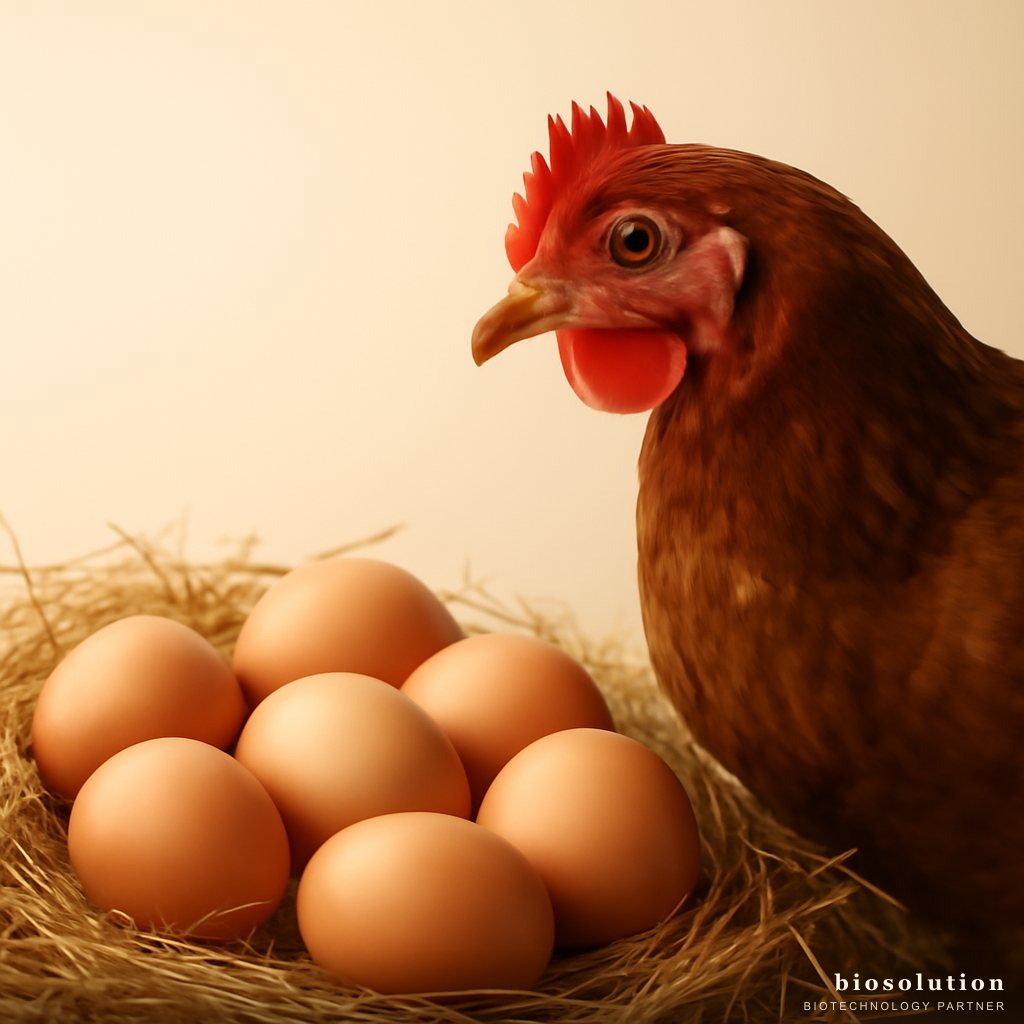
Layer Probiotics: 7 Common Mistakes That Reduce Egg Production
Layer probiotics have become a mainstay for modern farmers to improve egg production and quality. However, many farmers fail to achieve optimal results due to mistakes in selection, storage, or application. This article identifies seven common mistakes when using probiotics and how Biosolution's Layer Probiotic Formula can be the right solution.
1. Choosing Probiotics Without the Right Strain
Not all probiotics are the same. Many products on the market only list "good bacteria" without specifying the strain. In fact, the effectiveness of probiotics depends heavily on the type of strain used. For laying hens, strains scientifically proven to increase egg production and improve shell quality are Lactobacillus bulgaricus, Lactobacillus acidophilus, and Bacillus coagulans.
Lactobacillus bulgaricus produces lactic acid that suppresses the growth of pathogenic bacteria such as Salmonella. Lactobacillus acidophilus helps stabilize the gut microbiota so that nutrient absorption is more optimal. Meanwhile, Bacillus coagulans forms heat-resistant spores that can survive the feed process and reach the intestines in an active state, helping optimize calcium absorption which is important for eggshell formation.
The mistake of choosing probiotics without specific strains leads to inconsistent results. Ensure the product you use has a clear and tested strain composition, such as those found in Layer Probiotic Formula from Biosolution.
2. Incorrect Dosage: Too Low or Too High
Probiotic dosage must match the needs of laying hens. Too low a dose provides no significant effect, while excessive dosage can cause digestive disorders such as diarrhea or bloating. For probiotics applied through drinking water, the recommended dose is 1 ml per liter of water, given daily during the production period.
Morning administration is highly recommended because hens are active and have optimal water consumption. Do not reduce the dosage to save costs, as the results will fall far short of the target. Conversely, do not increase the dosage beyond recommendations as it will not linearly improve efficacy.
3. Incorrect Mixing Method
Probiotics are living organisms. Mixing them with water containing high chlorine or disinfectants will kill the beneficial bacteria. Use clean water without chlorine or let the water sit for 24 hours to allow chlorine to evaporate. Also, avoid mixing probiotics with medications or vitamins simultaneously in one water container, as chemical interactions can reduce bacterial viability.
For maximum results, follow the application instructions from the product. Biosolution recommends direct mixing into clean drinking water without other additives. Ensure the drinking water tank is clean and free of previous drug residues.
4. Improper Storage
Liquid probiotics must be stored in a cool, dry place, ideally at 4-8°C (refrigerator). Exposure to high temperatures or direct sunlight will drastically reduce the number of live bacteria. Do not store probiotics near heat sources or in a car parked under the scorching sun.
A common mistake is buying probiotics in large quantities and storing them in less-than-ideal conditions. It is better to buy according to short-term needs. Also, pay attention to the expiration date, as after that, the effectiveness of probiotics is not guaranteed.
5. Ignoring the Health Condition of the Hens
Probiotics work optimally in healthy hens. If hens are stressed, sick, or undergoing antibiotic treatment, the effectiveness of probiotics can be reduced. Broad-spectrum antibiotics will kill probiotic bacteria if given together. Allow a gap of at least 4-6 hours between antibiotic and probiotic administration.
Additionally, stress factors such as cage density, extreme temperatures, or sudden feed changes can disrupt gut microbiota balance. Ensure good cage management so that probiotics can work maximally. Learn more about layer management solutions from Biosolution.
6. Expecting Instant Results
Probiotics are not a magic remedy that provides results overnight. Changes in egg production are usually seen after 2-4 weeks of regular use. Many farmers stop too soon because they do not see immediate results. In fact, probiotics work gradually by improving the gut ecosystem and enhancing nutrient absorption.
Data shows that consistent use of probiotics can increase egg production by 3-5%, improve shell quality, reduce cracked egg cases, and maintain production persistence. Be patient and give probiotics time to work.
7. Not Choosing Probiotics with Specific Targets
Some probiotics are formulated specifically for laying hens, while others are for broilers or other poultry. General products may not provide optimal benefits for egg production. Choose probiotics designed for layers, such as Layer Probiotic Formula which contains Bacillus coagulans for calcium absorption, resulting in thicker and more uniform shells.
Conclusion
Layer probiotics are a powerful tool to increase egg production and quality, but mistakes in their use can negate these benefits. Avoid the seven mistakes above by choosing the right strain probiotics, accurate dosage, correct application method, proper storage, and optimal hen health management. With Biosolution's Layer Probiotic Formula, you get a complete, scientifically tested formula. For further consultation, contact our team via WhatsApp.
FAQ
1. How long does it take to see results from using probiotics in laying hens?
Results are usually seen after 2-4 weeks of regular use. A 3-5% increase in egg production and improvement in shell quality can be observed gradually.
2. Is it safe to give probiotics together with vaccination?
It is best to allow a 2-3 day gap between vaccination and probiotic administration to avoid interactions. Consult a veterinarian for the appropriate schedule.
3. Can probiotics be mixed with deworming medication?
Not recommended. Deworming medication is toxic to probiotic bacteria. Give probiotics after deworming is complete, with a minimum gap of 2 days.
4. Can probiotics be used for hens stressed due to hot weather?
Yes, probiotics actually help reduce the impact of stress by maintaining gut microbiota balance. Ensure sufficient drinking water and controlled cage temperature.
5. How to properly store liquid probiotics?
Store in the refrigerator at 4-8°C, avoid direct sunlight. Do not freeze. Use within 1 month after opening the package.