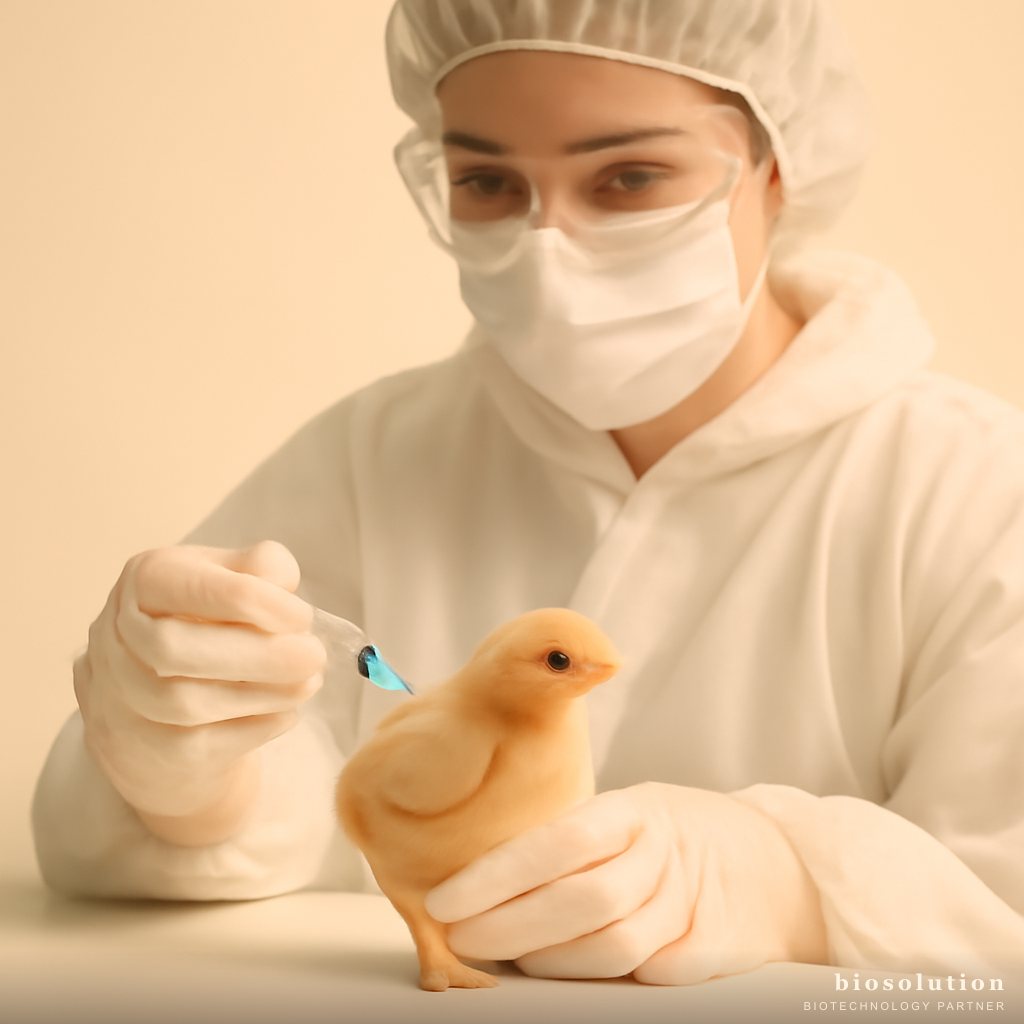
Newcastle Disease (ND) Prevention Management in Broilers: Antibiotics vs Probiotics
Newcastle Disease (ND) is one of the most detrimental viral diseases in broilers. Vaccination is the main pillar, but comprehensive prevention management—including biosecurity and nutrition—is crucial for success. In this article, we will compare two ND prevention approaches: conventional antibiotics versus probiotics, in terms of cost, effectiveness, and long-term impact. As a broiler farmer, understanding this difference is important to maintain productivity and profitability.
Why is Newcastle Disease (ND) a Serious Threat to Broilers?
ND is caused by Avian paramyxovirus type 1 (APMV-1) with high mortality, especially in velogenic strains. Infected broilers show respiratory symptoms, green diarrhea, and torticollis. Economic losses come not only from mortality but also from reduced body weight, worsened FCR, and treatment costs. In Indonesia, ND is endemic, so routine vaccination is mandatory. However, vaccination alone is not enough; good prevention management is needed to suppress outbreak risk.
Role of Antibiotics in ND Prevention: Costs and Risks
Historically, antibiotics such as tetracycline or tylosin were used to prevent secondary infections due to ND. Antibiotic cost per rearing cycle (35 days) ranges from IDR 50,000–100,000 per 100 birds, depending on type and dosage. However, long-term antibiotic use triggers bacterial resistance, residues in meat, and market rejection. Government regulations increasingly prohibit Antibiotic Growth Promoters (AGP). Consequently, farmers must seek safer and more sustainable alternatives.
Probiotics as an ND Prevention Alternative: Mechanism and Cost
Probiotics, such as Biosolution's Broiler Probiotic Formula, contain Lactobacillus acidophilus, Bacillus subtilis, and Bacillus coagulans. They work synergistically: Lactobacillus acidophilus lowers gut pH, inhibiting pathogens; Bacillus subtilis produces digestive enzymes and antimicrobial compounds; while Bacillus coagulans is stable in pelleted feed. Probiotic application cost is around IDR 30,000–50,000 per 100 birds per cycle (dose 1 ml/L drinking water or 2 ml/kg feed). This is 30–50% more economical than antibiotics. Additionally, probiotics leave no residues and improve feed efficiency (FCR improves by 8–12%).
Direct and Indirect Cost Comparison
| Aspect | Antibiotics | Probiotics |
|---|---|---|
| Direct cost per 100 birds | IDR 50,000–100,000 | IDR 30,000–50,000 |
| Treatment cost for secondary infections | High (if resistant) | Low (due to natural prevention) |
| Impact on FCR | No significant improvement | 8–12% improvement |
| Residue risk | Yes (meat not exportable) | None |
| Resistance risk | High | None |
Indirect costs such as reduced body weight due to diarrhea or subclinical infections are also lower with probiotics. Studies show probiotics suppress E. coli and Salmonella populations, which often complicate ND.
Case Study: Probiotic Effectiveness in Broiler Farms
Field research shows that probiotic administration from day-old chick (DOC) to harvest can reduce ND-related mortality to <3% over 35 days. On farms using probiotics, ND mortality was 40% lower compared to those relying solely on antibiotics. Additionally, harvest body weight increased by 5–10% (higher ADG) and meat quality improved due to residue-free status. A farmer in West Java reported feed cost savings of up to 12% after switching to probiotics.
Recommendations for Implementing Probiotics in ND Management
For optimal results, probiotics should be given daily from day one (starter phase) via drinking water, then 3 times a week during grower-finisher phase. The best time is in the morning after feeding. Ensure drinking water is clean and free of excess chlorine. Combine with routine ND vaccination and strict biosecurity. With this approach, ND risk can be minimized without sacrificing productivity.
Conclusion
Newcastle Disease (ND) prevention management in broilers using probiotics proves to be more cost-effective, safe, and sustainable compared to antibiotics. Probiotics not only suppress pathogens and enhance immunity but also improve FCR and ADG. Switching to probiotics is a strategic step to face AGP-free regulations and market demand for residue-free meat. For more information, consult your farm needs with the Biosolution team via WhatsApp or see Broiler Probiotic Formula.
FAQ
1. Can probiotics replace ND vaccination?
No. Probiotics do not replace vaccination but complement it. Vaccination remains mandatory to provide specific immunity against ND virus. Probiotics strengthen non-specific immunity and prevent secondary infections.
2. What is the cost of probiotics per cycle?
Probiotic cost is around IDR 30,000–50,000 per 100 birds for 35 days, 30–50% cheaper than antibiotics. Additionally, FCR improvement saves feed costs.
3. Are probiotics safe for broilers?
Yes, probiotics consist of beneficial bacteria that are safe and leave no residues. Biosolution products are tested and have no side effects.
4. How to administer probiotics to chickens?
Mix 1 ml of probiotic per liter of drinking water or 2 ml per kg of feed. Give daily during starter phase, then 3 times a week during grower-finisher. Ensure clean drinking water.
5. Are probiotics effective in preventing ND?
Probiotics do not directly kill ND virus but strengthen the chicken's immune system and suppress opportunistic pathogens, thereby reducing infection severity and mortality.