Newcastle Disease (ND) Prevention Management in Broilers
Newcastle disease (ND) is one of the most detrimental viral diseases in broiler chickens in Indonesia. High mortality rates, decreased production performance, and treatment costs pose a significant economic burden. Therefore, ND prevention management in broilers must be a top priority for every farmer. This article thoroughly examines the causes of ND, its economic impact, and integrated prevention strategies involving vaccination, biosecurity, and gut immunity enhancement through probiotics.
Causes of Newcastle Disease and Transmission Cycle
Newcastle disease is caused by the Avian avulavirus 1 virus (formerly Newcastle disease virus) from the Paramyxoviridae family. This virus has several pathotypes: velogenic (highly virulent), mesogenic (moderate), and lentogenic (mild). In broilers, velogenic strains can cause sudden death in up to 90% of cases within 2–6 days. Transmission occurs through direct contact with feces, respiratory secretions, feed, water, or contaminated equipment. Wild birds also act as vectors. The incubation period ranges from 2–15 days, depending on the virus dose and the chicken's immune status.
Economic Impact of ND on Broiler Farms
Economic losses due to ND not only stem from mortality but also:
- Decreased average daily gain (ADG) by up to 30% in recovered chickens.
- Increased feed conversion ratio (FCR) due to stress and reduced appetite.
- High costs of emergency vaccination and treatment.
- Losses from early culling or delayed harvest.
- Closure of export markets due to outbreak status.
According to FAO data, ND outbreaks in Southeast Asia cause losses of billions of rupiah per year. For independent farmers, a single outbreak can deplete capital for 2–3 production cycles.
ND Prevention Strategies: Vaccination and Biosecurity
ND Vaccination
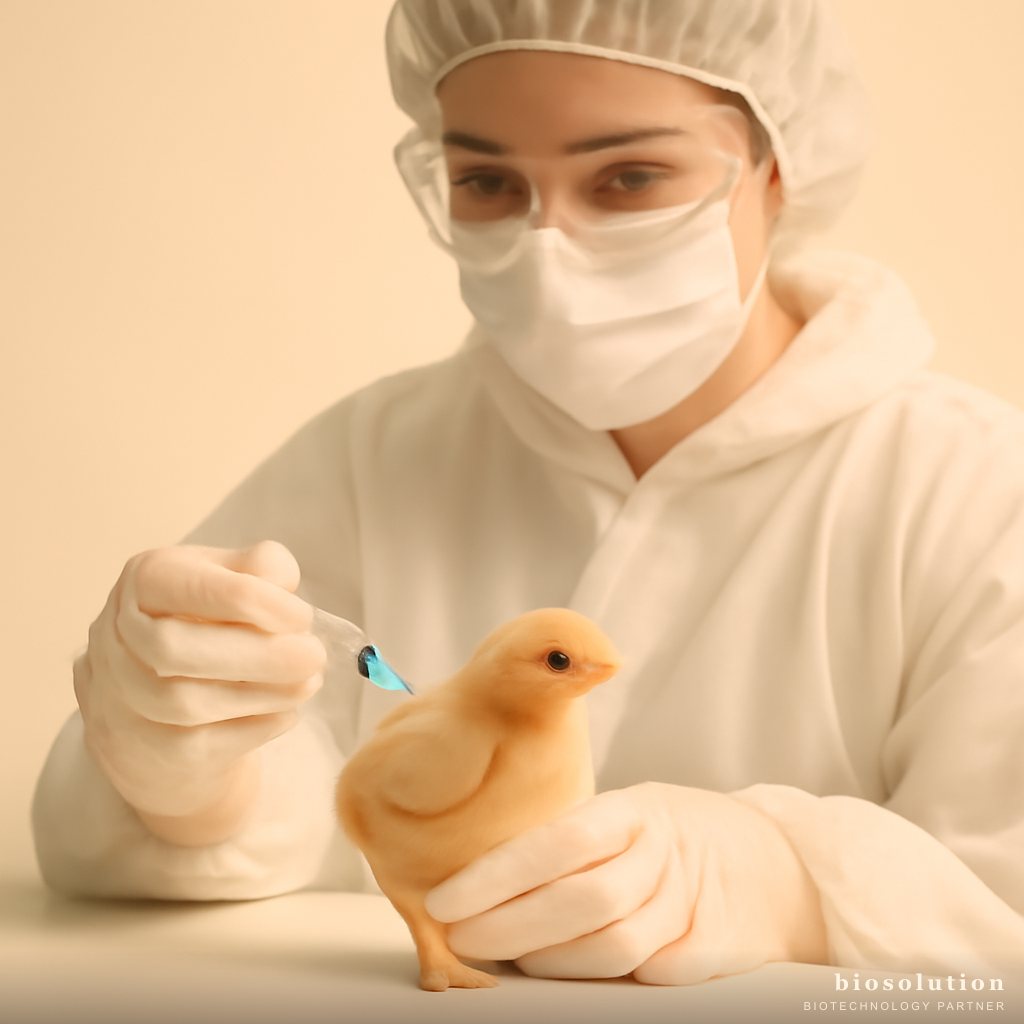
Vaccination is the first line of defense. ND vaccines are available in live (lentogenic) and inactivated forms. Common protocol for broilers:
- First vaccination: 1–4 days of age (live vaccine, eye drop or spray).
- Booster: 14–18 days of age (live or inactivated vaccine, depending on field pressure).
Vaccination must be done correctly: storage at 2–8°C, use within 1 hour after reconstitution, and administration in the morning/evening when the house temperature is comfortable. Vaccination failure is often caused by maternal antibody interference, stress, or poor application technique.
Biosecurity
Strict biosecurity includes:
- Routine cleaning and disinfection of the house.
- Restricted access for people and vehicles.
- Dedicated equipment per house.
- Proper waste and carcass management.
- Quarantine of new chickens for at least 2 weeks.
Role of Gut Immunity in ND Prevention
The gut is the largest immune organ in chickens. About 70% of immune cells are located in the digestive tract. Mucosal gut immunity, especially secretory IgA (sIgA), acts as the first line of defense against pathogens entering through feed and water. When gut immunity is strong, ND virus is more easily neutralized before reaching target organs. Conversely, an unhealthy gut (dysbiosis, high pH) becomes a gateway for infection.
Broiler Probiotic Formula as a Prevention Solution
Broiler Probiotic Formula from Biosolution is designed to strengthen gut immunity and suppress pathogens. This product contains three superior bacterial strains:
- Lactobacillus acidophilus: The main lactic acid bacterium that lowers gut pH, inhibiting the growth of E. coli, Salmonella, and Clostridium. Additionally, L. acidophilus stimulates sIgA production and enhances macrophage phagocytosis activity.
- Bacillus subtilis: Produces protease, amylase, and lipase enzymes that improve feed digestion. B. subtilis also produces subtilisin and bacitracin (bacteriocins) that fight Gram-positive pathogens.
- Bacillus coagulans: Thermostable spores resistant to feed pelleting temperatures. B. coagulans survives in the digestive tract and produces L-lactic acid and antimicrobial compounds.
Mechanism of Probiotics in ND Prevention
- Competitive exclusion: Probiotics compete with pathogens for nutrients and adhesion sites on the gut mucosa. By dominating the gut surface, probiotics prevent viruses and pathogenic bacteria from attaching.
- Lactic acid production: Lowers gut pH, creating an acidic environment unfavorable for ND virus and pathogenic bacteria.
- Bacillus enzymes: Improve feed digestibility, allowing chickens to obtain optimal nutrients for antibody production.
- Immunomodulation: Probiotics stimulate gut immune cells (M cells, dendritic cells) to produce anti-inflammatory cytokines and increase IgA secretion. Mucosal IgA can neutralize ND virus entering through the digestive tract.
Application Method and Dosage
- Method: Mix into drinking water or feed.
- Dosage: 1 ml/L drinking water or 2 ml/kg feed.
- Frequency: Daily during starter phase (0–14 days); 3 times per week during grower–finisher phase (15–35 days).
- Best time: Morning after feeding.
Measurable Performance
Based on field trials, consistent use of Broiler Probiotic Formula shows:
- FCR improvement of 8–12% (from 1.6 to 1.45–1.5).
- ADG increase of 5–10% (average 50–55 g/day to 55–60 g/day).
- Total mortality <3% over 35 days of rearing.
- No antibiotic residues in meat, making it safe for consumption.
Integrating Probiotics into ND Prevention Programs
ND prevention cannot rely on a single method alone. An integrated approach combining vaccination, biosecurity, and probiotics provides optimal protection. Probiotics do not replace vaccines but enhance vaccine response and reduce vaccination stress. With robust gut immunity, chickens are better able to fight ND infection if vaccination breakthrough occurs.
Case Study: Successful Farmer with Probiotics
Mr. Budi, a broiler farmer in West Java, suffered losses due to ND with up to 30% mortality in 2023. After implementing an integrated prevention program including Broiler Probiotic Formula, he recorded mortality dropping below 3% in the next cycle. FCR improved from 1.65 to 1.52, and treatment costs decreased drastically. "I no longer worry about ND. This probiotic has become an important part of my daily management," he said.
Conclusion
Newcastle disease remains a serious threat to broiler farming in Indonesia. However, with comprehensive ND prevention management—including proper vaccination, strict biosecurity, and gut immunity strengthening through probiotics—the risk of outbreaks can be significantly reduced. Broiler Probiotic Formula from Biosolution offers a science-based solution to improve FCR, ADG, and chicken immunity. For further consultation on probiotic application in your farm, contact the Biosolution technical team via WhatsApp.
FAQ
What is Newcastle disease (ND) in chickens?
Newcastle disease is a highly contagious viral disease in chickens caused by the Avian avulavirus 1 virus. Symptoms include respiratory distress, green diarrhea, torticollis (twisted neck), and sudden death. ND can cause major economic losses due to high mortality and reduced performance.
How to prevent ND in broilers?
ND prevention is achieved through routine vaccination, strict biosecurity (house disinfection, access restriction), and gut immunity enhancement. Using probiotics such as Broiler Probiotic Formula can help improve chicken resistance to viral infection.
Are probiotics effective against ND virus?
Probiotics do not directly kill the virus but strengthen mucosal gut immunity and enhance nonspecific immune responses. With a healthy gut, chickens are better able to withstand infection and reduce symptom severity if exposed to the virus.
How to apply Broiler Probiotic Formula?
This product is mixed into drinking water (1 ml/L) or feed (2 ml/kg). During the starter phase (0–14 days), it is given daily; during the grower–finisher phase (15–35 days), 3 times per week is sufficient. Morning administration after feeding is more effective.
Are probiotics safe for chickens to be slaughtered?
Very safe. Probiotics are beneficial bacteria that leave no harmful residues in meat. This product supports AGP-free (antibiotic growth promoter-free) programs, making chicken meat healthier and safer for consumption.