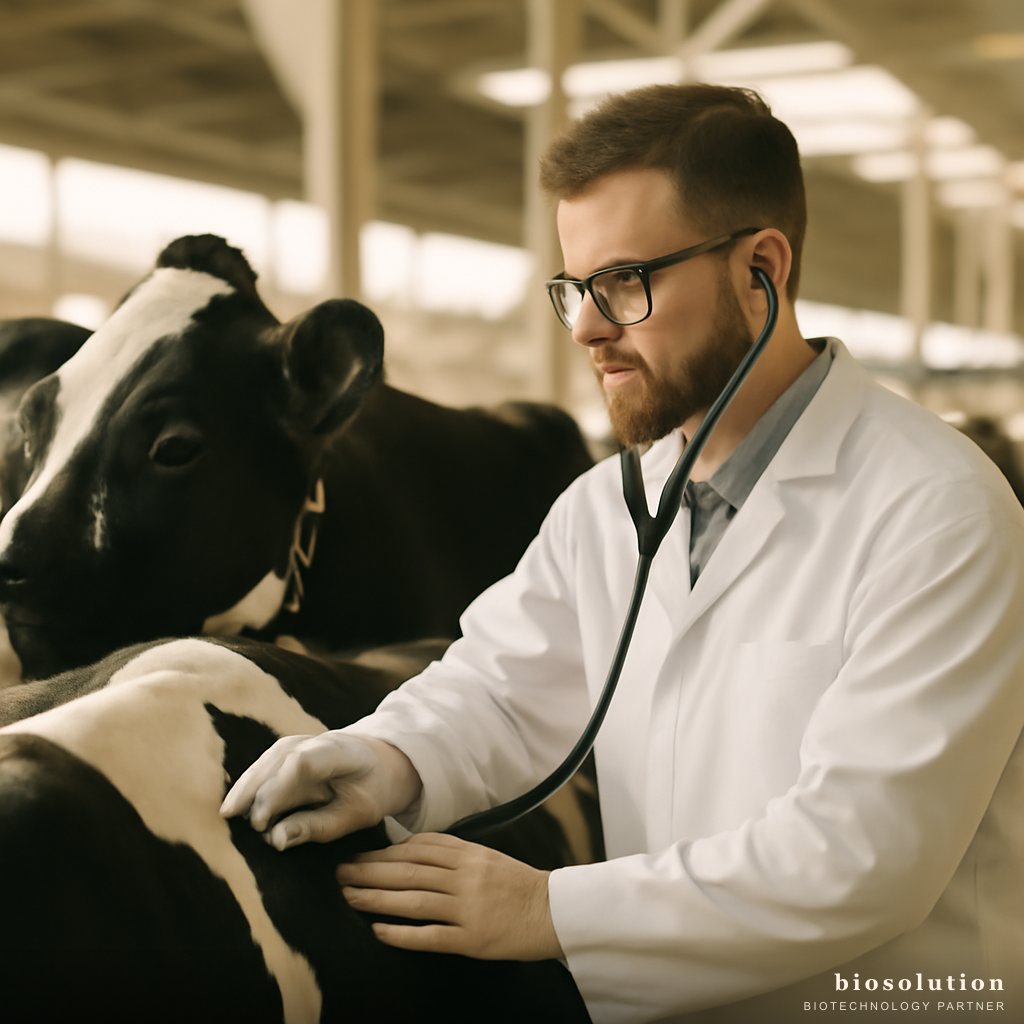
Prevent Feedlot Cattle Rumen Acidosis with Proper Probiotic Schedule
Rumen acidosis is one of the biggest challenges in feedlot cattle feed management, especially when the ration is dominated by high concentrate. This condition not only reduces growth performance but also increases mortality risk. However, with a proper probiotic administration strategy per maintenance phase, rumen acidosis can be effectively prevented. This article will discuss the probiotic schedule based on adaptation, fattening, and final maintenance phases, and how Intensive Feedlot Cattle Probiotic Formula from Biosolution becomes a reliable solution.
Why Does Rumen Acidosis Occur in Feedlot Cattle?
Rumen acidosis occurs due to a drastic drop in rumen pH caused by excessive accumulation of lactic acid and VFAs (volatile fatty acids). In feedlot cattle, high-concentrate feeding (easily fermentable carbohydrates) without proper adaptation triggers an explosion of lactic acid bacteria populations such as Streptococcus bovis. These bacteria produce large amounts of lactic acid, suppress cellulolytic bacteria, and cause pH to drop below 5.5. Impacts include decreased appetite, laminitis, bloat, and even death.
Research from FAO shows that gradual feed management and the use of rumen additives like probiotics can reduce acidosis incidence by up to 40%. Therefore, understanding rumen physiology and its response to feed changes is key to success.
Adaptation Phase: Key to Early Acidosis Prevention
The adaptation phase is the most critical period in the feedlot. Cattle coming from pasture or high-fiber feed systems must gradually adapt to concentrate rations. During this phase, the rumen microbial population is still dominated by cellulolytic bacteria sensitive to low pH. Probiotic administration in the adaptation phase aims to:
- Accelerate colonization of low-pH-tolerant lactic acid bacteria, such as Lactobacillus acidophilus and Enterococcus faecium.
- Suppress excessive growth of Streptococcus bovis.
- Stabilize rumen pH above 5.8.
Schedule: Starting from the first day of arrival, mix 30 ml of Feedlot Cattle Probiotic Formula per head per day into the morning concentrate. Continue daily for the first 2–3 weeks. This product contains a consortium of beef cattle probiotics specifically formulated to accelerate concentrate adaptation by up to 30% faster.
Early Fattening Phase: pH Stabilization and ADG Increase
After successful adaptation, cattle enter the early fattening phase (weeks 4 to 8). In this phase, the concentrate proportion is increased to 80–90% of the total ration. The risk of subclinical acidosis remains high due to rumen pH fluctuations each time cattle consume large amounts of feed. Probiotics in this phase play a role in:
- Providing cellulase enzymes to aid digestion of residual fiber from forage.
- Increasing production of more stable VFAs (acetate, propionate) compared to lactic acid.
- Increasing average daily gain (ADG) by 10–14%.
Schedule: Still 30 ml per head per day, mixed into the morning concentrate. Ensure even distribution so each animal gets the optimal dose. In this phase, monitoring feces and appetite is important to detect early signs of acidosis.
Late Fattening Phase: Maintaining Performance Until Harvest
The late fattening phase (weeks 9 to harvest) is the peak growth period. Cattle consume maximum feed amounts, and acid accumulation in the rumen can peak. Probiotics are still needed to:
- Prevent extreme pH drops when cattle overeat.
- Optimize feed conversion ratio (FCR) for more economical carcasses.
- Reduce mortality due to acute acidosis.
Schedule: Continue 30 ml per head per day until 7 days before harvest. Stopping a week before harvest aims to avoid probiotic residues in the carcass, although scientifically probiotics do not leave harmful residues.
Role of Intensive Feedlot Cattle Probiotic Formula in Each Phase
The Intensive Feedlot Cattle Probiotic Formula from Biosolution is specifically designed to meet the needs of feedlot cattle in every phase. Its main content is a consortium of beef cattle probiotics consisting of Lactobacillus acidophilus, Bifidobacterium spp., and Saccharomyces cerevisiae, plus cellulase enzymes. This combination works synergistically:
- Lactobacillus acidophilus produces lactic acid in controlled amounts, suppresses pathogenic bacteria, and stimulates the growth of cellulolytic bacteria.
- Saccharomyces cerevisiae consumes oxygen in the rumen, creating an anaerobic environment ideal for lactic acid bacteria, and provides nutrients for cellulolytic bacteria.
- Cellulase enzymes break down fiber into simple sugars, reducing the fermentation load on concentrate.
As a result, rumen pH is more stable, concentrate adaptation is faster, and ADG increases by 10–14% without increasing acidosis risk.
Additional Tips: Feed Management and Monitoring
Besides probiotics, good feed management greatly supports acidosis prevention:
- Step-up program: Gradually increase concentrate proportion (e.g., 40% → 60% → 80% over 3 weeks).
- Feeding frequency: Provide feed 2–3 times a day to avoid excessive consumption at once.
- Water availability: Ensure clean water is always available, as dehydration worsens acidosis.
- Feces monitoring: Loose or mucous feces can be an early indication of subclinical acidosis.
By combining a proper probiotic schedule and good feed management, rumen acidosis can be prevented, optimizing feedlot performance.
Conclusion
Preventing rumen acidosis in high-concentrate feedlot cattle requires a holistic approach, with a probiotic schedule tailored to each maintenance phase. The adaptation, early fattening, and late fattening phases each require probiotic support to stabilize rumen pH, increase ADG, and reduce mortality. The Intensive Feedlot Cattle Probiotic Formula from Biosolution, with its probiotic consortium and cellulase enzymes, has proven effective in every phase. For further consultation on a probiotic schedule suitable for your feedlot conditions, contact the Biosolution team via WhatsApp.
FAQ
1. What is rumen acidosis? Rumen acidosis is a condition where rumen pH drops below 5.5 due to excessive accumulation of lactic acid and VFAs, often occurring in feedlot cattle fed high-concentrate diets without adaptation. Symptoms include decreased appetite, diarrhea, laminitis, and can lead to death.
2. How to prevent rumen acidosis with probiotics? Probiotics such as Lactobacillus acidophilus and Saccharomyces cerevisiae help stabilize rumen pH by controlling lactic acid production, stimulating cellulolytic bacteria, and providing digestive enzymes. Routine administration of 30 ml per head per day from the adaptation phase to the end of fattening effectively prevents acidosis.
3. When is the best time to give probiotics to feedlot cattle? The best time is in the morning during the first feeding. Probiotics are mixed into the concentrate for even distribution. Daily administration during the fattening period (except 7 days before harvest) provides optimal results.
4. Is it safe to give probiotics every day? Yes, probiotics are safe to give daily because the microbes contained are non-pathogenic and beneficial for rumen health. The dose of 30 ml per head per day has been tested and proven to have no side effects.
5. How long does it take to see results from probiotic administration? Improvement in appetite and fecal stability is usually seen within 3–7 days. Significant ADG increase (10–14%) can be observed after 4–6 weeks of routine administration.