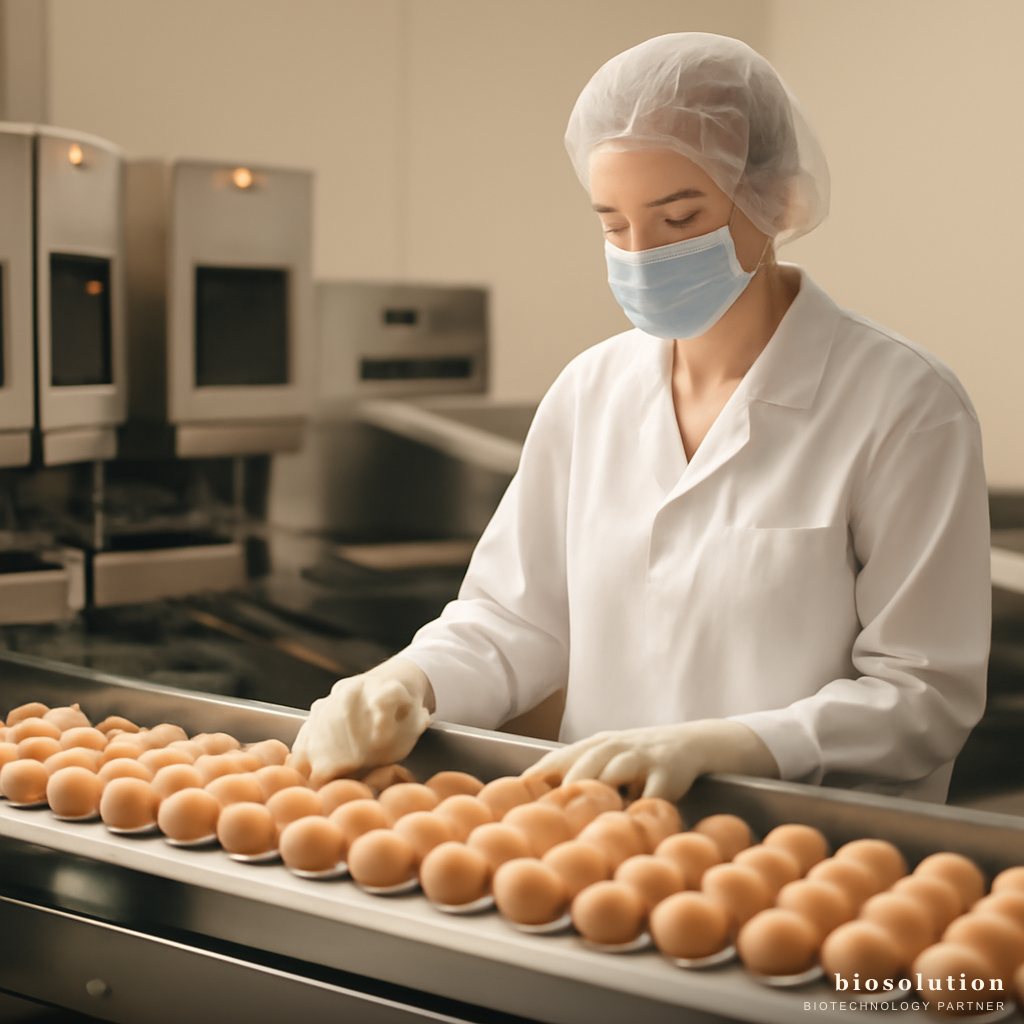
Prevent Salmonella in Layer Eggs with the Right Probiotic Schedule
Salmonella in layer eggs is a serious threat to food safety and farm productivity. This pathogenic bacterium not only reduces egg quality but also risks causing economic losses due to culling and decreased production. As a commercial layer farmer, you need an effective prevention strategy, one of which is through structured probiotic management. By administering probiotics according to the rearing phase, you can strengthen the chicken's gut microbiota, suppress Salmonella colonization, and produce safer, higher-quality eggs.
Why Salmonella Is a Critical Problem in Layer Farms?
Salmonellosis in poultry, particularly caused by Salmonella enteritidis and Salmonella typhimurium, is a global concern because it can be transmitted to humans through consumption of contaminated eggs or meat. In laying hens, this bacterium often infects the reproductive tract and contaminates eggs before shell formation. Consequently, even clean-looking eggs can carry health risks.
Besides food safety, Salmonella directly impacts chicken performance. Subclinical infections can cause decreased appetite, diarrhea, and a 10–15% drop in egg production. In severe cases, there is increased mortality and significant treatment costs. Therefore, prevention through feed management, biosecurity, and probiotic supplementation is key to successful layer farming.
The role of probiotics in suppressing Salmonella has been scientifically proven. Beneficial microorganisms such as Lactobacillus and Bacillus can compete with pathogens for adhesion sites and nutrients in the gut, and produce antimicrobial compounds like lactic acid and bacteriocins. Thus, Salmonella populations can be naturally suppressed without antibiotic residues.
Rearing Phases and Probiotic Needs of Laying Hens
Each growth phase of laying hens presents unique challenges to gut health and susceptibility to Salmonella infection. Therefore, the probiotic administration schedule must be adjusted for optimal benefits.
Starter Phase (0–6 Weeks)
During this phase, the chicken's digestive system is still developing and the gut microbiota is not yet stable. Chicks are vulnerable to pathogen colonization because they lack a sufficient population of beneficial bacteria. Early probiotic administration helps establish a healthy gut microbial community, strengthens the gut barrier, and stimulates local immunity.
For the starter phase, probiotics can be given via drinking water at a dose of 1 ml per liter of water daily. Strains such as Lactobacillus acidophilus and Bacillus coagulans are highly beneficial due to their ability to produce spores that are resistant to environmental conditions and the digestive tract. With this routine, the risk of early Salmonella infection can be significantly reduced.
Grower Phase (7–16 Weeks)
In the grower phase, chickens experience rapid growth and hormonal changes before maturity. Stress from vaccination, feed changes, or cage density can lower immunity, making Salmonella infection easier. Probiotics should still be given to maintain microbiota balance and prevent dysbiosis.
Lactobacillus bulgaricus in the Layer Probiotic Formula plays an important role in this phase because its high lactic acid production can suppress Salmonella growth. Daily administration at a dose of 1 ml/liter of drinking water is recommended, especially in the morning when chickens are actively drinking.
Layer Phase (17 Weeks to Culling)
The production phase is a critical period because chickens must maintain optimal performance while facing high metabolic load. The risk of Salmonella increases due to production stress, decreased immunity, and potential environmental contamination. Consistent probiotic administration is crucial to maintain egg quality and food safety.
Research shows that probiotic supplementation in laying hens can reduce Salmonella counts in the gut and eggs by 50–70%. The Layer Probiotic Formula containing Bacillus coagulans also aids calcium absorption, resulting in thicker eggshells and fewer cracked eggs. Thus, probiotics not only prevent Salmonella but also improve product quality.
Proper Probiotic Administration Schedule for Each Phase
Below is a guideline for probiotic administration per rearing phase that can be applied on your farm:
| Phase | Age | Dose | Frequency | Administration Time |
|---|---|---|---|---|
| Starter | 0–6 weeks | 1 ml/liter water | Daily | Morning |
| Grower | 7–16 weeks | 1 ml/liter water | Daily | Morning |
| Layer | 17 weeks–culling | 1 ml/liter water | Daily | Morning |
Daily probiotic administration in the morning provides the consistency needed to maintain beneficial bacteria populations in the gut. Ensure drinking water is clean and does not contain excess chlorine that could kill probiotics. If using medication, allow at least a 2-hour gap between probiotic and antibiotic administration.
Mechanisms of Probiotics Against Salmonella
Probiotics work through several mechanisms to suppress Salmonella:
- Competitive exclusion: Probiotic bacteria adhere to gut receptors, leaving no space for Salmonella to colonize. Lactobacillus acidophilus and Lactobacillus bulgaricus are highly effective in this competition.
- Production of antimicrobial compounds: Lactic acid, hydrogen peroxide, and bacteriocins produced by probiotics create an acidic environment unfavorable for Salmonella.
- Immune modulation: Probiotics stimulate IgA production and local immune cells, enhancing the body's response to pathogens.
- Improvement of gut barrier: Probiotics strengthen intestinal tight junctions, making it harder for Salmonella to penetrate the epithelium and enter circulation.
Understanding these mechanisms gives farmers confidence that probiotics are a scientific and effective preventive tool.
Case Study: Effectiveness of Layer Probiotic Formula
A trial on a commercial layer farm showed that administration of the Layer Probiotic Formula for 12 weeks reduced Salmonella prevalence in chicken intestines from 18% to 4%. Additionally, egg production increased by 3–5%, and the percentage of cracked eggs decreased by 20%. This proves that probiotics not only protect against Salmonella but also improve performance.
Another advantage of this formula is the content of Bacillus coagulans, which forms spores, making it more resistant to storage conditions and the digestive tract. Farmers need not worry about probiotic viability during distribution.
Conclusion
Reducing the risk of Salmonella in layer egg production requires a holistic approach, and probiotics are an important component. By implementing a proper probiotic administration schedule according to the rearing phase—from starter to end of production—you can build a natural defense against pathogens while improving egg quality. The Layer Probiotic Formula from Biosolution, with a combination of Lactobacillus bulgaricus, Lactobacillus acidophilus, and Bacillus coagulans, is a proven solution to help commercial layer farmers produce safe, high-quality eggs. For more information on dosage and application, consult the Biosolution technical team via WhatsApp.
Frequently Asked Questions (FAQ)
Q: Is it safe to give probiotics daily to laying hens? A: Yes, probiotics are safe to give daily because they are natural microorganisms that support gut health. The dose of 1 ml per liter of drinking water has been tested and causes no side effects. Regular administration is necessary to maintain stable beneficial bacteria populations and prevent Salmonella colonization.
Q: When is the best time to give probiotics to chickens? A: The best time is in the morning, when chickens start actively drinking. Consistent timing helps ensure all chickens receive an even dose. Avoid giving probiotics simultaneously with antibiotics; allow at least a 2-hour gap to maintain probiotic effectiveness.
Q: Can probiotics replace Salmonella vaccination? A: Probiotics do not replace vaccination but complement the prevention program. Vaccination provides specific immunity against Salmonella, while probiotics strengthen non-specific defenses and reduce pathogen load in the gut. The combination offers optimal protection.
Q: How should probiotics be stored to keep them active? A: Store probiotics in a cool, dry place away from direct sunlight. The ideal storage temperature is 15–25°C. Once opened, use within 30 days to maintain bacterial viability. Do not freeze or store in a humid place.
Q: Are there side effects if the probiotic dose is excessive? A: Excessive doses rarely cause side effects because probiotics are non-pathogenic. However, in stressed or sick chickens, high doses may cause temporary mild diarrhea. Follow the recommended dose (1 ml/liter) for optimal results.