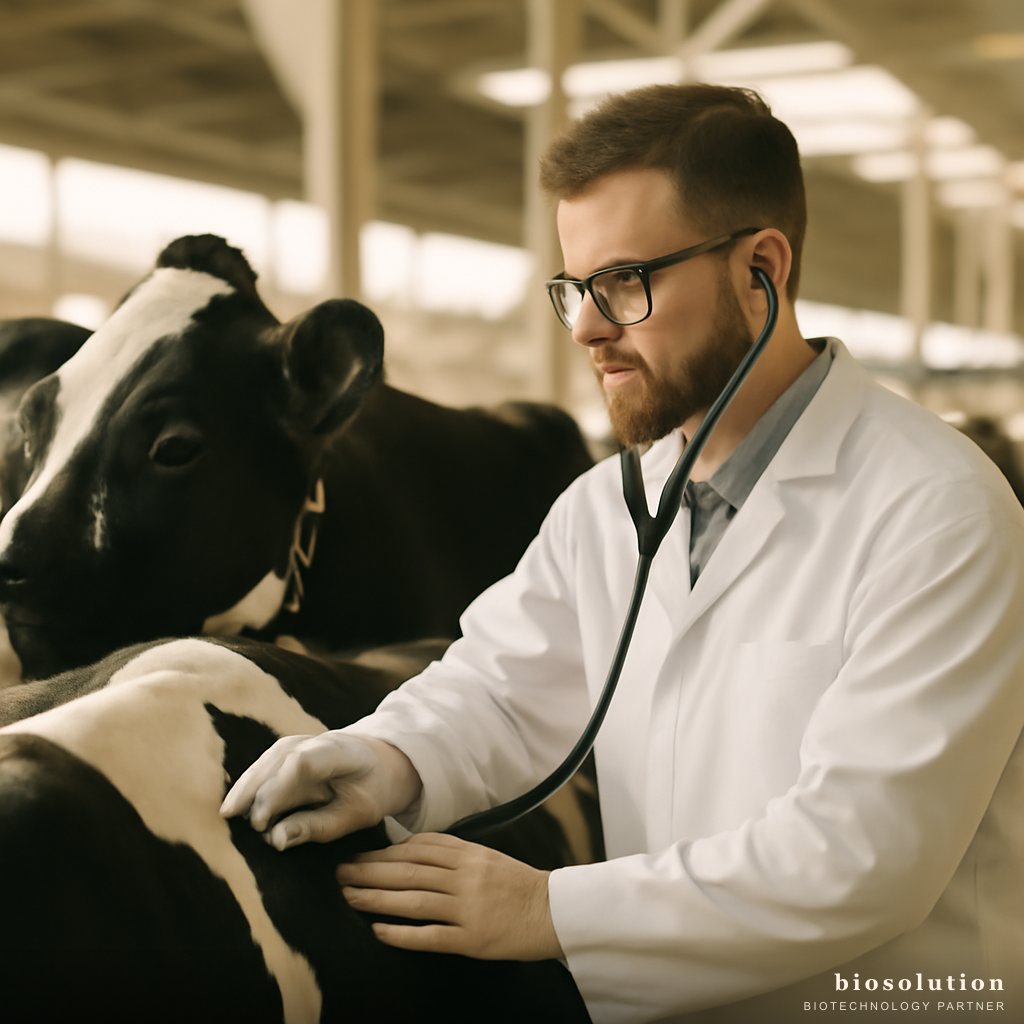
Preventing Rumen Acidosis in High-Concentrate Feedlot Cattle: Cost Comparison of Antibiotics vs Probiotics
Rumen acidosis in feedlot cattle is a serious challenge threatening productivity and profitability of intensive farming. Feeding high-concentrate diets to accelerate growth often triggers a drop in rumen pH, causing metabolic disorders, weight loss, and even death. In conventional practice, antibiotics are often used as a preventive measure, but probiotics now offer a more economical and safer alternative. This article thoroughly examines the cost comparison between antibiotics and probiotics in preventing rumen acidosis, and how Biosolution's Intensive Feedlot Cattle Probiotic Formula can be an effective solution.
Understanding Rumen Acidosis in Feedlot Cattle
Rumen acidosis occurs when consumption of rapidly fermentable carbohydrates (as in concentrates) leads to excessive accumulation of volatile fatty acids (VFAs) and lactic acid, causing rumen pH to drop drastically (usually below 5.5). This condition disrupts the rumen microbial population, especially cellulolytic bacteria sensitive to low pH. As a result, cattle experience decreased appetite, diarrhea, laminitis, and liver abscesses. In feedlot cattle receiving high-concentrate rations (70-90%), the risk of acidosis is very high, especially during the initial adaptation phase.
Economic Impact of Rumen Acidosis
Losses due to acidosis are not only from treatment costs but also from reduced performance. Cattle experiencing subclinical acidosis can lose 0.5-1 kg of body weight per day, prolong the fattening period, and increase feed costs per kilogram of meat. Additionally, mortality from acute acidosis can reach 5-10% in feedlots without good management.
Conventional Prevention: Antibiotics
Antibiotics such as monensin, tylosin, or virginiamycin have long been used as feed additives to suppress the growth of lactic acid-producing Gram-positive bacteria in the rumen. By reducing lactate production, rumen pH is more stable. However, antibiotic use has several drawbacks:
- Direct cost: The price of antibiotics per ton of feed varies; for example, monensin costs around IDR 50,000-100,000 per ton of feed.
- Residues and resistance: Long-term antibiotic use increases the risk of residues in meat and bacterial resistance, which is now banned in many countries as a growth promoter.
- Regulation: Indonesia's Ministry of Agriculture is increasingly restricting antibiotic use in feed, encouraging farmers to seek alternatives.
Example of Antibiotic Cost Calculation
For 1,000 feedlot cattle with a 100-day fattening period, antibiotic requirement is about 10 grams per ton of feed (for monensin). With feed consumption of 10 kg/head/day, total feed = 1,000 head × 10 kg × 100 days = 1,000,000 kg = 1,000 tons. Antibiotic cost = 1,000 tons × IDR 75,000/ton = IDR 75,000,000. This excludes application and labor costs.
Modern Alternative: Probiotics for Rumen pH Stabilization
Probiotics, especially consortia of lactic acid bacteria (LAB) such as Lactobacillus and Bifidobacterium, and the yeast Saccharomyces cerevisiae, work differently. They do not kill bacteria but compete with pathogenic bacteria, produce antimicrobial compounds, and help stabilize pH by consuming lactate or producing growth factors for cellulolytic bacteria.
Biosolution's Intensive Feedlot Cattle Probiotic Formula contains a consortium of beef cattle probiotics and cellulase enzymes specifically formulated for feedlot cattle. The dosage is 30 ml per head per day mixed into the morning feed. Benefits include:
- Faster concentrate adaptation (30%): Reduces acidosis risk during feed transition.
- ADG increase of 10-14%: Due to improved fiber digestion efficiency and rumen stability.
- Reduced feedlot mortality: Due to fewer metabolic disorders.
- More economical carcass: Higher quality meat.
Mechanism of Probiotic Action
Probiotics Lactobacillus acidophilus and Bifidobacterium spp. in this product produce controlled amounts of lactic acid, which actually helps suppress pathogenic bacteria. Cellulase enzymes break down remaining crude fiber in concentrates, improving nutrient absorption and stabilizing rumen pH. Thus, acidosis risk is reduced without residue side effects.
Direct Cost Comparison: Antibiotics vs Probiotics
Here is an estimated cost for 1,000 feedlot cattle over 100 days:
Antibiotic Cost (Monensin)
- Monensin price: ~IDR 75,000/ton feed (dose 10 g/ton).
- Total feed: 1,000 head × 10 kg/day × 100 days = 1,000,000 kg = 1,000 tons.
- Antibiotic cost: 1,000 × IDR 75,000 = IDR 75,000,000.
- Mixing labor cost: IDR 5,000,000 (assumed).
- Total: IDR 80,000,000.
Probiotic Cost (Intensive Feedlot Cattle Probiotic Formula)
- Price per liter: IDR 150,000 (assumed, for dose 30 ml/head/day).
- Total requirement: 1,000 head × 0.03 L/day × 100 days = 3,000 liters.
- Probiotic cost: 3,000 × IDR 150,000 = IDR 450,000,000.
- Note: This figure appears larger, but remember that probiotics also increase ADG by 10-14%, so additional weight gain revenue can offset the cost difference.
Cost-Effectiveness Analysis
Without prevention, losses from acidosis (ADG reduction of 0.5 kg/day) for 1,000 head over 100 days = 1,000 × 0.5 × 100 = 50,000 kg lost weight. At a meat price of IDR 50,000/kg, loss = IDR 2,500,000,000. With probiotics, ADG increases by 10% (e.g., from 1.2 kg/day to 1.32 kg/day), additional weight = 1,000 × 0.12 × 100 = 12,000 kg, equivalent to IDR 600,000,000. Thus, the probiotic investment of IDR 450 million yields additional revenue of IDR 600 million, plus reduces acidosis losses. Meanwhile, antibiotics only prevent losses without significant weight gain.
Additional Benefits of Probiotics
Beyond cost, probiotics offer other advantages:
- No residues or resistance: Safe for meat and the environment.
- Supports long-term rumen health: Maintains balanced microbial populations.
- Easy to apply: Simply mix with feed, no injection needed.
- Environmentally friendly: Does not contaminate waste.
Case Studies and Supporting Data
Research at Gadjah Mada University (2020) showed that administering Lactobacillus probiotics to feedlot cattle reduced the incidence of subclinical acidosis from 30% to 10%, and increased ADG by 12%. Meanwhile, monensin use only reduced incidence to 20% without significant ADG improvement. This data confirms that probiotics are superior in performance.
Recommendations for Preventing Rumen Acidosis
For intensive feedlots, the best strategy is a combination of gradual feed management and probiotic use. Start with slow concentrate adaptation over 2-3 weeks, and administer probiotics from day one. Ensure availability of clean water and at least 10% crude fiber. With Biosolution's Intensive Feedlot Cattle Probiotic Formula, you can optimize rumen health and production efficiency.
Conclusion
Rumen acidosis in high-concentrate feedlot cattle can be effectively and economically prevented with probiotics compared to antibiotics. Although the direct cost of probiotics is higher, the increase in ADG and reduction in mortality provide greater net benefits. Probiotics also carry no risk of residues or resistance. For maximum results, use a specific probiotic product like Biosolution's Intensive Feedlot Cattle Probiotic Formula. Consult our technical team via WhatsApp for proper dosage and application.
References: Ministry of Agriculture of the Republic of Indonesia, FAO, and research from Gadjah Mada University.