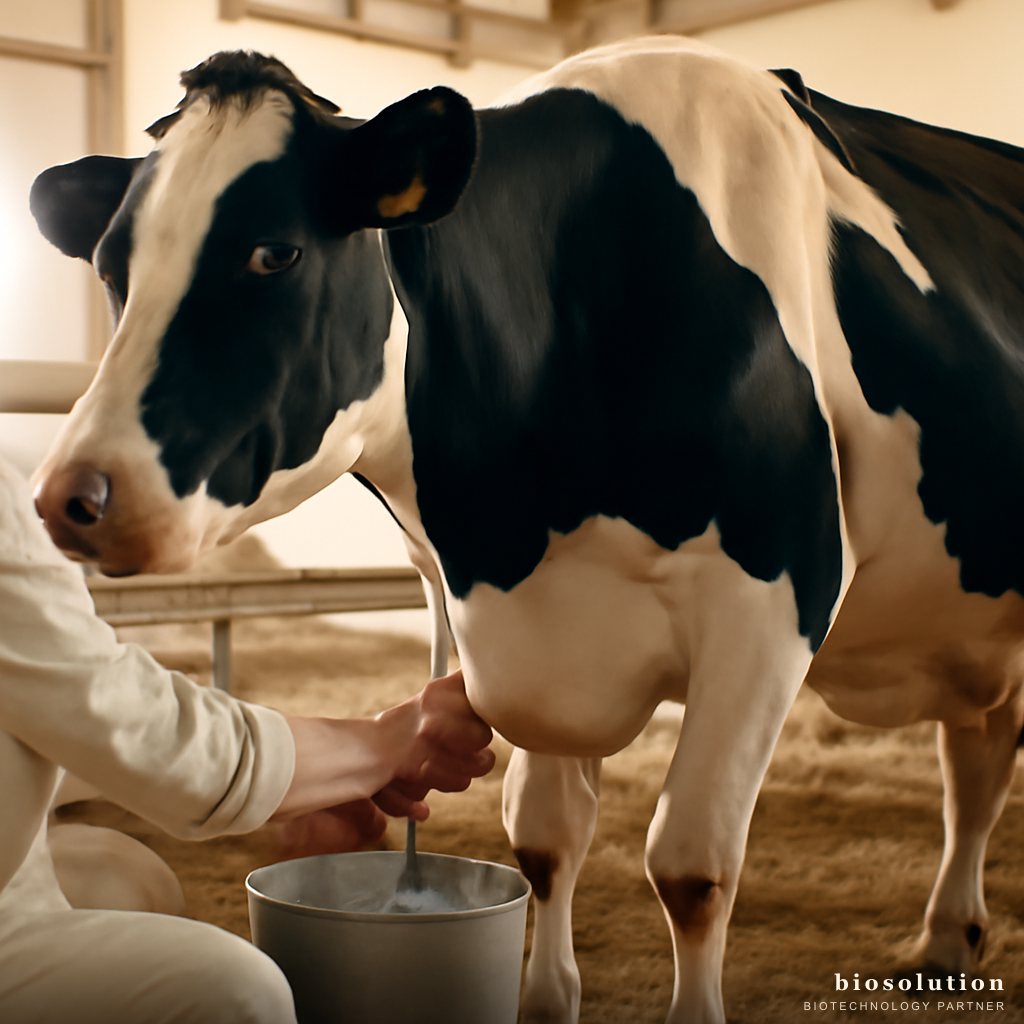
Probiotics for Dairy Cows Increase Milk Production and Quality
Probiotics for dairy cows have become a mainstay strategy for modern farmers to increase milk production and maintain its quality. With economic pressures and increasing market demands, farmers are required to produce milk in large volumes while remaining nutrient-rich. This is where probiotics play a role: through modulation of rumen and intestinal microflora, probiotics can improve feed efficiency, reduce the risk of mastitis, and directly drive higher milk production. This article will thoroughly discuss how probiotics for dairy cows work, what their main components are, and what economic impacts can be achieved.
Mechanism of Probiotics in Increasing Milk Production
Probiotics for dairy cows work through several synergistic mechanisms that affect digestion, metabolism, and the immune system of cows. First, probiotics help stabilize rumen pH. A healthy rumen has an ideal pH between 6.0–6.8. When cows consume high-concentrate feed, rumen pH can drop drastically (subclinical acidosis), inhibiting the growth of cellulolytic bacteria and reducing the production of volatile fatty acids (VFAs) which are precursors of milk fat. Probiotics such as Lactobacillus acidophilus and Lactobacillus bulgaricus ferment lactose and other carbohydrates into lactic acid, which actually helps maintain stable pH if given in the right dosage.
Second, probiotics increase cellulase enzyme activity due to the presence of Bacillus coagulans. This bacterium produces cellulase enzymes that break down crude fiber into simple sugars, making more energy available for milk production. Third, probiotics such as Lactobacillus casei act as anti-stress agents by modulating immune responses and suppressing pathogen growth in the digestive tract. Oxidative stress in dairy cows, especially during peak lactation, can reduce milk production by up to 10%. With probiotics, this stress is suppressed, and cows can maintain optimal lactation performance.
Superior Probiotic Composition for Dairy Cows
To achieve maximum results, the selection of probiotic strains is very important. Products like Probiotic Formula for Dairy Cows from Biosolution contain a combination of five complementary strains: Lactobacillus acidophilus (rumen pH stabilization), Lactobacillus bulgaricus (fiber fermentation), Lactobacillus casei (anti-stress), Bacillus coagulans (cellulase enzyme producer), and Bifidobacterium sp. (gut microbiota stabilization). Each strain has a specific role that supports rumen and gut health holistically.
Bifidobacterium sp., for example, is very effective in maintaining the balance of large intestine microbiota, preventing diarrhea, and improving nutrient absorption. Meanwhile, Bacillus coagulans has high resistance to heat and stomach acid, so its viability is maintained when passing through the digestive tract. This combination ensures that probiotics work throughout the entire gastrointestinal tract, from the rumen to the intestines.
Impact on Milk Quality: Fat and Protein
One of the most valued indicators of milk quality is fat and protein content. Probiotics for dairy cows have been proven to maintain or even increase both parameters. The mechanism is related to increased production of acetic acid and butyric acid in the rumen, which are precursors of milk fat. With stable rumen pH, cellulolytic bacteria can work optimally, producing more acetate. In addition, probiotics also increase the availability of microbial amino acids for milk protein synthesis.
Research shows that regular administration of probiotics can increase milk fat content by 0.1–0.3% and protein by 0.05–0.15%. Although it sounds small, on a daily production scale, this increase has a significant impact on the selling price of milk. Many dairy processing industries offer price bonuses for milk with high fat and protein. Thus, investing in probiotics not only increases volume but also quality with higher economic value.
Udder Health and Mastitis Reduction
Mastitis remains a major scourge for dairy farmers. This disease not only reduces milk production but also causes economic losses due to treatment costs and discarded milk. Probiotics play a role in mastitis prevention through two pathways: first, increasing local immunity in the udder by modulating cellular immune responses; second, reducing translocation of pathogenic bacteria from the digestive tract to the udder. Lactobacillus casei and Bifidobacterium sp. are known to stimulate the production of IgA and macrophages in udder tissue, making cows more resistant to infection by Staphylococcus aureus and Escherichia coli.
Additionally, probiotics also help reduce the incidence of rumen acidosis, which is often associated with an increased risk of mastitis. With a healthy rumen, cows do not experience metabolic stress, so their immune system remains optimal. Preventive use of probiotics can reduce mastitis incidence by up to 30%, as reported in several field studies.
Proper Application and Dosage
For probiotics to provide optimal results, application must be done correctly. Probiotic Formula for Dairy Cows from Biosolution is recommended at a dose of 20 ml per head per day, given daily in the morning before milking. The application method can be through drench (dissolved in water and given directly) or mixed into the concentrate. Ensure the probiotic is mixed evenly and not exposed to direct sunlight to maintain bacterial viability.
It is also important to start probiotic administration gradually, especially if the cows have never received probiotics before. Start with half the dose for 3-5 days, then increase to the full dose. This is to allow time for the rumen microbiota to adapt. Results usually begin to appear after 2-3 weeks of use, with consistent increases in milk production.
Economic Impact of Probiotic Use
From an economic perspective, probiotics for dairy cows provide clear benefits. With a 5–8% increase in milk production, a cow that originally produced 20 liters per day can increase to 21–21.6 liters. If the price of fresh milk is IDR 6,000 per liter, the additional income per head per day reaches IDR 6,000–IDR 9,600. In a month (30 days), that means IDR 180,000–IDR 288,000 per head. Meanwhile, the cost of probiotics is only around IDR 2,000–IDR 3,000 per head per day, making the ROI very attractive.
Not to mention the savings from reduced mastitis treatment costs and improved milk quality. Milk with high fat content usually gets a premium price. Thus, investing in probiotics can generate significant net profits in both the short and long term.
Conclusion
Probiotics for dairy cows have been scientifically proven to increase milk production and quality through rumen pH stabilization, increased enzyme activity, and immune enhancement. Products like the Probiotic Formula for Dairy Cows from Biosolution offer a practical solution with a combination of superior strains that are easy to apply. For farmers looking to increase farm productivity and profitability, probiotics are a rational and sustainable choice. For further consultation, contact the Biosolution team via WhatsApp or see our products on the product page.