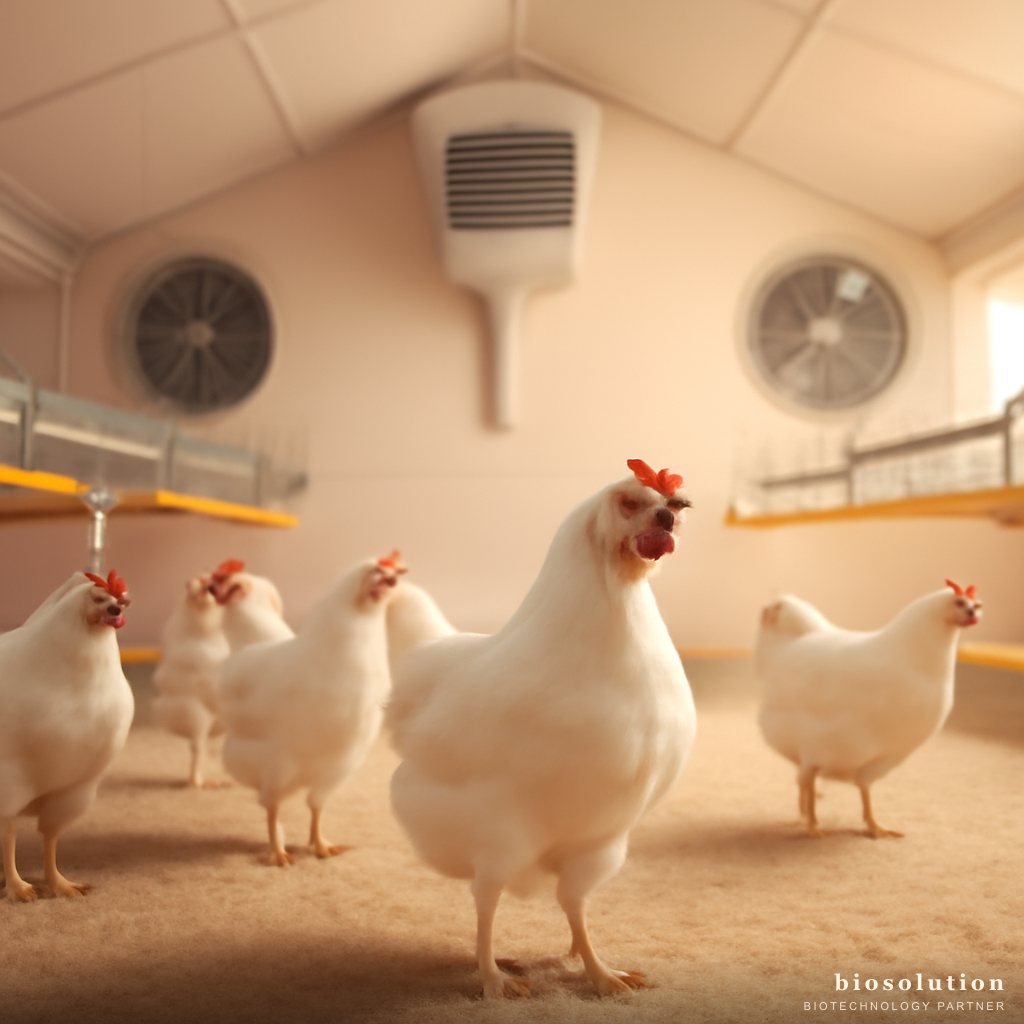
Reduce Ammonia Barn Odor with Probiotics: The Right Solution for Broiler Farms
Pungent ammonia odor in chicken barns is a classic problem in broiler farming. Besides disturbing worker comfort and the surrounding environment, ammonia gas (NH₃) also has serious impacts on chicken health and productivity. Reduce ammonia barn odor is not just about comfort, but an important strategy to improve feed efficiency, reduce mortality, and maintain meat quality. One increasingly popular approach is the use of probiotics, such as Broiler Probiotic Formula from Biosolution, which works directly in the chicken's digestive tract to inhibit ammonia formation from the start.
Why Does Ammonia Odor Appear in Chicken Barns?
Ammonia (NH₃) is produced from the breakdown of uric acid in chicken feces by urease bacteria. Uric acid is the end product of nitrogen metabolism in poultry. In humid, crowded, and poorly ventilated barn conditions, urease bacteria thrive, producing large amounts of ammonia. Factors that accelerate ammonia production include:
- High humidity (>70%) due to spilled drinking water or wet feces.
- Excessive barn density which reduces air circulation.
- Poor litter management (sawdust or husk not replaced regularly).
- Incompletely digested feed, leaving excess nitrogen in the intestines.
Ammonia accumulated in barn air can reach concentrations >25 ppm, which already irritates the chicken's respiratory tract. At concentrations >50 ppm, chicken growth is inhibited, feed intake decreases, and respiratory diseases such as CRD (Chronic Respiratory Disease) easily appear.
Economic Impact of Ammonia Odor for Farmers
Ammonia odor is not just a smell issue, but also erodes farmer profits. Some economic losses to watch out for:
Decreased Body Weight and Worsened FCR Chickens chronically exposed to ammonia experience oxidative stress and respiratory tract inflammation. Energy that should be used for growth is diverted to fight stress. As a result, Feed Conversion Ratio (FCR) can increase by 5–10%, meaning more feed is wasted.
Increased Mortality Ammonia weakens the mucosal immune system, making chickens susceptible to secondary infections such as colibacillosis and salmonellosis. Mortality rates can spike up to 10% in severe cases.
Decreased Meat Quality Chicken meat exposed to high ammonia tends to be paler, softer, and watery (PSE). This lowers the selling price in the market.
Environmental Sanctions and Resident Complaints Farms in densely populated areas often face protests due to ammonia odor. In some regions, farmers may be fined or even have their barns closed if they do not manage waste properly.
Thus, investing in reducing ammonia early is actually cheaper than the losses incurred.
Role of Probiotics in Suppressing Ammonia Production
Probiotics are live microorganisms that provide health benefits to the host when administered in adequate amounts. In broilers, probiotics work through several mechanisms to suppress ammonia:
1. Competition with Urease Bacteria
Probiotic bacteria such as Lactobacillus acidophilus and Bacillus subtilis compete with urease-producing pathogenic bacteria (e.g., E. coli and Clostridium) for attachment sites and nutrients in the gut. With probiotic dominance, the urease bacterial population decreases, thus reducing ammonia production.
2. Lowering Gut pH
Lactobacillus acidophilus produces lactic acid which lowers gut pH. This acidic environment is unfavorable for urease bacteria, thus inhibiting urease enzyme activity. Additionally, low pH also enhances mineral and vitamin absorption.
3. Improving Feed Digestibility
Bacillus subtilis and Bacillus coagulans produce protease, amylase, and cellulase enzymes that help break down feed more efficiently. Thus, less nitrogen is wasted in feces, and more protein is absorbed by the chicken's body. This directly reduces the substrate for ammonia formation.
4. Immunomodulation
Probiotics stimulate the production of mucosal IgA in the gut, strengthen the gut barrier, and reduce inflammation. A healthy gut absorbs nutrients better and prevents translocation of pathogenic bacteria.
Broiler Probiotic Formula: Specific Solution for Broilers
The Broiler Probiotic Formula from Biosolution is specifically formulated for broilers with three superior strains:
- Lactobacillus acidophilus: Main lactic acid bacterium that lowers gut pH and suppresses gram-negative bacteria.
- Bacillus subtilis: Producer of digestive enzymes and antimicrobial compounds, and improves protein digestibility.
- Bacillus coagulans: Heat-resistant spores that are stable in pellet feed processing, able to survive in the digestive tract and aid competitive exclusion.
Usage Instructions
- Dosage: 1 ml/L drinking water or 2 ml/kg feed.
- Frequency: Daily during the starter period (first week), then 3 times a week during the grower–finisher period.
- Administration time: Morning after feeding, so probiotics directly contact the newly ingested feed.
Measurable Benefits
Data from various trials show that consistent use of this probiotic provides:
| Parameter | Result |
|---|---|
| FCR Improvement | 8–12% |
| ADG Increase | 5–10% |
| Target Mortality | <3% in 35 days |
| Antibiotic Residue | 0% (AGP-free) |
Thus, in addition to reducing ammonia odor, farmers also gain better feed efficiency and growth.
Case Study: Real Impact of Ammonia Reduction
A study in a medium-scale broiler farm in West Java showed that after 2 weeks of administering Broiler Probiotic Formula, ammonia concentration in the barn dropped from an average of 35 ppm to 12 ppm. Chickens appeared more active, feed intake increased by 7%, and mortality decreased from 4% to 1.5%. The farmer reported that barn odor was significantly reduced, so there were no more complaints from neighbors.
This data aligns with research from FAO and IRRI stating that probiotics can reduce ammonia emissions by up to 50% in poultry. (Source: FAO. Probiotics in animal nutrition).
Integration with Other Barn Management Practices
Probiotics are not the only solution. For maximum results, farmers need to combine probiotics with the following management practices:
- Good ventilation: Ensure smooth air circulation, especially at night.
- Litter management: Replace or turn litter regularly to keep it dry.
- Ideal density: Do not exceed 12–15 birds/m².
- Clean drinking water: Ensure no bacterial contamination.
- Quality feed: Use feed with easily digestible protein and balanced amino acids.
With a holistic approach, the effectiveness of probiotics in reducing ammonia will be further optimized.
Conclusion
Reduce ammonia barn odor with probiotics is a smart strategy that not only suppresses toxic gas but also improves chicken performance and farmer profits. The Broiler Probiotic Formula from Biosolution, with three superior strains Lactobacillus acidophilus, Bacillus subtilis, and Bacillus coagulans, offers a natural, safe, and proven effective solution. With the right dosage and good barn management, you can enjoy a healthier barn, more productive chickens, and a cleaner environment.
For more information or consultation on dosage and application, contact the Biosolution technical team via WhatsApp. We are ready to help you realize an ammonia-free and antibiotic-free farm.
Also read related article: Kampong & KUB Chicken Probiotic Formula for native chicken farming.