Reduce Chicken Coop Ammonia Smell with Probiotics: Avoid 5 Common Farmer Mistakes
The pungent ammonia smell in chicken coops is not just an unpleasant odor. Ammonia (NH₃) produced from the fermentation of urea and uric acid in chicken manure can irritate the respiratory tract, reduce appetite, and trigger diseases like airsacculitis. As a result, chicken performance declines and FCR increases. To reduce chicken coop ammonia smell, many farmers turn to probiotics. However, not all probiotic applications are successful. Mistakes in strain selection, dosage, and administration methods can render the probiotic investment useless. This article discusses the 5 most common mistakes when using probiotics to suppress ammonia, and how Formula Probiotik Ayam Pedaging from Biosolution can be the right solution.
1. Choosing Probiotics Without Strains Proven to Suppress Ammonia
The first mistake is randomly selecting a probiotic product without considering the strain composition. Not all probiotic bacteria can suppress ammonia production. The key is bacteria that can ferment carbohydrates into lactic acid, thereby lowering intestinal pH and inhibiting urease-positive bacteria (which produce the urease enzyme that breaks down urea into ammonia).
Why Lactobacillus acidophilus and Bacillus sp. Are Important
Products like Formula Probiotik Ayam Pedaging contain Lactobacillus acidophilus which produces lactic acid, suppressing the growth of pathogenic bacteria such as E. coli and Clostridium that produce urease. Additionally, Bacillus subtilis and Bacillus coagulans produce protease and amylase enzymes that improve protein digestion efficiency. When protein is more completely digested, nitrogen residues in manure decrease, thereby reducing ammonia production.
Research from the Ministry of Agriculture shows that adding multi-strain probiotics to broiler feed can reduce coop ammonia levels by up to 40% (Source: Ministry of Agriculture RI). Ensure the product you choose contains these specific strains.
2. Incorrect Dosage and Frequency of Administration
The second mistake is giving probiotics with arbitrary dosages. Too little has no effect, too much can trigger diarrhea or disrupt microbiota balance. Each product has an optimal dosage that must be followed.
Recommended Dosage
For Formula Probiotik Ayam Pedaging, the correct dosage is 1 ml/L of drinking water or 2 ml/kg of feed. During the starter phase (days 1-14), administer daily to build a good bacteria population from the start. During the grower-finisher phase (days 15-35), 3 times a week is sufficient. Morning administration after feeding helps bacteria pass through stomach acid more effectively.
Never double the dosage hoping for faster results. Consistency is more important than quantity. Follow the instructions on the product label.
3. Ignoring Drinking Water and Feed Quality
Probiotics are living organisms. Drinking water with high chlorine content or extreme pH can kill probiotic bacteria before they reach the intestines. Similarly, feed containing fungicides or antibiotics can neutralize probiotic effects.
Tips for Maintaining Probiotic Viability
- Use water without chlorine (let tap water sit for 24 hours or use well water).
- Mix probiotics into drinking water just before administration; do not let it sit for more than 6 hours.
- If mixed with feed, ensure the feed is not heated above 60°C, as even Bacillus spores can die at high temperatures.
- Do not give probiotics simultaneously with antibiotics. If necessary, leave at least a 2-hour gap.
By maintaining water and feed quality, probiotics can work optimally to suppress ammonia.
4. Inconsistent Administration
Probiotics are not an instant cure. The ammonia reduction effect is only seen after 7-14 days of regular use. Many farmers stop after a few days because they haven't seen results, or only give them when chickens are sick. In fact, probiotics are preventive.
Building a Stable Microbiota
Consistent administration for the full 35 days will build a stable population of Lactobacillus and Bacillus in the gut. A healthy microbiota will continuously produce lactic acid and enzymes, so ammonia suppression is ongoing. If administration is stopped, the good bacteria population declines and ammonia can rise again.
Create a schedule and stick to it. For example, during the starter phase, give every morning; during the grower-finisher phase, give on Monday, Wednesday, Friday. Use aids like notes or phone reminders.
5. Not Managing Supporting Coop Management
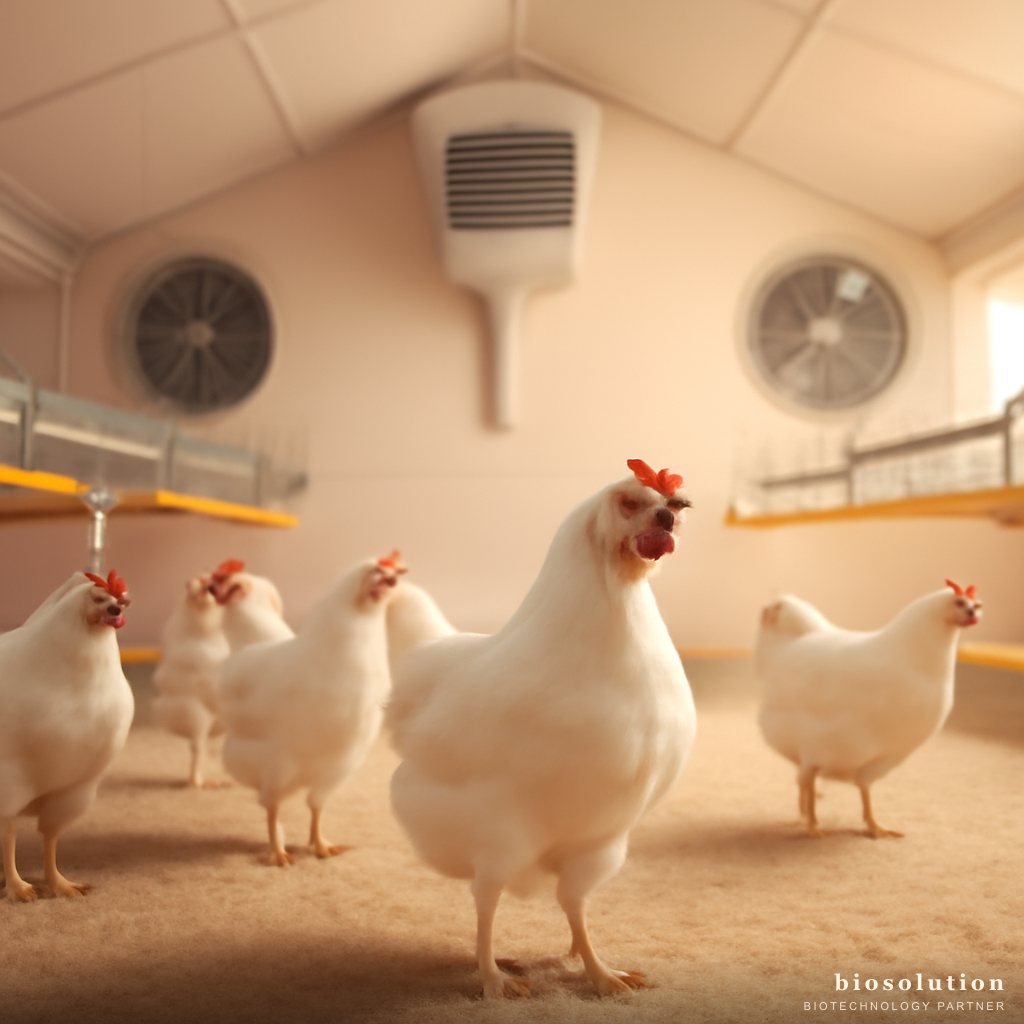
Probiotics are not a standalone solution. Without good coop management, the effectiveness of probiotics in reducing ammonia will be hindered. Factors such as population density, ventilation, and sanitation greatly influence outcomes.
Synergy of Probiotics with Coop Management
- Ventilation: Ensure smooth air circulation to expel already formed ammonia. Probiotics reduce ammonia production, but ventilation is still necessary.
- Density: Do not raise chickens too densely. The standard broiler density is 12-15 birds/m². Overcrowding increases manure accumulation and ammonia.
- Sanitation: Clean drinkers and feeders daily. Manure that accumulates on the floor will still produce ammonia even if probiotics are given. Litter must be kept dry.
- Litter: Use clean rice husks or sawdust. Wet litter accelerates ammonia formation.
By integrating probiotics into a good management system, you will achieve optimal results.
Why Biosolution's Formula Probiotik Ayam Pedaging Is Effective
This product is specifically designed for broilers with three superior strains: Lactobacillus acidophilus, Bacillus subtilis, and Bacillus coagulans. They work synergistically:
- Lactobacillus acidophilus lowers intestinal pH, inhibiting urease bacteria.
- Bacillus subtilis produces protease and amylase enzymes, improving protein digestion.
- Bacillus coagulans forms heat-resistant spores, stable in pelleted feed.
Performance test results show an 8–12% improvement in FCR, a 5–10% increase in ADG, and mortality below 3%. Additionally, this probiotic supports AGP-free (antibiotic-free) programs, resulting in residue-free chicken meat.
For maximum results, use together with Formula Probiotik Ayam Kampung if you also raise native chickens.
Conclusion
Reducing chicken coop ammonia smell with probiotics is a smart strategy, but it must be done correctly. Avoid five common mistakes: choosing strains without evidence, incorrect dosage, ignoring water/feed quality, inconsistency, and neglecting coop management. By using a quality product like Biosolution's Formula Probiotik Ayam Pedaging and applying the tips above, you can suppress ammonia, improve chicken performance, and create a healthier coop environment.
Want further consultation? Contact the Biosolution technical team via WhatsApp for dosage and schedule recommendations tailored to your coop conditions.
FAQ
1. How long does it take to see a reduction in ammonia smell after giving probiotics?
Generally, a reduction in ammonia smell is noticeable after 7–14 days of regular use. However, optimal results are usually achieved after 3–4 weeks. Consistency is crucial.
2. Can probiotics be given together with vaccination?
It is best to wait 2–3 days after vaccination before giving probiotics. This is to avoid interference with the immune response. However, probiotics can be given before vaccination to strengthen immunity.
3. How should probiotics be stored to keep them active?
Store in a cool, dry place away from direct sunlight. The ideal storage temperature is 15–25°C. Once opened, use within 30 days to maintain bacterial viability.
4. Are probiotics safe for sick chickens?
Probiotics are safe and even recommended to aid recovery. However, if chickens have severe diarrhea or systemic infection, consult a veterinarian first.
5. Can probiotics completely replace antibiotics?
Probiotics can reduce the need for antibiotics through competitive exclusion and immunomodulation. However, in cases of severe infection, antibiotics are still necessary. Probiotics serve as prevention and support, not a total replacement.