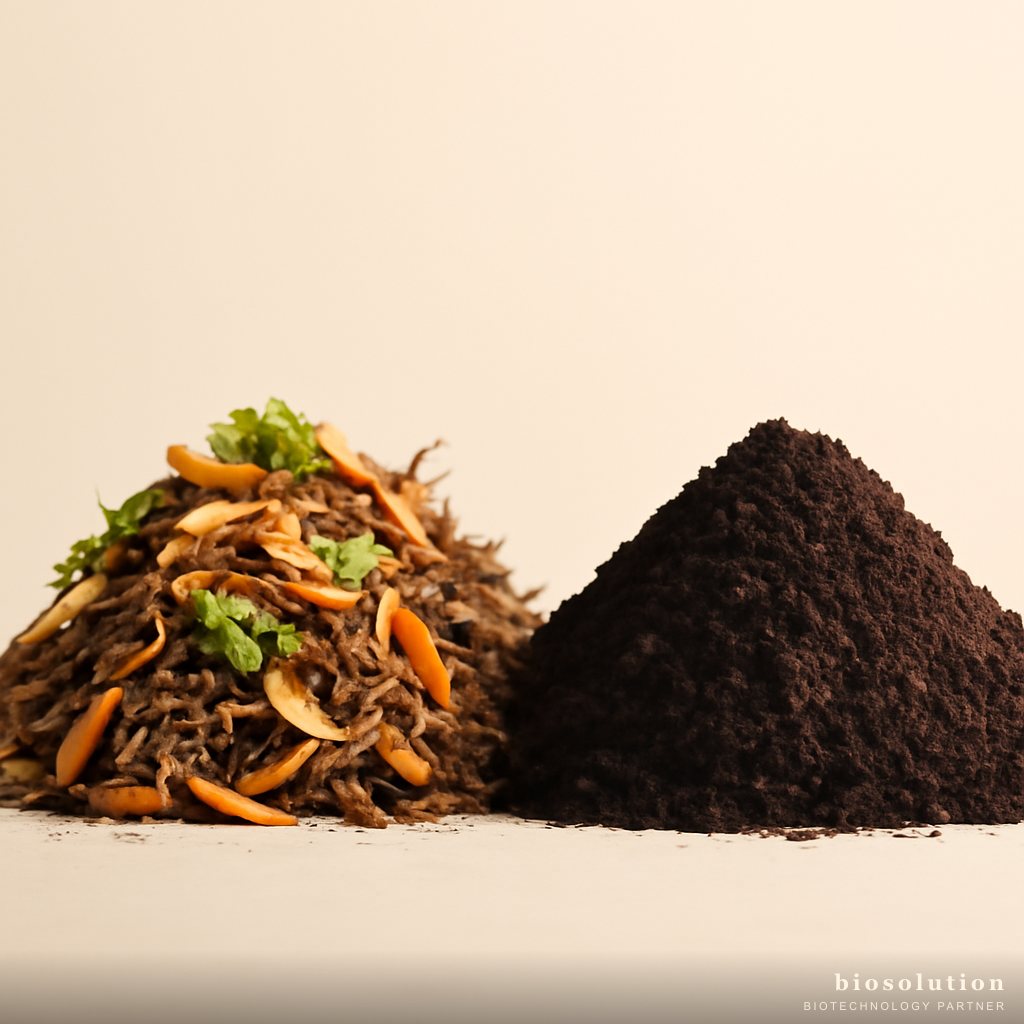
7 Common Mistakes When Using Rice Straw Decomposer (14 Days) – Avoid for Success
Rice straw is an abundant agricultural waste that often becomes a problem. Instead of burning it, which harms the environment, straw can be processed into high-quality compost in just 14–21 days using a rice straw decomposer. However, many farmers fail to achieve optimal results due to several common mistakes. This article will discuss 7 fatal mistakes to avoid for a successful acceleration of rice straw decomposition into compost in 14 days.
1. Not Chopping the Straw Before Application
One of the most basic mistakes is leaving the straw whole without chopping. Decomposer microbes such as Aspergillus niger and Trichoderma viride work more effectively on a larger surface area. Long, rigid straw is difficult for fungal mycelia to penetrate, slowing down the decomposition process.
Solution: Chop the straw into 5–10 cm pieces. This increases the surface area for microbial contact and accelerates cellulase enzyme penetration. As a result, composting time can be reduced by up to 50%. Use a chopping machine or sickle for maximum results.
2. Moisture Content Too Low or Too High
Microbes need water for metabolic activity. If the pile is too dry (<40%), microbes become dormant and decomposition stops. Conversely, if too wet (>70%), anaerobic conditions occur, causing foul odors and inhibiting the growth of aerobic fungi like Trichoderma viride.
Solution: Maintain moisture content at 50–60%. Signs: when a handful of straw is squeezed, a little water comes out (not dripping). If too dry, sprinkle with clean water. If too wet, turn the pile and add dry materials like rice husks.
3. Pile Size Not Ideal
Piles that are too small (<1 m³) lose heat too quickly, while those too large (>3 m³) are difficult to aerate. The optimal decomposition temperature is 40–60°C. If the temperature is not reached, thermophilic microbes remain inactive and the process slows down.
Solution: Create a pile with a minimum height of 1 meter and width of 1.5–2 meters. Length can be adjusted. Ensure the pile is large enough to retain heat but still easy to turn.
4. Incorrect Turning Frequency
Turning the pile is important to supply oxygen and even out temperature. However, turning too often (every day) disrupts fungal mycelial growth. Turning too infrequently leads to anaerobic zones.
Solution: Turn the pile every 5–7 days. This aligns with the application recommendation for Formula Dekomposer Jerami & Limbah Organik from Biosolution. With this schedule, microbes have enough time to colonize the substrate without oxygen deficiency.
5. Ignoring the C/N Ratio of Raw Materials
Rice straw has a high C/N ratio (60–80:1). Microbes need nitrogen for protein synthesis. If the C/N ratio is too high, decomposition slows due to nitrogen deficiency. Farmers often forget to add nitrogen sources.
Solution: Add nitrogen-rich materials such as chicken manure (1 part manure : 3 parts straw) or urea (0.5–1 kg per ton of straw). The ideal initial C/N ratio is 30–40:1. After 14–21 days, good rice straw compost has a C/N ratio <20.
6. Using a Decomposer with Incorrect Microbes
Not all straw decomposer products contain strong lignocellulolytic microbes. Many products only contain general bacteria that are ineffective against lignin. As a result, the straw does not decompose completely.
Solution: Choose a decomposer containing Aspergillus niger (producer of cellulase and organic acids) and Trichoderma viride (fast lignocellulose decomposer), such as those in Formula Dekomposer Jerami & Limbah Organik. This product also contains Thiobacillus sp. which helps lower pH and accelerate organic sulfur decomposition.
7. Applying Decomposer Too Late in the Afternoon
Decomposer microbes are sensitive to UV sunlight. If applied during the hot midday sun, most microbes die before they can work. Farmers often apply it carelessly at any time without considering the timing.
Solution: Apply the decomposer in the late afternoon (3:00–5:00 PM) when sunlight intensity decreases. This gives microbes time to adapt and start working at night. Cover the pile with plastic or tarpaulin to maintain moisture and protect from rain.
Conclusion
Accelerating rice straw decomposition into compost in 14 days is not impossible if you avoid the mistakes above. The keys to success are material preparation, moisture control, pile size, scheduled turning, balanced C/N ratio, selection of quality decomposer, and proper application timing. With Formula Dekomposer Jerami & Limbah Organik from Biosolution, you can obtain ready-to-use compost in 14–21 days with a C/N ratio <20. For further consultation, contact our team via WhatsApp at bit.ly/wsbiosolution.
FAQ
Is rice straw decomposer safe for the environment?
Yes, rice straw decomposer based on microbes such as Aspergillus niger and Trichoderma viride are natural microorganisms that are not harmful. This product actually reduces straw burning, which causes air pollution. The resulting compost is also safe for soil and plants.
What is the dosage of decomposer for 1 ton of straw?
The recommended dosage is 1 liter of decomposer for 1 ton of raw material. Mix with clean water (about 10–20 liters) and sprinkle evenly over the straw pile. One application per pile is sufficient.
Can the decomposer be used for other materials besides rice straw?
Certainly. This product is formulated for various organic wastes such as rice husks, corn cobs, livestock manure, and other harvest residues. The content of Trichoderma viride and Aspergillus niger can degrade lignocellulose from various sources.
Is it necessary to add chemical fertilizers to the pile?
Not mandatory, but adding nitrogen sources (chicken manure or urea) can speed up the process. However, if you only want to utilize straw alone, the decomposer still works, albeit slower. Ensure the initial C/N ratio is not too high.
How long until the straw compost is ready to use?
With proper application, rice straw compost can mature in 14–21 days. Characteristics of mature compost: dark brown color, crumbly texture, no odor, and pile temperature returns to room temperature.