Complete Guide to Managing Productive Peatland Without Burning: Causes, Symptoms, and Microbial Solutions
Peatland is often considered marginal land that is difficult to cultivate. However, with the right microbiological approach, productive peatland is no longer a dream. This article thoroughly discusses the causes of low productivity, symptoms that appear, and microbe-based solutions for managing peatland without burning. Discover how Biosolution's Oil Palm Biofertilizer Formula can be your key to success.
Why Is Peatland Often Unproductive?
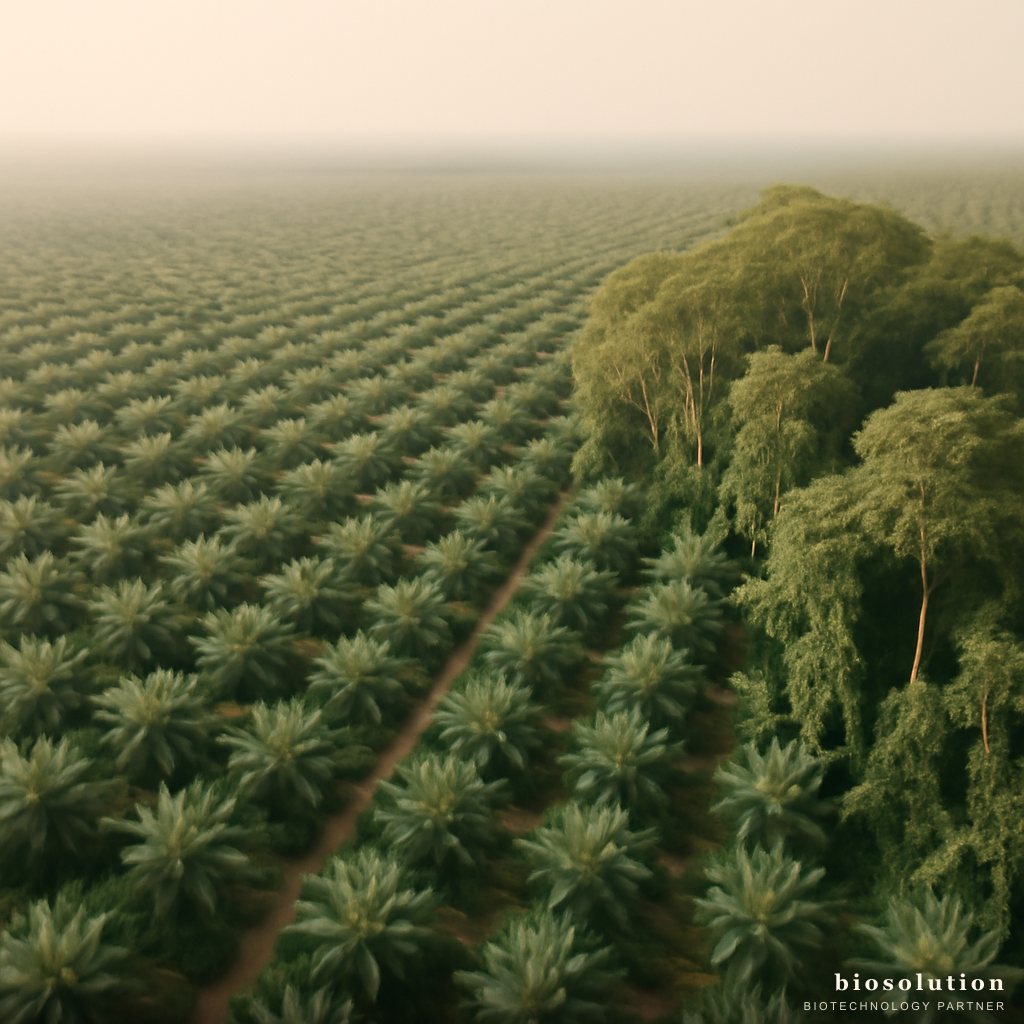
Peatland has unique characteristics: low pH, poor nutrients, and poor drainage. These conditions make it difficult for oil palm plants to absorb nutrients, making them susceptible to pathogens such as Ganoderma, and inhibiting growth. Burning peatland for land clearing actually damages the ecosystem and triggers prolonged fires. In fact, with proper microbial management, peatland can become sustainably productive.
Main Limiting Factors
- Acidic pH (3-4): Inhibits the availability of phosphorus and micronutrients.
- Low N content: Peat is poor in nitrogen due to slow decomposition.
- Soil-borne pathogens: Ganoderma boninense is a major threat.
- Excessive drainage: Causes subsidence and CO2 emissions.
Symptoms of Problematic Peatland in Oil Palm
Farmers often see the following symptoms without knowing the exact cause:
- Yellowing leaves, stunted growth.
- Stem rot at the base (symptom of Ganoderma).
- Drastic decline in FFB production.
- Soil easily waterlogged or too dry.
These symptoms indicate an imbalance in soil microbiology. Conventional solutions with chemical fertilizers are only temporary and actually worsen peat degradation.
Microbial Solution: Transforming Peatland into Productive Without Burning
The basic principle is to improve the soil microbial ecosystem. Biosolution presents the Oil Palm Biofertilizer Formula containing three superior microbes:
- Trichoderma harzianum: Biocontrol of the pathogenic fungus Ganoderma while stimulating root growth (PGPR).
- Azotobacter sp.: Fixes free nitrogen from the air, overcoming N deficiency in peat.
- Bacillus subtilis: Phosphate solubilizer and growth hormone producer, while suppressing pathogens.
Synergistic Mode of Action
These three microbes work synergistically: Azotobacter provides N, Bacillus solubilizes P, and Trichoderma protects roots from infection. As a result, peat soil becomes more fertile, aeration improves, and plants grow healthily.
Application of Biofertilizer for Oil Palm on Peat
The application method is very easy: drench the palm circle at a dose of 20 ml per tree every 3 months. Best time is morning or late afternoon to avoid direct UV light. Ensure the solution reaches the root zone.
Advantages Over Chemical Fertilizers
- Increases FFB production by 10–15% based on field trial data.
- Reduces Ganoderma attack thanks to Trichoderma.
- Improves peat soil quality biologically.
- Reduces chemical fertilizers by 30%, saving costs.
Case Study: Success of a Peatland Farmer in Riau
Mr. Ahmad, an oil palm farmer in Riau, manages 2 hectares of peatland. Before using biofertilizer, FFB production was only 12 tons/ha/year with 30% Ganoderma attack. After routine application of Oil Palm Biofertilizer Formula for 1 year, production increased to 14.5 tons/ha/year and Ganoderma attack dropped below 5%. "The soil became looser, roots increased, and I no longer need to burn," he said.
Conclusion
Productive peatland without burning is not a utopia. With microbial solutions like the Oil Palm Biofertilizer Formula, farmers can increase yields while protecting the environment. Start with small steps: routine application every 3 months. For further consultation, contact the Biosolution team via WhatsApp or see product details on the product page.