Biofertilizer for Bananas: Case Study of Javanese Farmers with Liquid 5-in-1 Formula
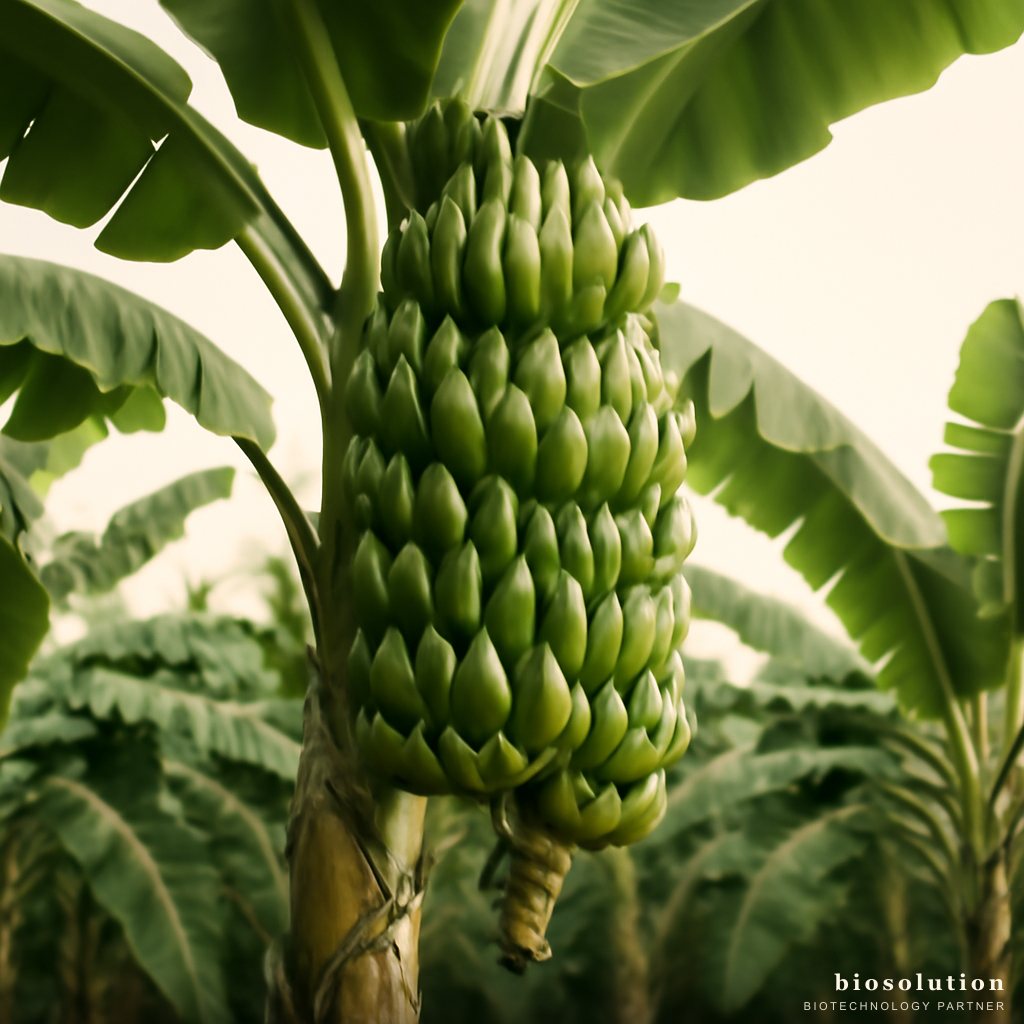
Bananas, both Cavendish and local varieties, are leading commodities in Indonesia. However, banana cultivation often faces challenges such as Fusarium wilt disease, increasingly compacted soil, and high chemical fertilizer costs. This is where biofertilizer for bananas becomes the right solution. This article presents a case study of farmers in Java who successfully overcame these obstacles using Biosolution's Liquid 5-in-1 Biofertilizer Formula. With a consortium of five superior microbial strains, this fertilizer not only enriches the soil but also significantly increases crop yields.
Why Do Bananas Need Biofertilizer?
Banana plants are known to be heavy feeders, especially of nitrogen, phosphorus, and potassium. In conventional systems, these needs are met with high doses of chemical fertilizers. However, continuous use leads to soil degradation, a decline in beneficial microbes, and an increase in soil-borne pathogens such as Fusarium oxysporum f. sp. cubense (Foc), which triggers Panama disease. Biofertilizers offer a sustainable approach by improving soil health biologically.
Biofertilizer for bananas works through several mechanisms: nitrogen fixation, phosphate solubilization, phytohormone production, and antagonism against pathogens. Thus, plants not only receive adequate nutrients but are also more stress-tolerant. Farmers in Java who switched to biofertilizer reported a reduction in chemical fertilizer use of up to 50% without decreasing yields. In fact, harvests increased by 20–30%.
Liquid 5-in-1 Biofertilizer Formula: Superior Microbial Consortium
The product used in this case study is the Liquid 5-in-1 Biofertilizer Formula, containing five microbial strains with specific roles:
- Rhizobium sp.: Symbiotic nitrogen fixer; although bananas are not legumes, its presence helps increase available N for surrounding plants through rhizosphere association.
- Bacillus subtilis: Phosphate solubilizer and plant growth promoter (PGPR). This bacterium produces organic acids that dissolve bound P, as well as the phytohormone IAA that stimulates root growth.
- Azospirillum sp.: Associative nitrogen fixer that lives around the roots of grasses and other plants, including bananas. Contributes up to 30% of plant N requirements.
- Pseudomonas fluorescens: Antagonist of soil-borne pathogens, produces siderophores that bind iron, causing pathogen iron deficiency. Effective against Fusarium and Pythium.
- Trichoderma sp.: Biocontrol fungus that decomposes organic matter and parasitizes pathogenic fungi. Also enhances systemic resistance in plants.
The combination of these five microbes in one product ensures synergy: N fixation, P solubilization, growth promotion, and disease control. Each strain has a minimum density of 10⁸ CFU/ml, guaranteeing field effectiveness.
How to Apply Biofertilizer to Bananas
Based on the experience of Javanese farmers, biofertilizer for bananas is applied by drenching the root zone. The recommended dosage is 5–10 ml per liter of water, applied every 10–14 days. Application frequency is 3–5 times per growing season, starting when the plant is 1 month old after planting. The best time is in the morning before 10 AM or in the afternoon after 4 PM, when temperatures are not too hot and microbes are still active.
Farmers also mix the biofertilizer with regular irrigation water and then drench it evenly around the base of the banana stem. For optimal results, the soil is kept moist but not waterlogged. Using organic mulch also helps maintain microbial populations.
Results Achieved by Javanese Farmers
Mr. Budi, a Cavendish banana farmer in East Java, manages a 2-hectare plot. Before using biofertilizer, he complained of Fusarium wilt attacks that killed 20% of his plants. Chemical fertilizer costs reached IDR 4 million per hectare per season. After switching to the Liquid 5-in-1 Biofertilizer Formula, he applied a dose of 7 ml/liter of water every 12 days. The results:
- Reduction in Fusarium attack: Only 2% of plants were infected, thanks to Trichoderma and Pseudomonas.
- Reduction in chemical fertilizer: From 500 kg NPK per hectare to 250 kg (down 50%).
- Increase in harvest: From 25 tons/ha to 32 tons/ha (up 28%).
- Fruit quality: Larger, more uniform, and sweeter taste.
Local banana farmers (Raja and Kepok varieties) in Central Java also experienced similar benefits. They reported faster sucker growth, greener leaves, and a shorter harvest period by about 2 weeks.
Advantages of Biofertilizer vs. Chemical Fertilizer
Biofertilizer for bananas offers several advantages over chemical fertilizers:
- Improves soil structure: Microbes produce polysaccharides that bind soil particles, enhancing aeration and drainage.
- Reduces environmental impact: Leaves no harmful chemical residues.
- Increases plant resistance: Plants are more tolerant to drought and pathogen attacks.
- Cost efficiency: Although initial price is comparable, reduced chemical fertilizer use and increased yields lower the cost per kg of fruit.
Simple comparison table:
| Aspect | Chemical Fertilizer | 5-in-1 Biofertilizer |
|---|---|---|
| Cost per hectare per season | IDR 4 million | IDR 2.5 million (including 50% chemical fertilizer) |
| Harvest yield | 25 tons/ha | 32 tons/ha |
| Soil health | Declining | Improving |
| Disease risk | High | Low |
Mechanism of Biofertilizer Action on Bananas
The working process of biofertilizer begins when applied to the soil. Microbes immediately colonize the rhizosphere and form biofilms. Here are the detailed mechanisms:
- N₂ fixation: Rhizobium and Azospirillum convert atmospheric nitrogen into ammonia that plants can absorb. In bananas, the contribution of N from biological fixation can reach 20-30%.
- Phosphate solubilization: Bacillus subtilis and Pseudomonas fluorescens produce organic acids (citric, malic) that dissolve bound P in the soil. Available phosphate increases 2-3 times.
- Phytohormone production: Bacillus and Azospirillum produce IAA (auxin), gibberellins, and cytokinins. IAA stimulates lateral root and root hair growth, increasing water and nutrient uptake.
- Pathogen antagonism: Trichoderma parasitizes the mycelium of Fusarium and Pythium, while Pseudomonas produces siderophores that suppress pathogen growth. This mechanism reduces wilt and root rot diseases.
Other Case Study: Local Bananas on Marginal Land
In the Gunung Kidul area, Yogyakarta, Kepok banana farmers faced critical soil with low pH and very low P content. After using the 5-in-1 biofertilizer, they saw changes within 2 months: greener leaves, sturdier stems. Soil analysis showed an increase in available P from 5 ppm to 18 ppm. Harvests increased from 15 tons/ha to 22 tons/ha.
Conclusion
Biofertilizer for bananas, especially the Liquid 5-in-1 Biofertilizer Formula, has proven effective in increasing the productivity of Cavendish and local bananas. The case study of Javanese farmers shows a 20-30% increase in yield, a 50% reduction in chemical fertilizer use, and a decrease in disease incidence. With a consortium of 5 superior microbes, this fertilizer not only enriches the soil but also maintains ecosystem balance. For farmers looking to transition to sustainable agriculture, biofertilizer is the right choice.
Interested in trying it? Consult your land needs with the Biosolution team via WhatsApp or see the product Liquid 5-in-1 Biofertilizer Formula for more information.