Biofertilizer for Bananas: Complete Nutrition Solution for Cavendish & Local Varieties
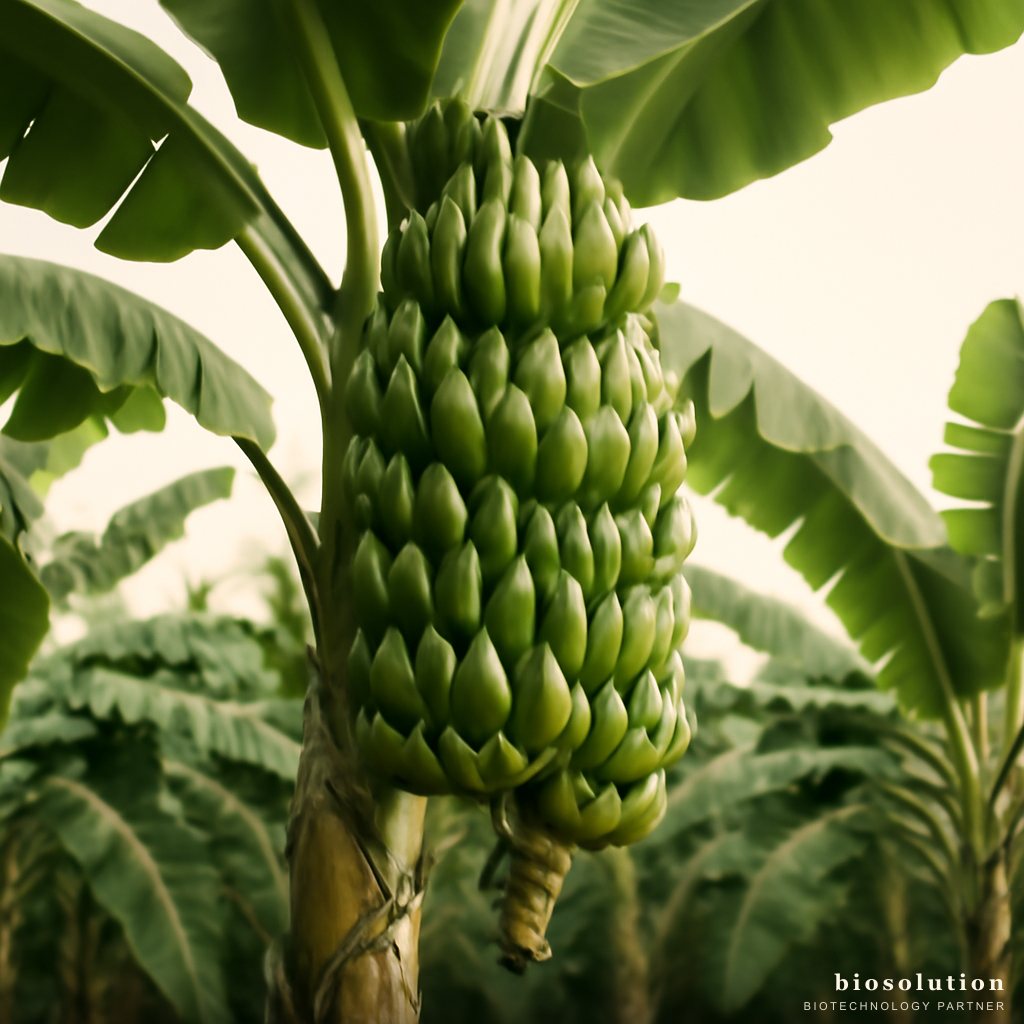
Biofertilizer for bananas is the right choice for farmers who want to increase the productivity of Cavendish and local bananas sustainably. By relying on a superior microbial consortium, biofertilizer not only provides nutrients but also improves soil and plant health. This article will thoroughly explore the role of microbes in regenerative agriculture and how Biosolution's 5-in-1 formula can be a complete nutrition solution for your banana plants.
Why Do Bananas Need Biofertilizer?
Bananas are nutrient-hungry plants, especially for nitrogen, potassium, and phosphorus. In conventional systems, these needs are met by synthetic chemical fertilizers that are expensive and potentially damage soil structure in the long term. This is where biofertilizer plays a role. By utilizing microbes such as Rhizobium sp., Azospirillum sp., and Bacillus subtilis, biofertilizer can fix nitrogen from the air, solubilize bound phosphate, and produce phytohormones that stimulate root growth.
In intensively monocultured Cavendish bananas, the risk of declining soil fertility and disease attacks such as Fusarium wilt (Panama disease) is higher. Regular use of biofertilizer can suppress soil-borne pathogens through antagonistic mechanisms possessed by Pseudomonas fluorescens and Trichoderma sp.. As a result, plants are healthier, fruit quality is better, and production costs can be reduced by up to 50%.
Superior Composition: 5 Microbial Strains in One Bottle
Biosolution's 5-in-1 biofertilizer formula is specifically designed to meet the nutritional needs of banana plants synergistically. Here are each strain and its role:
Rhizobium sp. – Symbiotic Nitrogen Fixer
Although bananas are not legumes, the formulated Rhizobium sp. can live associatively in the rhizosphere and contribute available nitrogen to the plant. In the consortium, it works with other microbes to increase N₂ fixation efficiency.
Bacillus subtilis – Phosphate Solubilizer & PGPR
Bacillus subtilis is known as a Plant Growth-Promoting Rhizobacteria (PGPR) that solubilizes bound phosphate in the soil into forms available to plants. Additionally, it produces IAA (auxin) hormone that stimulates root elongation, optimizing nutrient uptake.
Azospirillum sp. – Associative Nitrogen Fixer
Azospirillum sp. lives around banana roots and fixes atmospheric nitrogen non-symbiotically. This strain is very effective on gramineous plants but also contributes significantly to bananas, which have fibrous root systems.
Pseudomonas fluorescens – Soil Pathogen Biocontrol
One of the main advantages of this biofertilizer is its ability to suppress Fusarium wilt, a scourge for banana farmers. Pseudomonas fluorescens produces siderophores that bind iron, depriving pathogens of nutrients. It also produces natural antibiotics that inhibit the growth of pathogenic fungi.
Trichoderma sp. – Decomposer & Fungal Antagonist
Trichoderma sp. is a beneficial fungus that decomposes organic matter into humus while being antagonistic to Fusarium, Pythium, and Rhizoctonia. It grows quickly and surrounds pathogens, then releases enzymes that break down pathogen cell walls.
Mechanism of Action: Microbial Synergy for Complete Nutrition
The combination of the five strains works synergistically through several mechanisms:
- Nitrogen Fixation: Rhizobium and Azospirillum convert atmospheric N₂ into ammonia that is directly absorbed by roots.
- Phosphorus Solubilization: Bacillus and organic acids from other microbes solubilize bound P (Al-P, Fe-P, Ca-P) into phosphate ions.
- Phytohormone Production: IAA, gibberellins, and cytokinins from Bacillus and Pseudomonas stimulate lateral root and root hair growth.
- Pathogen Antagonism: Pseudomonas and Trichoderma suppress pathogen populations in the rhizosphere through competition, antibiosis, and parasitism.
- Organic Matter Decomposition: Trichoderma accelerates composting of plant residues, gradually releasing micro and macro nutrients.
Proper Application Method for Bananas
For maximum results, application of biofertilizer for bananas must be done correctly:
- Method: Drenching the root zone or spraying the soil around the stem.
- Dosage: 5–10 ml per liter of water, applied at 200–300 ml per mature plant.
- Frequency: Every 10–14 days, starting from 1 month after planting until before harvest. Perform 3–5 applications per growing season.
- Best Time: Morning before 10 AM or afternoon after 4 PM, when temperatures are not too hot and microbes are still active.
Ensure the soil is moist before application so that microbes colonize quickly. Avoid mixing with high-dose chemical fertilizers or synthetic fungicides simultaneously, as this can reduce microbial viability.
Regenerative Agriculture: Returning to Nature with Microbes
Biofertilizer is a main pillar of regenerative agriculture, which aims to restore soil health, water, and biodiversity. Unlike conventional agriculture that only pursues yield, regenerative agriculture rebuilds the soil ecosystem. With regular biofertilizer application, soil microbial populations increase, soil structure becomes loose, and nutrient cycles run naturally.
Bananas grown regeneratively show better resistance to drought and pest attacks. The resulting fruit also has a sweeter taste and stronger aroma due to the accumulation of secondary metabolites triggered by microbes. In several Cavendish banana centers in Lampung and East Java, farmers who switched to biofertilizer reported a reduction in chemical fertilizer costs of up to 50% and yield increases of 20–30%.
Real Results: Performance Data of the 5-in-1 Formula
Based on field and laboratory tests, Biosolution's 5-in-1 biofertilizer formula shows the following performance:
- Yield increase: +20–30% in bananas and other horticultural crops.
- Chemical fertilizer reduction: up to 50% without reducing fruit quality.
- Microbial density: 10⁸ CFU/ml for each strain, ensuring colonization effectiveness.
- Complete consortium: 5 strains in one bottle, easy to apply.
With this data, this biofertilizer becomes a complete plant nutrition solution that not only increases productivity but also maintains land sustainability.
Conclusion
Biofertilizer for Cavendish and local bananas is a long-term investment for farmers who want to increase yields while caring for the soil. Biosolution's 5-in-1 formula containing Rhizobium sp., Bacillus subtilis, Azospirillum sp., Pseudomonas fluorescens, and Trichoderma sp. provides complete nutrition, disease control, and supports regenerative agriculture. With proper application, you can experience the benefits yourself.
Interested in trying? Visit the Complete Plant Nutrition Formula product page for more information or direct consultation with our team via WhatsApp.
FAQ
1. Is this biofertilizer safe for Cavendish bananas that are sensitive to disease? Yes, very safe. In fact, the content of Pseudomonas fluorescens and Trichoderma sp. acts as a natural biocontrol that suppresses Fusarium pathogens and other soil-borne diseases. Regular use can significantly reduce the risk of disease attacks.
2. How many times should biofertilizer be applied to bananas in one growing season? It is recommended to apply 3–5 times per growing season with intervals of 10–14 days. Start the first application when the plant is 1 month old after planting, then repeat until near harvest. During the rainy season, frequency can be increased to maintain microbial populations.
3. Can biofertilizer be mixed with chemical fertilizers? It is best not to mix them directly in one tank because high-dose chemical fertilizers can kill microbes. However, you can apply them alternately with a 2–3 day gap. This combination is actually effective in reducing chemical fertilizer doses by up to 50%.
4. Is this biofertilizer suitable for local bananas such as kepok or raja? Of course. This formula is designed for all types of bananas, both Cavendish and local varieties. The microbes work universally in the banana rhizosphere, so the benefits are equally good for all cultivars.
5. How should biofertilizer be stored to keep microbes alive? Store in a cool, dry place, avoid direct sunlight. The ideal storage temperature is 10–25°C. Do not freeze. Opened bottles should be used within 1 month to maintain microbial viability.