Biofertilizer for Bananas: Microbial Solution to Boost Cavendish & Local Production
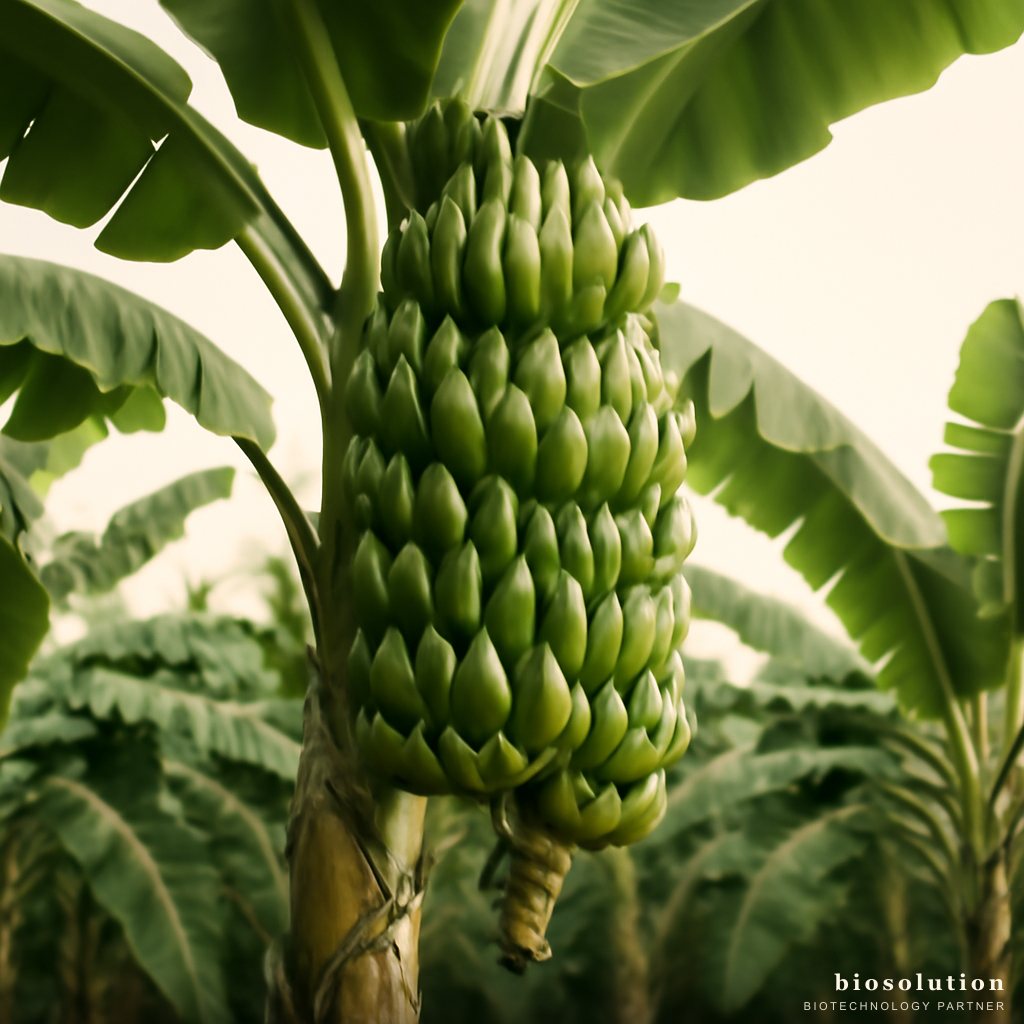
Bananas are a major horticultural commodity in Indonesia, both Cavendish bananas for export and local varieties such as Ambon, Raja, and Mas. However, farmers often face challenges of declining productivity due to soil-borne diseases, dependence on chemical fertilizers, and land degradation. Biofertilizer for bananas emerges as a microbiology-based solution that not only increases yields but also improves soil health sustainably. In this article, we will discuss in depth the causes of banana cultivation problems, symptoms that appear, and how a superior microbial consortium can be an effective answer for Cavendish and local farmers.
Why is Biofertilizer Important for Cavendish and Local Bananas?
Bananas have high nutrient requirements, especially nitrogen (N), phosphorus (P), and potassium (K). Unfortunately, synthetic chemical fertilizers are often used excessively, causing soil degradation, a decline in beneficial microbes, and pathogen resistance. On the other hand, bananas are susceptible to fusarium wilt (Panama disease) caused by Fusarium oxysporum f. sp. cubense, and bacterial wilt caused by Ralstonia solanacearum.
Biofertilizer for bananas offers an environmentally friendly approach by utilizing functional microbes. Products like the 5-in-1 Liquid Biofertilizer Formula from Biosolution contain a consortium of five synergistic microbial strains: Rhizobium sp., Bacillus subtilis, Azospirillum sp., Pseudomonas fluorescens, and Trichoderma sp.. Each has a specific role ranging from nitrogen fixation, phosphate solubilization, phytohormone production, to pathogen biocontrol. With regular application, farmers can reduce chemical fertilizers by up to 50% without decreasing yields, and even increase harvests by 20–30%.
Recognize the Causes and Symptoms of Problems in Banana Plants
Main Causes
- Soil-borne pathogens: Fusarium oxysporum and Ralstonia solanacearum persist in the soil and infect roots.
- Nutrient imbalance: Potassium deficiency causes small and easily rotten fruit, while nitrogen deficiency inhibits leaf growth.
- Improper cultivation practices: Continuous monoculture, poor drainage, and excessive use of chemical fertilizers suppress natural antagonistic microbial populations.
- Environmental stress: Drought or waterlogging weakens plant resistance.
Symptoms that Appear
- Yellowing leaves, wilting, and pseudostem rot (fusarium wilt symptoms).
- Small fruit, slow growth, and few suckers.
- Blackish-brown roots that do not develop.
- Productivity declines drastically from season to season.
Microbial Solution: Mechanism of the 5-Strain Consortium
The biofertilizer product for bananas from Biosolution works through several mechanisms simultaneously:
Nitrogen Fixation
Rhizobium sp. and Azospirillum sp. are able to fix atmospheric nitrogen into ammonia that can be absorbed by plants. Rhizobium symbioses with legume roots, but in bananas, Azospirillum lives in the rhizosphere and provides N associatively. This reduces the need for urea fertilizer by 30–50%.
Phosphate and Potassium Solubilization
Bacillus subtilis produces organic acids that solubilize bound phosphate in the soil, making P available to roots. Together with Pseudomonas fluorescens, these microbes also produce siderophores that bind iron, inhibiting pathogen growth.
Phytohormone Production
Bacillus subtilis and Pseudomonas fluorescens produce IAA (auxin), gibberellins, and cytokinins that stimulate root elongation, lateral root formation, and shoot growth. More and healthier roots improve nutrient and water uptake.
Pathogen Biocontrol
Trichoderma sp. is an antagonistic fungus that colonizes the rhizosphere and produces chitinase and glucanase enzymes that degrade the cell walls of Fusarium. Pseudomonas fluorescens produces antibiotics such as 2,4-diacetylphloroglucinol (DAPG) that are toxic to pathogens. Thus, the risk of fusarium wilt disease can be significantly suppressed.
Effective Application Methods of Biofertilizer on Bananas
For optimal results, follow these application guidelines:
Timing and Method
- Drenching to the root zone: Mix 5–10 ml of product per liter of water, then drench 200–300 ml per seedling or mature tree. Apply in the morning (before 10 AM) or afternoon (after 4 PM) to avoid UV rays that kill microbes.
- Frequency: Repeat every 10–14 days, 3–5 times per growing season. First application at planting, second during active vegetative phase, third at early flowering, and so on.
- Combination with chemical fertilizers: Gradually reduce the dose of chemical fertilizers. For example, if you usually use 200 kg urea/ha, reduce to 100 kg urea/ha and add biofertilizer. Monitor plant growth.
Additional Tips
- Ensure the soil is moist before application so microbes can move easily.
- Do not mix with chemical fungicides at the same time; allow at least 3 days interval.
- For land already infected with Fusarium, apply more intensively (every 7 days) for the first 2 weeks.
Performance Data and Real Benefits in the Field
The 5-in-1 Liquid Biofertilizer Formula product has been tested on various crops, including bananas. Here is its performance data:
- Yield increase: +20–30% compared to control without biofertilizer.
- Chemical fertilizer reduction: −50% without reducing fruit quality.
- Microbial content: 10⁸ CFU/ml per strain, so effective even at low doses.
- 5-strain consortium: Provides a more stable synergistic effect compared to single inoculants.
Cavendish banana farmers in Lampung reported a decrease in fusarium wilt attacks by up to 60% after 3 seasons of regular application, and an increase in average bunch weight of 2 kg per tree. For local bananas, yields increased by 25% with more uniform fruit size.
Conclusion
Biofertilizer for Cavendish and local bananas is a smart solution to increase productivity while maintaining land sustainability. With a microbial consortium such as Bacillus subtilis, Pseudomonas fluorescens, and Trichoderma sp., farmers not only suppress diseases but also significantly reduce chemical fertilizer costs. The 5-in-1 Liquid Biofertilizer Formula product from Biosolution is ready to be your partner in healthier and more profitable banana farming.
Interested in trying? Consult your land needs with our team via WhatsApp for appropriate dosage and application schedule recommendations. See the Complete Plant Nutrition Formula product for more information. Also read the article on the benefits of biofertilizer on bananas for field case studies.
FAQ
What is biofertilizer for bananas?
Biofertilizer is a live microbial inoculant applied to soil or plants to improve nutrient availability, stimulate growth, and suppress pathogens. For bananas, biofertilizer contains nitrogen-fixing bacteria, phosphate solubilizers, and antagonistic fungi such as Trichoderma.
Can biofertilizer completely replace chemical fertilizers?
Not completely, but it can reduce the dose of chemical fertilizers by up to 50% without decreasing yields. Biofertilizer provides nutrients gradually and improves soil properties, making plants more efficient in nutrient uptake.
How to correctly apply biofertilizer on bananas?
Mix 5–10 ml of product per liter of water, drench to the root zone every 10–14 days. Apply in the morning or afternoon. Avoid mixing with chemical fungicides simultaneously.
How long does it take to see the effects of biofertilizer?
Improvement in root and leaf growth is usually visible within 2–3 weeks after the first application. Yield increase will be noticeable in the next harvest season, especially if applied regularly.
Is biofertilizer safe for the environment?
Very safe. The microbes used are natural non-pathogenic strains isolated from agricultural soil. Biofertilizer leaves no chemical residues and supports soil biodiversity.