Biofertilizer for Cocoa: 2 Complete Plant Nutrient Formulas for More and Healthier Pods
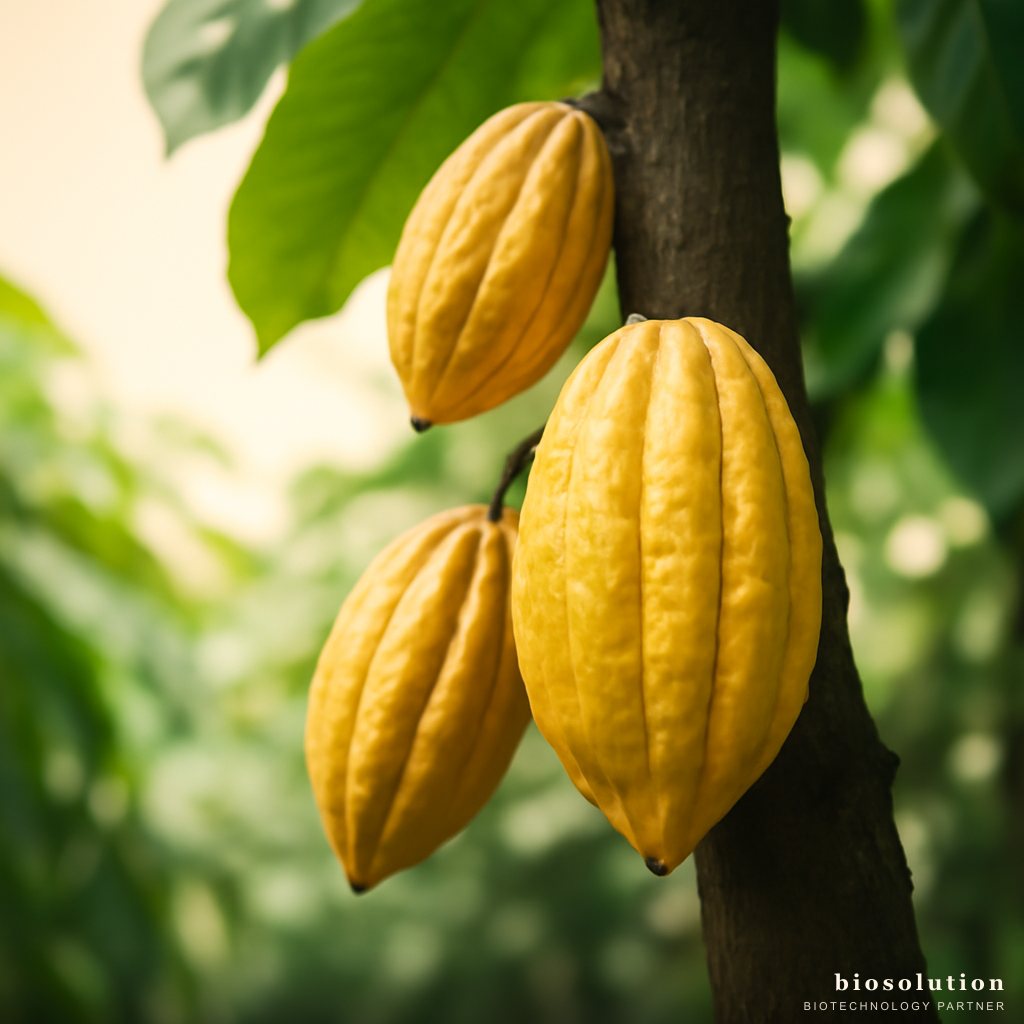
Cocoa (Theobroma cacao) is a plantation commodity highly dependent on soil nutrient balance and rhizosphere microbiome health. Many farmers face problems of few, small, or fruit rot-affected pods. Biofertilizer for cocoa offers a sustainable solution by utilizing beneficial microorganisms to enhance nutrient availability, stimulate root growth, and suppress pathogens. In this article, we review a case study of Javanese farmers who successfully overcame these constraints using the 5-in-1 Liquid Biofertilizer Formula from Biosolution, a consortium of five superior microbial strains.
Why Does Cocoa Need Biofertilizer?
Cocoa plants are nutrient-hungry, especially nitrogen (N), phosphorus (P), potassium (K), and micronutrients like zinc (Zn) and boron (B). However, continuous use of chemical fertilizers can damage soil structure, reduce beneficial microbial populations, and increase dependency. Biofertilizers act as bioremediation agents and biofertilizers that work naturally.
Role of Microbes in the Cocoa Rhizosphere
Around cocoa roots, there is a complex microbial ecosystem. Nitrogen-fixing bacteria such as Rhizobium sp. and Azospirillum sp. fix atmospheric nitrogen into ammonia that plants can absorb. Phosphate-solubilizing bacteria like Bacillus subtilis convert bound phosphate into available forms. Meanwhile, Pseudomonas fluorescens and Trichoderma sp. act as biocontrol agents that protect roots from soil-borne pathogens such as Phytophthora palmivora, the cause of cocoa pod rot.
Without the support of these microbes, cocoa roots struggle to absorb nutrients even when large amounts of chemical fertilizers are applied. As a result, the pods produced are few and disease-prone.
5-in-1 Liquid Biofertilizer Formula: Superior Microbial Consortium
Biosolution developed the 5-in-1 Liquid Biofertilizer Formula containing five microbial strains with specific roles. This product is formulated for all types of plants, including cocoa, at a dose of 5–10 ml per liter of water, applied every 10–14 days for 3–5 times per growing season. Here is the complete composition:
| Microbial Strain | Main Role |
|---|---|
| Rhizobium sp. | Symbiotic N₂ fixation for legumes and related plants |
| Bacillus subtilis | Phosphate solubilizer and root growth promoter (PGPR) |
| Azospirillum sp. | Associative N₂ fixation in grasses |
| Pseudomonas fluorescens | Antagonist of soil-borne pathogens, siderophore producer |
| Trichoderma sp. | Biocontrol of soil fungi and organic matter decomposer |
Mechanism of Consortium Action
The five strains work synergistically through several mechanisms:
- Nitrogen fixation: Rhizobium and Azospirillum provide a stable N supply.
- Phosphate solubilization: Bacillus and organic acids from other microbes dissolve bound P.
- Phytohormone production: Bacillus produces IAA and gibberellins that stimulate lateral root growth.
- Pathogen antagonism: Pseudomonas and Trichoderma produce antimicrobial compounds and siderophores that inhibit Fusarium, Pythium, and Phytophthora.
With this consortium, cocoa plants receive complete nutrition and natural protection.
Case Study: Javanese Farmer Increases Cocoa Production by 30%
Mr. Sutrisno, a cocoa farmer in Trenggalek Regency, East Java, owns 2 hectares of 5-year-old cocoa plants. Before using biofertilizer, pod production was only about 800 kg per hectare per year, with many pods affected by pod rot. He routinely used NPK 15-15-15 fertilizer at 300 kg/ha per year, but results did not improve.
In early 2025, he began applying the 5-in-1 Liquid Biofertilizer Formula by drenching the root zone at a dose of 10 ml per liter of water every 14 days for 5 applications. He also reduced chemical fertilizer to 150 kg/ha (a 50% reduction). The results?
Increase in Pod Count
After 3 months, the number of pods per tree increased from an average of 25 to 40. Pods were also larger and more uniform. At the main harvest, production reached 1,100 kg per hectare, a 37.5% increase compared to before.
Decrease in Disease Incidence
Pod rot (Phytophthora) incidence dropped drastically from 20% to only 5%. Trichoderma and Pseudomonas in the consortium effectively suppressed pathogens in the soil and on pods.
Soil Structure Improvement
After 6 months, the soil became looser and rich in earthworms. Soil analysis showed increased organic carbon content and microbial populations.
Mr. Sutrisno is satisfied and now recommends this biofertilizer to other farmers in his farmer group.
Proper Application of Biofertilizer for Cocoa
For optimal results, follow these application guidelines:
Application Timing
- Apply in the morning before 10 AM or in the afternoon after 4 PM to avoid UV rays that can kill microbes.
- First application at the start of the rainy season, then repeat every 10–14 days.
Application Method
- Drenching: Mix 5–10 ml of product per liter of water, drench 200–300 ml per tree around the root zone.
- Soil spray: For large areas, spray the solution onto the soil surface in the root zone.
Dosage and Frequency
- Dosage: 5–10 ml per liter of water.
- Frequency: 3–5 times per growing season (every 10–14 days).
- For mature cocoa trees, use a higher dose (10 ml/L) at the first application.
Additional Tips
- Do not mix biofertilizer with chemical pesticides or fungicides at the same time. Allow a minimum of 3 days interval.
- Store the product in a cool, dark place. Avoid direct sunlight.
Advantages of Biofertilizer Over Conventional Chemical Fertilizer
| Aspect | Chemical Fertilizer | Biofertilizer |
|---|---|---|
| Nutrient content | Only N, P, K | Nutrients + microbes + phytohormones |
| Soil impact | Acidic, hard, poor in microbes | Loose, fertile, rich in microbes |
| Dependency | High, needs continuous application | Decreasing, as microbes are self-sustaining |
| Long-term results | Declining | Continuously increasing |
| Cost | Expensive | Cheaper (can reduce chemical fertilizer by 50%) |
With biofertilizer, farmers not only save costs but also maintain land sustainability.
Conclusion
Biofertilizer for cocoa, especially the 5-in-1 Liquid Biofertilizer Formula, has been proven to increase pod count by up to 30% and suppress disease incidence. The case study of Javanese farmers shows that application of the microbial consortium Rhizobium, Bacillus, Azospirillum, Pseudomonas, and Trichoderma yields tangible results: more harvest, healthier plants, and more fertile soil. If you want to try this solution, consult with the Biosolution team via WhatsApp to get the right dosage recommendation for your field conditions. See product details 5-in-1 Liquid Biofertilizer Formula for more information.
FAQ
1. Is biofertilizer safe for cocoa plants?
Yes, biofertilizer is very safe because it uses natural microbes that are not pathogenic. This product has been tested and leaves no harmful residues on the fruit. In fact, microbes help increase plant resistance to disease.
2. How many times should biofertilizer be applied in one season?
For cocoa, it is recommended to apply 3–5 times per growing season with an interval of 10–14 days. The first application is done at the start of the rainy season to maximize vegetative growth and fruit set.
3. Can biofertilizer be mixed with chemical fertilizer?
Yes, but it is not recommended to mix them directly in the same tank. Allow a minimum of 3 days interval between chemical fertilizer and biofertilizer applications so that microbes are not affected by the salts or extreme pH of chemical fertilizers.
4. How should biofertilizer be stored properly?
Store in a cool, dark place at 15–25°C. Avoid direct sunlight and extreme temperatures. Keep tightly closed after use. The product can last up to 6 months if stored properly.
5. Can biofertilizer overcome cocoa pod rot disease?
Biofertilizer does not directly kill pathogens, but antagonistic microbes such as Trichoderma and Pseudomonas suppress the growth of Phytophthora fungi in the soil and on fruit surfaces. Combining with garden sanitation and pruning will be more effective in controlling the disease.