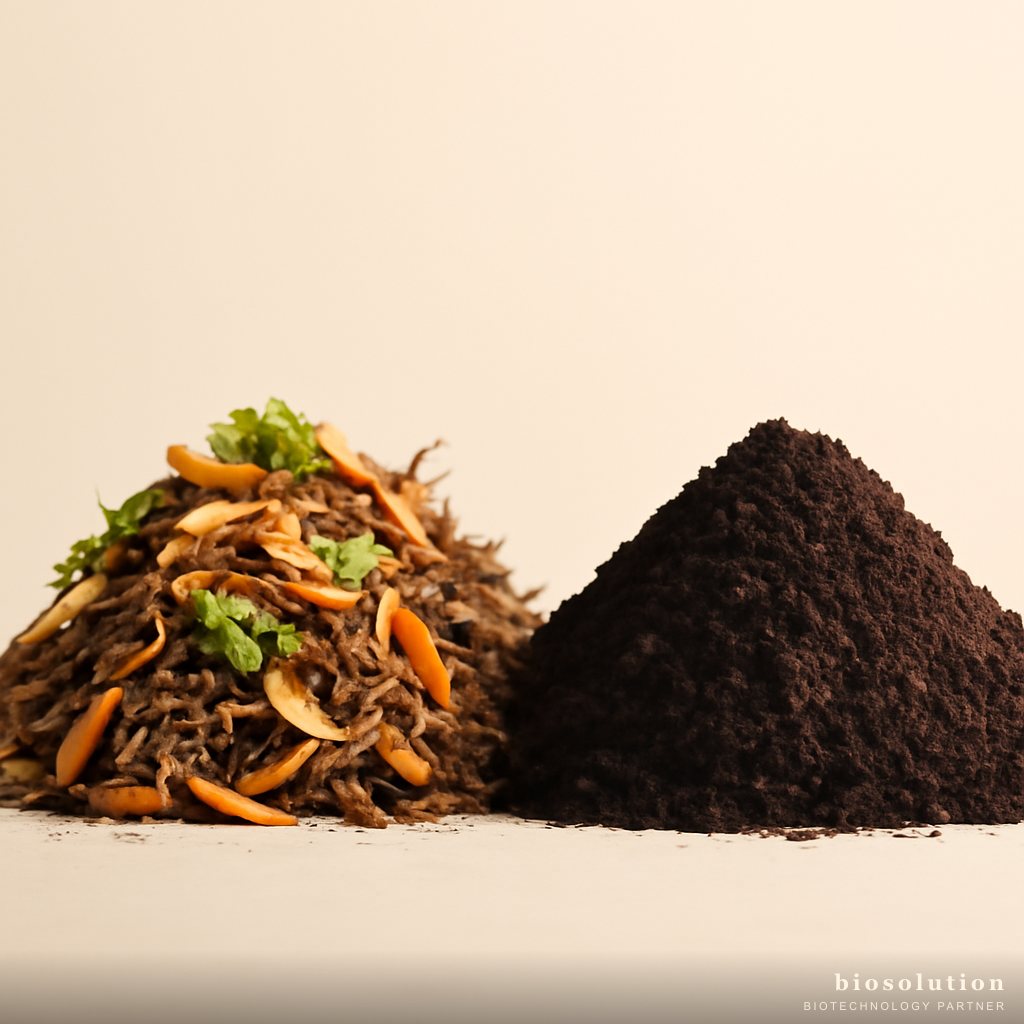
Biofertilizer for Indonesian Organic Certification
Organic farming in Indonesia is increasingly popular among both farmers and health-conscious consumers. However, the main challenge is meeting strict organic certification standards, especially regarding fertilizer inputs and pest control. This is where organic farming biofertilizer plays a role as a natural solution that not only meets certification requirements but also supports regenerative agriculture. Biofertilizer, or biological fertilizer, contains living microbes that help plants absorb nutrients, improve soil structure, and suppress diseases. This article will answer common questions about biofertilizer for organic certification and the role of microbes in sustainable farming systems.
What Is Biofertilizer and Why Is It Important for Organic Certification?
Biofertilizer is a product containing living microorganisms beneficial to plants. Unlike chemical fertilizers, biofertilizer works biologically by utilizing the natural abilities of microbes such as nitrogen fixation, phosphate solubilization, and growth hormone production. In the context of Indonesian organic certification, biofertilizer is an allowed input because it leaves no harmful chemical residues. The SNI 6729:2016 standard on Organic Farming Systems requires the use of natural inputs, and biofertilizer falls into that category. By using biofertilizer, farmers can reduce dependence on synthetic chemical fertilizers, which is an important step toward regenerative agriculture that restores soil ecosystems.
The Role of Microbes in Organic Certification
Microbes such as Rhizobium sp., Bacillus subtilis, and Trichoderma sp. have specific roles that support organic farming. Rhizobium sp. fixes nitrogen from the air for leguminous plants, reducing the need for N fertilizer. Bacillus subtilis solubilizes phosphate bound in the soil, making phosphorus available to plants. Trichoderma sp. acts as a biocontrol agent that suppresses soil-borne fungal pathogens. By using a microbial consortium like that found in 5-in-1 Liquid Biofertilizer Formula, farmers can meet plant nutrient needs naturally and fulfill organic certification requirements.
How Does Biofertilizer Support Regenerative Agriculture?
Regenerative agriculture aims to restore soil health, increase biodiversity, and sequester carbon. Biofertilizer is an important tool in this system because the microbes it contains improve soil structure, increase organic matter, and trigger natural nutrient cycles. For example, Azospirillum sp. found in Biosolution's formula helps fix nitrogen in gramineous plants like rice and corn, while Pseudomonas fluorescens produces siderophores that bind iron and inhibit pathogens. With regular application, the soil becomes looser, better aerated, and with increased water holding capacity. This aligns with the principles of regenerative agriculture, which not only maintains but also improves natural resources.
Microbial Mechanisms in Soil Improvement
Microbes in biofertilizer work through several mechanisms: nitrogen fixation, phosphate solubilization, phytohormone production (IAA, gibberellins), and pathogen antagonism. Bacillus subtilis and Trichoderma sp. also produce enzymes that decompose organic matter, accelerating humus formation. Thus, biofertilizer not only fertilizes plants but also regenerates soil damaged by excessive chemical fertilizer use. For optimal results, application is done every 10–14 days at a dose of 5–10 ml per liter of water, as recommended for the Economical Biofertilizer Formula suitable for aid programs.
Is Biofertilizer Effective for All Types of Plants?
Yes, biofertilizer can be used for various plants, from rice, corn, vegetables, to fruits. However, its effectiveness depends on the compatibility of microbial strains with the plant. The 5-strain consortium in Biosolution's product is designed for a broad spectrum: Rhizobium sp. for legumes, Azospirillum sp. for grasses, and others for general crops. Research shows a 20–30% increase in yields for rice and corn, and a reduction of chemical fertilizers by up to 50% without yield loss. This data is supported by field trials published in university journals (e.g., Indonesian Journal of Agricultural Science).
Case Study: Organic Rice with Biofertilizer
A farmer in West Java applied biofertilizer to organic rice and reported a 60% reduction in urea use and a 25% increase in grain yield. Azospirillum sp. microbes helped fix nitrogen, while Bacillus subtilis solubilized phosphate from manure. Plants were greener, roots longer, and disease incidence decreased. This proves that organic farming biofertilizer can gradually replace the role of chemical fertilizers.
How to Choose the Right Biofertilizer for Certification?
To meet organic certification standards, choose a biofertilizer registered with the Ministry of Agriculture and bearing an organic label. Ensure the product contains clear microbial strains, no synthetic chemicals, and a minimum concentration of 10⁸ CFU/ml per strain. Biosolution provides products with 5 strains in one bottle, each with a density of 10⁸ CFU/ml, making it effective and efficient. Also, consider the application method: drenching the root zone or soil spraying in the morning or evening to avoid UV rays that can kill microbes.
Checklist Before Buying
- Check the distribution permit and registration number.
- Ensure the microbial composition matches the target crop.
- Pay attention to the expiration date and storage (avoid extreme temperatures).
- Read application instructions: dose 5–10 ml/liter of water, frequency 10–14 days.
Conclusion
Organic farming biofertilizer is the right solution for farmers seeking organic certification and transitioning to regenerative agriculture. With a microbial consortium like Rhizobium sp., Bacillus subtilis, and Trichoderma sp., farmers can reduce chemical fertilizers by up to 50%, increase crop yields by 20–30%, and improve soil health. Biosolution products, such as 5-in-1 Liquid Biofertilizer Formula, have proven effective and safe for various crops. If you want to start organic farming or increase land productivity, consult your needs with Biosolution's expert team via WhatsApp. Get proper application guidance according to your land conditions.
FAQ
1. Can biofertilizer completely replace chemical fertilizers?
Biofertilizer can reduce chemical fertilizer use by up to 50% without yield loss, especially when combined with organic fertilizers like compost. For some crops, total replacement may require gradual adjustment. The microbial consortium in biofertilizer provides essential nutrients through biological mechanisms, so dependence on chemical fertilizers can be significantly reduced.
2. How should biofertilizer be stored to keep microbes alive?
Store biofertilizer in a cool, dry place at 4–30°C, away from direct sunlight. Do not freeze. Ensure the cap is tightly closed after use. Shelf life is typically 6–12 months if stored properly. Check the expiration date before application.
3. Is biofertilizer safe for the environment and humans?
Yes, biofertilizer contains natural microbes that are not harmful to humans, animals, or the environment. Biosolution products have been tested and contain no harmful pathogens. In fact, biofertilizer helps reduce pollution from chemical fertilizers and supports soil biodiversity.
4. How long does it take to see the effects of biofertilizer on plants?
Initial effects such as increased root growth and greener leaves are usually visible within 1–2 weeks after application. Yield improvement is seen at the end of the growing season. For optimal results, regular application every 10–14 days for 3–5 times per season is highly recommended.
5. Can biofertilizer be used together with chemical pesticides?
It is best to avoid mixing biofertilizer with chemical pesticides, fungicides, or bactericides as they can kill the microbes. If necessary, apply biofertilizer first and wait 3–5 days before using pesticides. For organic farming, use compatible botanical pesticides.