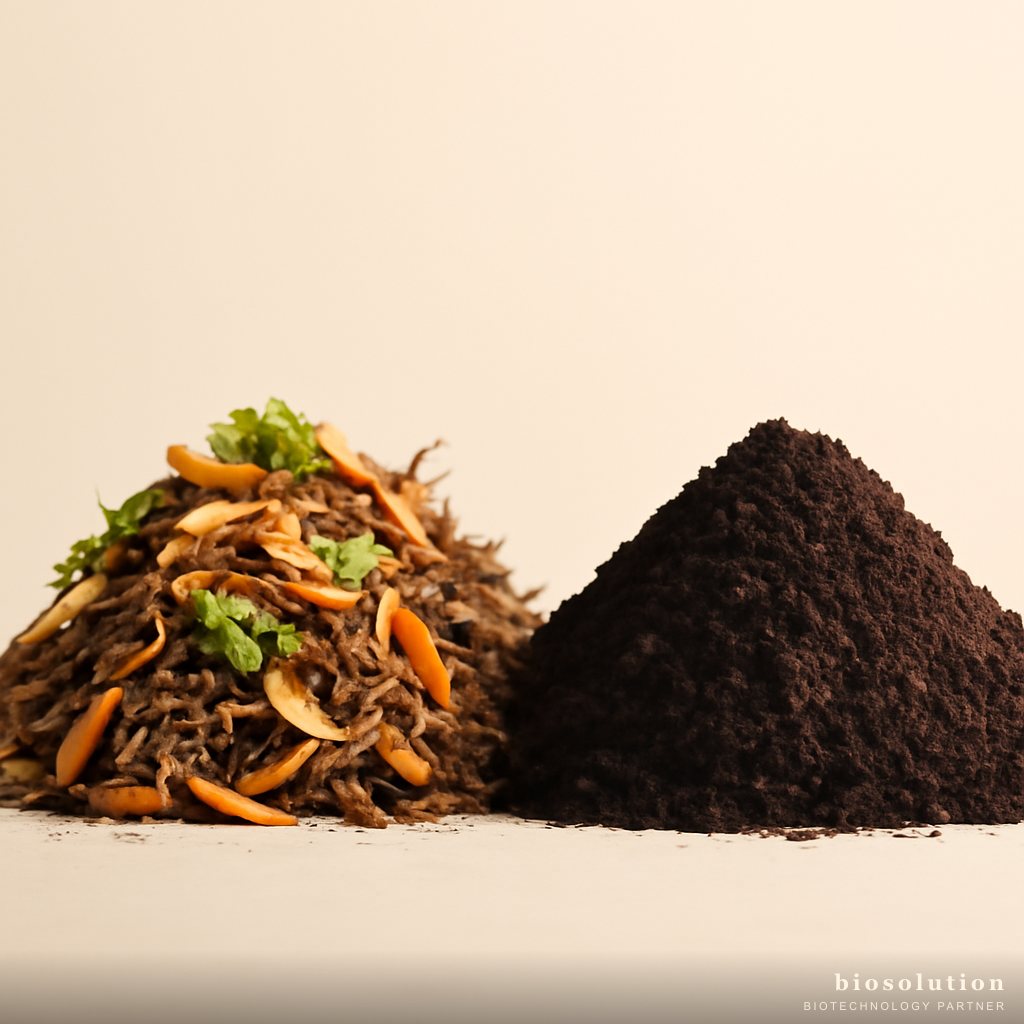
Biofertilizer for Tubers: 7 Common Mistakes in the Tuberization Phase
Biofertilizer for tubers is a mainstay for modern farmers who want to increase yields of potatoes, sweet potatoes, and shallots organically. However, many fail to obtain large, dense tubers due to technical errors during application. The tuberization phase is a critical period where plants need the right nutrients and growth hormones. This article reveals seven common mistakes in using biofertilizer during tuberization and how Biosolution's POC Formula for Tuber Quality can help you achieve optimal harvests.
Mistake 1: Applying Biofertilizer Too Early or Too Late
Why Application Timing is Crucial
The tuberization phase begins when the plant enters the generative stage, usually 30–45 days after planting depending on the variety. Many farmers apply biofertilizer too early (vegetative phase) so nutrients are wasted on leaf growth rather than tubers. Conversely, late application prevents tubers from reaching maximum size. Biofertilizer for tubers must be applied precisely when tuber initiation begins, i.e., when the plant starts forming stolons or mini tubers.
Solution from Biosolution
The POC Formula for Tuber Quality is designed with a PGPR consortium that triggers growth hormones and micronutrient availability. Apply every 7–10 days from the start of tuberization, at a dose of 3–5 ml per liter of water. Spray in the morning before 10 AM for optimal absorption. With proper timing, yield per plant increases by 15–25%.
Mistake 2: Incorrect Biofertilizer Dosage
Risks of Overdose and Underdose
Farmers often assume more biofertilizer is better. However, overdosing the PGPR consortium can cause soil microbial imbalance and even inhibit tuber formation. Conversely, too low a dose provides no significant effect. Biofertilizer for tubers requires precise dosage based on microbial concentration and plant needs.
Proven Dosage Recommendation
Based on field trials, a dose of 3–5 ml per liter of water for foliar spray or drench is optimal. The POC Formula for Tuber Quality contains seaweed extract as a natural source of cytokinins and humic-fulvic acids as nutrient carriers. With the right dose, flower/fruit drop is reduced by up to 30% and tubers are more uniform in size.
Mistake 3: Ignoring Environmental Conditions
Factors of Temperature, Humidity, and Light
Microbes in biofertilizer are very sensitive to the environment. Temperatures above 35°C or below 15°C can reduce PGPR viability. Low humidity also kills microbes before they can work. Many farmers spray during the hot midday sun, causing the biofertilizer to evaporate and become ineffective.
Best Application Practices
Apply biofertilizer for tubers in the morning (before 10 AM) or late afternoon (after 4 PM) when temperatures are cooler. Ensure the soil is moist but not waterlogged. The POC Formula for Tuber Quality is formulated to keep microbes stable under various conditions, but always follow application timing guidelines for maximum results.
Mistake 4: Ignoring Water Quality for Dilution
Chlorinated Water Kills Microbes
Tap or well water with high chlorine content can kill microbes in biofertilizer. Farmers often mix biofertilizer directly with water without letting it sit first. As a result, millions of PGPR bacteria die before being sprayed.
How to Prepare Water Correctly
Use clean water that has been left to stand for 24 hours, or rainwater. If you must use well water, leave it open overnight to allow chlorine to evaporate. Mix the POC Formula for Tuber Quality with water according to the dosage, then stir gently. Do not use hot water or water containing pesticides, as these can damage the PGPR consortium.
Mistake 5: Not Combining with Other Nutrients
Macro and Micronutrient Needs
Biofertilizer for tubers provides microbes and hormones but does not replace macronutrients like N, P, K. Many farmers rely solely on biofertilizer without basal fertilizer, so plants lack nutrients for tuber formation. Conversely, excess nitrogen stimulates leaf growth and inhibits tuberization.
Integrated Fertilization Strategy
Use a basal fertilizer with a high P and K ratio at planting. During tuberization, reduce nitrogen and increase potassium. The POC Formula for Tuber Quality contains humic and fulvic acids that aid nutrient absorption, making macronutrients more efficient. Combine with liquid organic fertilizer for optimal results.
Mistake 6: Inconsistent Application Frequency
Importance of Regular Application
PGPR microbes work gradually. Applying once or twice is not enough to maintain microbial populations in the rhizosphere. Farmers often stop after seeing tubers begin to form, but the tuber enlargement phase requires a continuous supply of hormones.
Recommended Application Schedule
Applying every 7–10 days during the tuberization phase (usually 4–6 applications) yields the best results. The POC Formula for Tuber Quality is easy to apply via foliar spray, so it is not troublesome. With consistency, tuber weight per plant increases significantly and harvest quality is more uniform.
Mistake 7: Not Monitoring Plant Signs
Indicators of Application Success
Farmers often fail to read plant responses. Yellowing leaves, slow growth, or small tubers may indicate that the biofertilizer is not working optimally. This could be due to the mistakes above, or extreme soil conditions (pH too acidic/alkaline).
How to Monitor and Correct
Conduct a simple soil test to determine pH and organic matter content. If pH is below 5.5 or above 7.5, PGPR microbes struggle to thrive. Use dolomite lime to raise pH or sulfur to lower it. Also observe the presence of earthworms as an indicator of soil health. With regular monitoring, you can adjust the dosage and frequency of biofertilizer for tubers.
Why Biosolution's POC Formula for Tuber Quality is the Right Solution?
After understanding the seven mistakes above, you may wonder: what product can solve all these problems? Biosolution's POC Formula for Tuber Quality is the answer. This product contains a PGPR consortium that triggers growth hormones, seaweed extract rich in cytokinins, and humic and fulvic acids as nutrient carriers. With a dose of 3–5 ml per liter of water, applied every 7–10 days, you can get larger, denser potatoes, sweet potatoes, and shallots with longer shelf life. This product is also safe for organic certification.
Conclusion
Using biofertilizer for tubers during the tuberization phase is indeed effective, but it must be done correctly. Avoid seven common mistakes: wrong application timing, incorrect dosage, ignoring environment, chlorinated water, not combining nutrients, inconsistent frequency, and not monitoring plants. By applying best practices and using Biosolution's POC Formula for Tuber Quality, you can maximize the yield potential of potatoes, sweet potatoes, and shallots. For further consultation, contact the Biosolution technical team via WhatsApp or see our featured product.