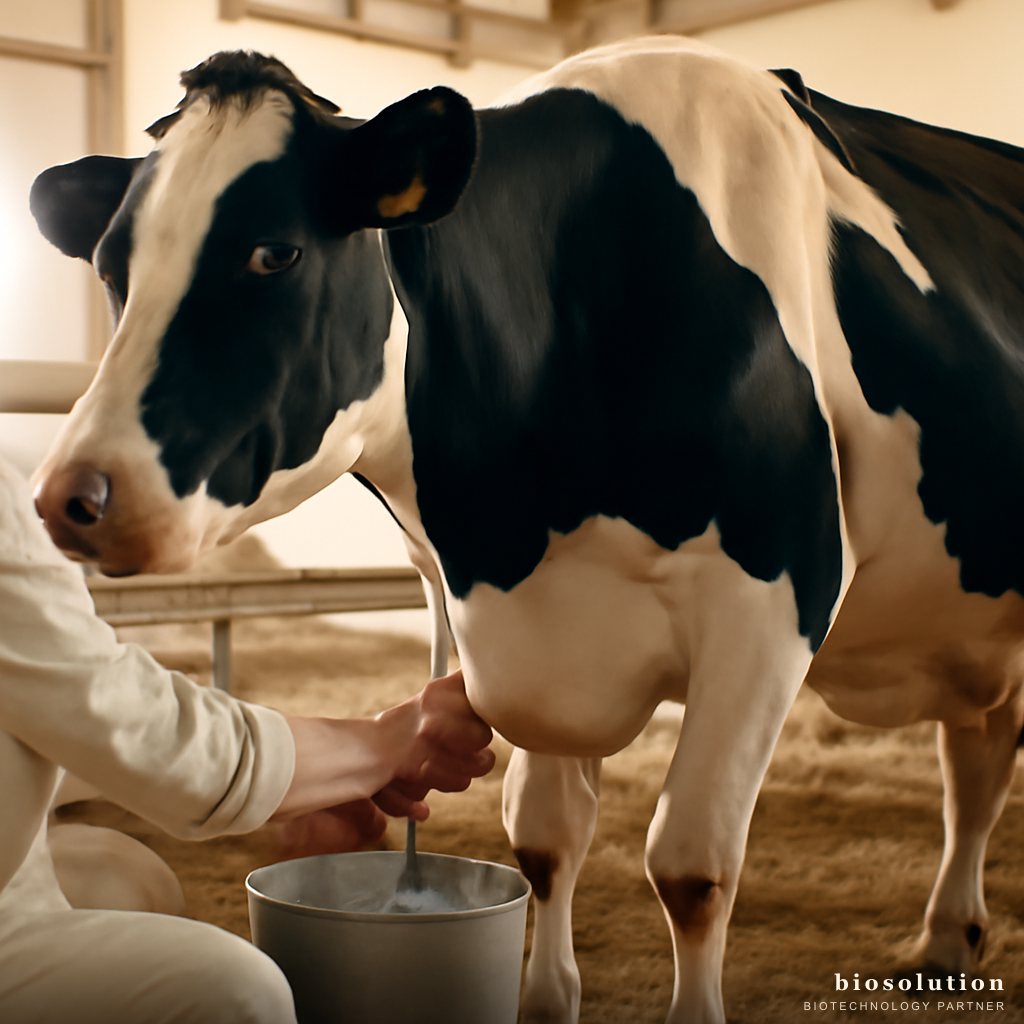
Dairy Cow Probiotics Increase Milk Production and Quality with Dairy Cow Probiotic Formula
Dairy farmers in Indonesia face a major challenge: how to consistently increase milk production without sacrificing quality or animal health? Dairy cow probiotics offer a microbiology-based scientific solution that not only increases milk volume by 5–8%, but also improves fat and protein composition and reduces mastitis risk. With Biosolution's Dairy Cow Probiotic Formula, farmers can optimize the genetic potential of cows through rumen and gut microbiota balance. This article thoroughly discusses the mechanisms, application, and scientific evidence behind the probiotic strategy for higher and better-quality milk production.
Why Are Probiotics Important for Dairy Cows?
The rumen of dairy cows is a complex ecosystem consisting of bacteria, protozoa, and fungi. The balance of these microbes determines the efficiency of feed fermentation, volatile fatty acid (VFA) production, and microbial protein synthesis. Imbalance—due to stress, sudden feed changes, or antibiotic use—can decrease milk production and trigger mastitis. Dairy cow probiotics work by:
- Stabilizing rumen pH: Lactobacillus acidophilus and Bifidobacterium sp. produce lactic acid that inhibits pathogenic bacteria and maintains optimal pH (6.0–6.8) for fiber fermentation.
- Increasing fiber digestibility: Bacillus coagulans produces cellulase enzymes that break down crude fiber into simple sugars, increasing energy availability for milk synthesis.
- Reducing oxidative stress: Lactobacillus casei has anti-stress effects by modulating immune response and reducing inflammation, especially during hot weather or transition periods.
Research from FAO shows that probiotic supplementation in dairy cows can increase milk production by an average of 0.5–1.5 liters per head per day, depending on initial conditions and feed management.
Superior Composition of Dairy Cow Probiotic Formula
Biosolution's Dairy Cow Probiotic Formula is formulated with five superior strains that work synergistically:
| Microbial Strain | Main Role |
|---|---|
| Lactobacillus acidophilus | Stabilizes rumen pH, inhibits mastitis pathogens |
| Lactobacillus bulgaricus | Ferments fiber, increases VFA production |
| Lactobacillus casei | Anti-stress, immune modulation |
| Bacillus coagulans | Cellulase enzyme, increases fiber digestibility |
| Bifidobacterium sp. | Stabilizes gut microbiota, nutrient absorption |
Each strain is selected based on its ability to survive in rumen conditions (low pH, anaerobic) and the gut, and has been scientifically proven to improve milk production performance. This combination ensures a greater synergistic effect compared to single-strain use.
Mechanism of Action in the Cow's Body
- In the rumen: L. acidophilus and L. bulgaricus ferment carbohydrates into lactic acid, which is then converted into propionate and acetate—the main precursors of lactose and milk fat. B. coagulans adds cellulase activity, increasing fiber degradation by up to 15%.
- In the small intestine: Bifidobacterium sp. helps absorb calcium, phosphorus, and amino acids, which are important for milk protein synthesis.
- In the udder: By reducing systemic inflammation, probiotics suppress subclinical mastitis incidence, which has been shown to lower somatic cell count (SCC) in milk.
Proper Application and Dosage
For optimal results, apply Dairy Cow Probiotic Formula as follows:
- Method: Drench (via tube) or mix into concentrate.
- Dosage: 20 ml per head per day.
- Frequency: Daily, consistently.
- Best time: Morning before milking, when the cow's stomach is empty so probiotics reach the rumen quickly.
Ensure the probiotic is evenly mixed in the feed and not exposed to excessive heat (>40°C) during storage. The effect of increased milk production usually becomes apparent after 2–3 weeks of regular use.
Real Benefits: Milk Production Up, Quality Maintained
Based on field trial data, consistent use of Dairy Cow Probiotic Formula provides:
- 5–8% increase in milk production: Equivalent to an additional 0.5–1 liter per head per day in medium-producing cows.
- Stable milk quality: Milk fat content maintained at 3.5–4.0% and protein at 3.0–3.2%, without fluctuations due to feed stress.
- Improved udder health: Clinical mastitis incidence decreases by up to 30%, and milk SCC drops significantly.
- Increased feed efficiency: Better feed conversion to milk (FCR), reducing feed costs per liter of milk.
For example, a dairy farm in West Java that applied this probiotic reported an average milk production increase from 15 liters to 16.2 liters per head per day within 4 weeks, with a decrease in mastitis cases from 5% to 2%.
Strategy for Integrating Probiotics into Farm Management
Probiotics are not a substitute for quality feed or good barn management, but a strategic complement. Here are effective integration steps:
- Evaluate initial conditions: Measure daily milk production, SCC, and body condition score (BCS) before starting probiotics.
- Apply gradually: Start with half the dose for 3–5 days, then increase to the full dose.
- Monitor response: Record weekly milk production and observe changes in feces (consistency, odor) as indicators of rumen health.
- Combine with feed management: Ensure feed contains sufficient fiber (NDF 30–35%) and high energy to support probiotic performance.
- Regular consultation: Contact the Biosolution technical team for dosage adjustments according to farm conditions.
FAQ
1. Are probiotics safe for lactating dairy cows?
Yes, probiotics are very safe because they use natural microbes already present in the cow's digestive tract. Dairy Cow Probiotic Formula has been toxicologically tested and has no side effects on lactating cows. In fact, probiotics help maintain udder health and increase milk production naturally.
2. How long does it take to see the effects of probiotics?
Initial effects are usually seen after 2–3 weeks of regular use. The most significant increase in milk production occurs in weeks 4 to 6. For maximum results, use consistently every day.
3. Can probiotics be mixed with concentrate feed?
Yes. Mix 20 ml of probiotic into the concentrate before feeding, ensuring it is evenly mixed. Avoid mixing with feed exposed to direct sunlight or temperatures above 40°C to maintain bacterial viability.
4. Do probiotics help with mastitis?
Yes, by stabilizing rumen microbiota and reducing systemic inflammation, probiotics suppress the growth of mastitis-causing bacteria such as Staphylococcus aureus. Regular use has been shown to reduce subclinical and clinical mastitis incidence by up to 30%.
5. How should probiotics be stored?
Store in a cool, dry place (temperature 15–30°C), away from direct sunlight. After opening, use within 30 days to maintain optimal viability.
Conclusion
Dairy cow probiotics are a scientific and practical solution to sustainably increase milk production and quality. Biosolution's Dairy Cow Probiotic Formula, with its five superior strains, offers a holistic approach that improves rumen health, suppresses mastitis, and increases feed efficiency. With a dosage of 20 ml per head per day, farmers can experience a 5–8% increase in milk production and more stable milk quality. If you want to start transforming your dairy farm, consult your needs with the Biosolution expert team via WhatsApp or see product details Dairy Cow Probiotic Formula.