Feed MOS Anti-Mycotoxin: Probiotic Strategy to Overcome Mycotoxins in Commercial Animal Feed
Mycotoxins in commercial animal feed are a latent threat that often goes undetected until economic losses occur. Various studies show that contamination by mycotoxin-producing fungi such as Aspergillus, Fusarium, and Penicillium can reduce livestock performance, disrupt the immune system, and even cause death. This is where the role of feed MOS anti-mycotoxin becomes crucial. Mannan-oligosaccharides (MOS) derived from Saccharomyces cerevisiae cell walls have been scientifically proven to bind various types of mycotoxins, thereby reducing their negative impacts. This article will discuss the mechanism of action of MOS, its application in commercial feed, and how Biosolution's Feed Mycotoxin Binder Formula is the right solution for feed mills and integrators.
What Are Mycotoxins and Why Are They Dangerous for Livestock?
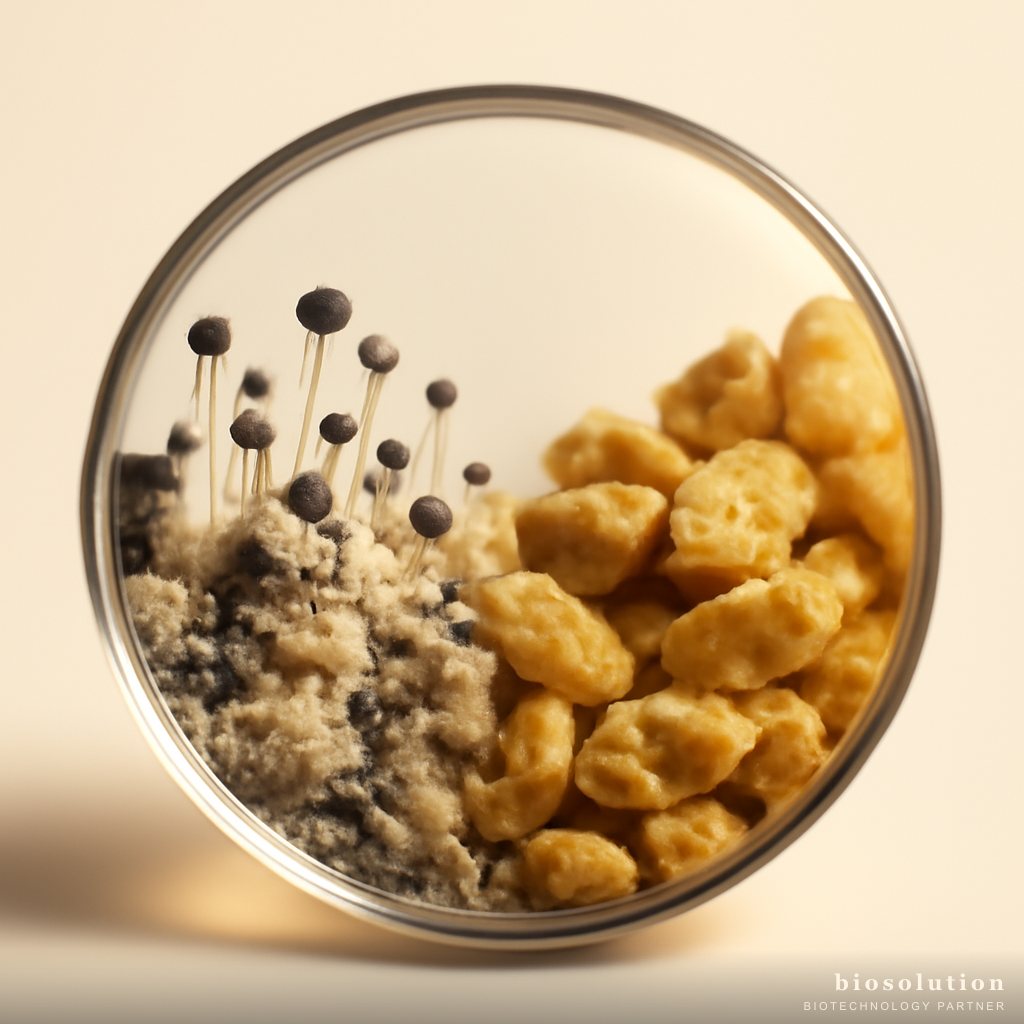
Mycotoxins are toxic compounds produced by certain fungi as secondary metabolites. These fungi can grow on feed raw materials such as corn, soybean meal, or bran, especially under warm and humid conditions. Some common mycotoxins found in Indonesia include aflatoxin, fumonisin, deoxynivalenol (DON), and zearalenone.
Impact of Mycotoxins on Livestock Health
Mycotoxins can cause various disorders, ranging from decreased appetite, digestive disturbances, liver and kidney damage, to immunosuppression. In poultry, aflatoxin can reduce body weight and egg production. In pigs, DON is often associated with feed refusal and vomiting. In dairy cows, aflatoxin M1 can be metabolized and appear in milk, endangering consumers.
Economic Losses Due to Mycotoxins
Losses from mycotoxins are not only due to decreased productivity but also from treatment costs, increased mortality, and reduced quality of livestock products. Therefore, mycotoxin control strategies are a priority for feed mills and integrators.
Mechanism of Action of MOS as a Feed Anti-Mycotoxin
Mannan-oligosaccharides (MOS) are complex carbohydrates extracted from the cell walls of Saccharomyces cerevisiae. The structure of MOS has a unique ability to bind mycotoxins physically through hydrogen bonds and hydrophobic interactions. This process is similar to the adsorption mechanism of activated carbon but is more selective and safer for livestock.
How Does MOS Bind Mycotoxins?
MOS has a surface rich in mannan and β-glucan groups. These groups can interact with both polar and non-polar mycotoxin molecules. When MOS is mixed into feed, it binds mycotoxins in the digestive tract, forming complexes that cannot be absorbed by the intestines. These complexes are then excreted with feces, preventing toxins from entering the bloodstream.
Advantages of MOS Over Other Binders
Some mycotoxin binders such as aluminosilicates (e.g., bentonite) are also commonly used. However, MOS has the advantage of not only binding mycotoxins but also providing prebiotic effects. MOS can stimulate the growth of beneficial bacteria in the gut such as Lactobacillus and Bifidobacterium, while inhibiting pathogens like Salmonella and E. coli. Thus, MOS provides dual protection: detoxification and improved digestive health.
Biosolution's Feed Mycotoxin Binder Formula: The Right Solution for Feed Mills
Biosolution presents the Feed Mycotoxin Binder Formula containing Saccharomyces cerevisiae cell wall as a source of MOS and β-glucan. This product is specifically designed for application in commercial animal feed, including poultry, pigs, ruminants, and aquaculture.
Composition and Mode of Action
This product consists of yeast cell walls rich in MOS and β-glucan. These two components work synergistically: MOS binds mycotoxins, while β-glucan enhances immune response. This mechanism has been scientifically tested and proven effective against various types of mycotoxins.
Dosage and Application
The recommended dosage is 1–2 kg per ton of feed, mixed during the feed mixing process. This product can be used daily as a preventive measure, especially during conditions prone to contamination such as the rainy season or humid storage.
Key Benefits
- Reduces negative effects of mycotoxins: Protects vital organs such as the liver and kidneys.
- Maintains livestock performance: Optimal feed intake and body weight maintenance.
- Safe for rainy season feed: Reduces risk of fungal contamination.
- Feed biosecurity backup: Complements existing feed management programs.
Case Study: Effectiveness of MOS in Commercial Animal Feed
Various studies have demonstrated the effectiveness of MOS in binding mycotoxins. A study from FAO reported that adding MOS to broiler chicken feed contaminated with aflatoxin reduced aflatoxin concentration in the liver by up to 40%. Another study from the journal Poultry Science showed that MOS improved body weight and feed conversion in chickens exposed to DON.
Field Implementation
Feed mills in Indonesia that have used Biosolution's Feed Mycotoxin Binder Formula reported a decrease in digestive disorder cases and improved livestock performance. This indicates that the product is not only scientifically effective but also practical in daily application.
Strategy for Integrating MOS into Feed Management Programs
For optimal results, the use of MOS should be integrated with a comprehensive feed management strategy. Here are some steps that can be applied:
1. Monitoring Raw Material Quality
Conduct routine testing of feed raw materials to detect mycotoxin levels. By knowing the contamination level, the MOS dosage can be adjusted.
2. Preventive Addition of MOS
Do not wait until problems occur. Regular addition of MOS to feed will provide continuous protection.
3. Combination with Other Probiotics
MOS can be combined with probiotics such as Lactobacillus acidophilus to improve gut health. Biosolution also provides other probiotic products that can be used together.
4. Proper Feed Storage
Ensure feed is stored in a dry and cool place to minimize fungal growth. MOS is not a substitute for good storage management but a complement.
FAQ About Feed MOS Anti-Mycotoxin
1. What is the difference between MOS and mineral mycotoxin binders?
MOS is organic and has a prebiotic effect, while mineral binders like bentonite only work physically. MOS is also more selective and does not bind essential nutrients, making it safe for long-term use.
2. How long does MOS take to work after being added to feed?
MOS begins working immediately after mixing with feed and entering the digestive tract. The binding process occurs within minutes to hours, and the MOS-mycotoxin complex is excreted within 24-48 hours.
3. Is MOS safe for all types of livestock?
Yes, MOS is safe for poultry, pigs, cattle, goats, sheep, and fish. No side effects have been reported at recommended doses. In fact, MOS can generally improve gut health.
4. Can MOS be used together with medications or vaccines?
MOS does not interfere with the effectiveness of medications or vaccines. However, for best results, allow a time gap if using oral medications. Consult with a livestock nutrition expert for proper scheduling.
5. How can I purchase Biosolution's Feed Mycotoxin Binder Formula?
This product is available for feed mills and integrators. You can contact the Biosolution team via WhatsApp for consultation and ordering. Visit the product page Feed Mycotoxin Binder Formula for more information.
Conclusion
Mycotoxins in commercial animal feed are a serious problem that requires an effective solution. Feed MOS anti-mycotoxin from Saccharomyces cerevisiae cell wall offers a natural and science-based approach to bind toxins while improving digestive health. Biosolution's Feed Mycotoxin Binder Formula is the right choice for feed mills and integrators who want to maintain livestock performance and feed efficiency. With a dosage of 1–2 kg per ton of feed, this product is easy to apply and delivers tangible results. For further consultation, contact us via WhatsApp or see related products here.