Green Water Transparency in Fish Ponds: Key to Successful Intensive Tilapia Farming
Green water transparency in fish ponds is a water quality parameter that often becomes a nightmare for intensive tilapia farmers. A dense green color or very low transparency can indicate phytoplankton blooming or accumulation of organic matter that threatens fish health. However, with proper understanding and application of probiotics such as Nitrosomonas sp., Nitrobacter sp., and Bacillus subtilis, you can effectively manage green water transparency throughout the cultivation phase. This article will discuss water quality management strategies per tilapia cultivation phase, complete with technical data and product recommendations.
Why Is Green Water Transparency in Fish Ponds Important?
Water transparency measures how deep light penetrates the pond. In intensive tilapia ponds, ideal transparency ranges from 20–40 cm. The green color comes from phytoplankton, which are actually beneficial as natural feed and oxygen producers during the day. However, if transparency drops below 15 cm, it indicates excessive phytoplankton population (blooming) which can cause extreme oxygen fluctuations – high oxygen during the day and low at night – and increase the risk of mass mortality.
Additionally, low transparency can also be caused by suspended particles from uneaten feed and feces. The accumulation of organic matter will be decomposed by bacteria, producing toxic ammonia (NH3) for fish. Therefore, maintaining green water transparency in fish ponds is not just about aesthetics, but an indicator of pond ecosystem balance.
Early Cultivation Phase: Stabilize Transparency with Nitrifying Probiotics
In the early phase (0–30 days), the pond is newly filled with water and seeds are stocked. At this time, water quality is still relatively clean, but feed accumulation begins. The main strategy is to prevent ammonia spikes by activating nitrifying bacteria early on.
Tilapia Pond Probiotic Formula from Biosolution contains Nitrosomonas sp. and Nitrobacter sp. which work synergistically to oxidize ammonia into nitrite then nitrate. Nitrate is much safer and can be utilized by phytoplankton. With a dosage of 2 L per 1000 m³ of water every 7 days, you can keep ammonia concentrations below 0.1 mg/L. Application in the morning allows the bacteria to adapt before the temperature rises.
In this phase, transparency is usually still high (>40 cm). If it is too clear, phytoplankton growth is actually inhibited. You can add organic fertilizer as needed to trigger natural phytoplankton growth. However, continue to monitor ammonia and nitrite using a test kit.
Growth Phase (30–60 Days): Maintain Green Balance and Oxygen
Entering the growth phase, tilapia start to actively eat and biomass increases. Organic load rises, so green water transparency in fish ponds tends to decrease. A range of 25–35 cm is still ideal. If transparency drops drastically, take the following steps:
- Reduce feed temporarily by 10–20% to suppress organic input.
- Apply probiotics regularly every 7 days. Bacillus subtilis in the formula plays a role in decomposing uneaten feed and feces into simple compounds that do not cause turbidity.
- Add aeration at night to prevent hypoxia due to phytoplankton respiration.
Efficacy data shows that consistent use of probiotics can reduce ammonia concentrations by up to 60% within 2 weeks, thus keeping transparency under control and tilapia growth more consistent.
Grow-Out Phase (60–90 Days): Anticipate Extreme Transparency Decline
In the grow-out phase, biomass reaches its peak. The risk of transparency dropping below 20 cm is higher. A dense green color accompanied by an unpleasant odor indicates deteriorating water quality. Corrective actions needed:
- Increase probiotic frequency to every 5 days if transparency <20 cm.
- Siphon the pond bottom to remove organic sediment.
- Change water 10–20% if necessary, but ensure new water is conditioned.
Probiotic Bacillus subtilis will accelerate the decomposition of organic sludge, thereby reducing turbidity and the potential for ammonia release. With high stocking densities (up to 50 fish/m³), probiotic use allows you to maintain water quality without frequent water changes.
Specific Roles of Bacteria in Maintaining Green Water Transparency in Fish Ponds
Each strain in the Tilapia Pond Probiotic Formula has a unique role:
- Nitrosomonas sp.: Oxidizes ammonia (NH3) into nitrite (NO2-). Ammonia is a toxic compound that can cause stress and fish death. By reducing ammonia, phytoplankton growth is also controlled because ammonia is their main fertilizer.
- Nitrobacter sp.: Oxidizes nitrite (NO2-) into nitrate (NO3-). Nitrite is also toxic and can interfere with oxygen transport in fish blood. Nitrate is safer and becomes a nutrient for phytoplankton.
- Bacillus subtilis: Heterotrophic bacteria that degrade complex organic matter (proteins, carbohydrates, fats) into simple compounds. By reducing organic accumulation, physical turbidity decreases and transparency increases.
These three bacteria work synergistically: Bacillus cleans the organic substrate, Nitrosomonas and Nitrobacter process nitrogen compounds. As a result, the nitrogen cycle runs perfectly, green water transparency in fish ponds remains within the ideal range, and water quality is stable.
Integration with Feed Management and Aeration
Probiotics are not the only factor. Their success depends on synergy with feed management and aeration:
- Feed: Provide quality feed with 28–30% protein according to the phase. Avoid overfeeding; calculate feed amount based on biomass weight (3–5% per day). Uneaten feed will become an organic burden.
- Aeration: Ensure dissolved oxygen >4 mg/L. At night, phytoplankton consume oxygen so additional aeration is needed, especially if transparency is low.
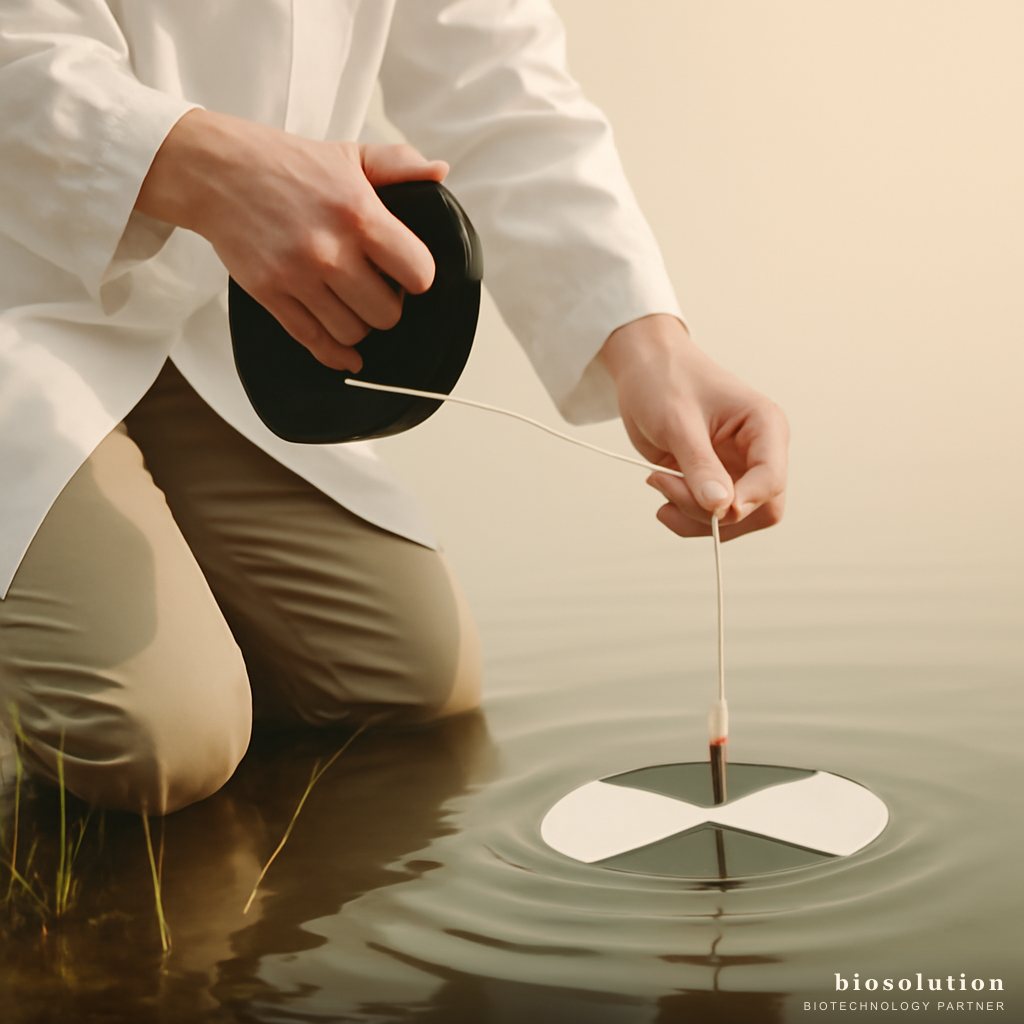
- Monitoring: Measure transparency daily using a Secchi disk. Also record temperature, pH (6.5–8.5), ammonia, and nitrite at least once a week.
With this integration, green water transparency in fish ponds can be maintained at optimal levels throughout the cultivation cycle.
Conclusion
Managing green water transparency in fish ponds is a challenge that can be overcome with a microbiology-based scientific approach. Through regular application of probiotics containing Nitrosomonas sp., Nitrobacter sp., and Bacillus subtilis every 7 days at a dose of 2 L per 1000 m³ of water, you can maintain stable water quality, reduce mortality, and increase tilapia productivity. Implement strategies per cultivation phase – from early to grow-out – for optimal results. Want further consultation? Contact the Biosolution technical team via WhatsApp for recommendations tailored to your pond conditions.
FAQ
1. What causes low green water transparency in fish ponds?
The main cause is phytoplankton blooming due to excess nutrients (ammonia, phosphate) from uneaten feed and feces. Accumulation of organic matter also causes physical turbidity. Probiotics help suppress excess nutrients and decompose organic matter.
2. What is the probiotic dosage for a 1000 m³ tilapia pond?
The dosage of Tilapia Pond Probiotic Formula is 2 L per 1000 m³ of water, applied every 7 days in the morning. For ponds with high organic load, frequency can be increased to every 5 days.
3. Are probiotics safe for tilapia?
Very safe. The bacteria used are non-pathogenic and naturally found in aquatic environments. Probiotics actually improve fish health by improving water quality and suppressing pathogens.
4. Can probiotics be used together with antibiotics or disinfectants?
It is best not to. Antibiotics and disinfectants can kill probiotic bacteria. Allow a minimum of 48 hours after using chemicals before applying probiotics.
5. When is the best time to measure transparency?
Measure transparency every morning around 08.00–09.00 using a Secchi disk. Record the results to monitor trends. A drastic drop needs immediate anticipation.
Related Products
- Catfish Pond Probiotic Formula – For catfish farming with similar water quality challenges.
- Tilapia Pond Probiotic Formula – The main solution for intensive tilapia ponds.
External Sources
- FAO: Water Quality in Aquaculture – Global guide on water quality parameters.
- Ministry of Marine Affairs and Fisheries: Tilapia Farming – Official information on cultivation standards in Indonesia.