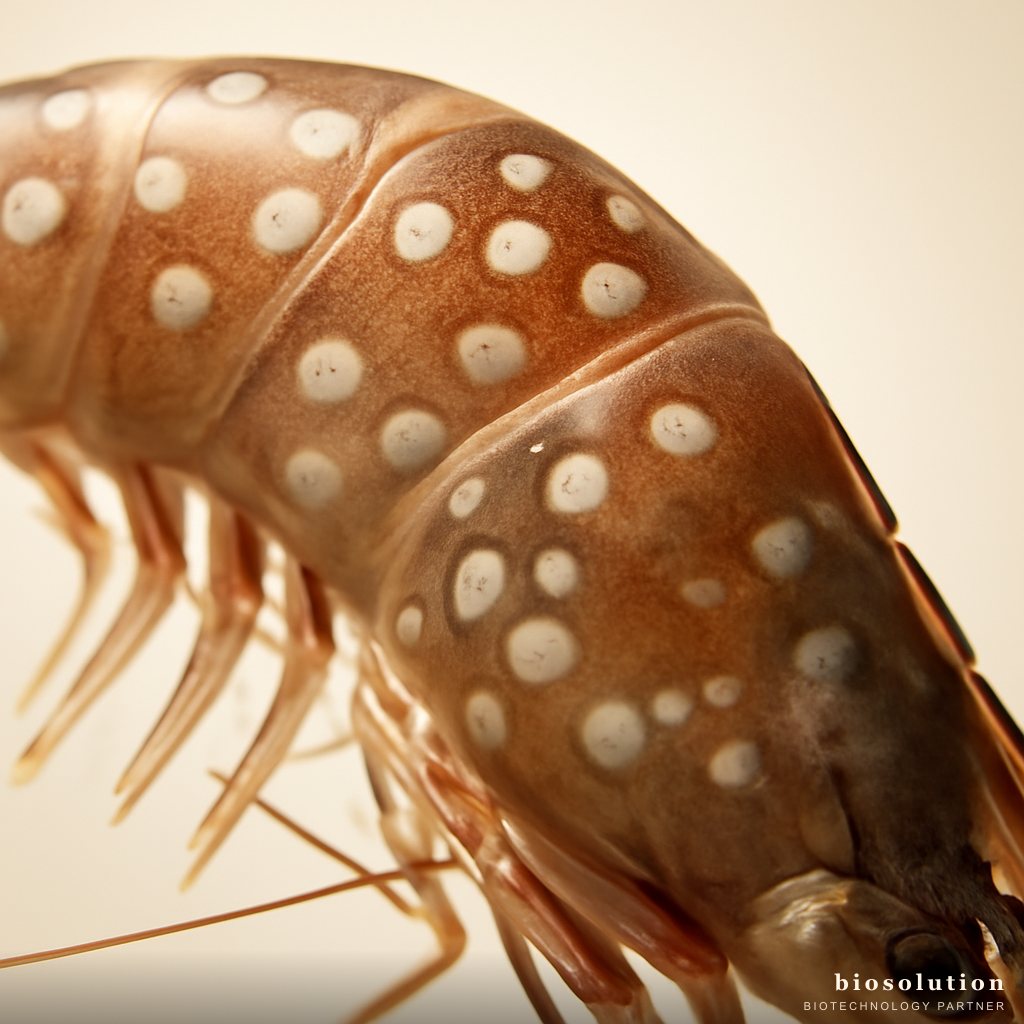
WSSV White Spot Disease in Shrimp: Risk Management Strategy for Vaname
WSSV (White Spot Syndrome Virus) is one of the most lethal diseases in vaname shrimp aquaculture worldwide. This virus has caused billions of dollars in economic losses in Asian shrimp farming centers, including Indonesia. Managing WSSV risk in vaname is key to the sustainability of brackish water aquaculture. This article thoroughly examines the causes, losses, and mitigation steps based on anti-Vibrio probiotics that can be applied in your ponds.
Understanding WSSV: Causes and Infection Mechanism
WSSV is a double-stranded DNA virus from the family Nimaviridae, genus Whispovirus. It attacks vaname shrimp (Litopenaeus vannamei) and tiger shrimp (Penaeus monodon) with mortality rates reaching 80-100% within 3-10 days after the first symptoms appear. The virus particles are rod-shaped, 120-150 nm x 270-290 nm in size, with an envelope and appendages that facilitate penetration into host cells.
WSSV Infection Cycle
The virus enters through the gills, digestive tract, or wounds on the cuticle. After attachment, the virus injects genetic material into epithelial cells. Replication occurs in the cell nucleus, then new virions are released to infect other cells. WSSV attacks various tissues, especially ectodermal (epidermis, gills) and mesodermal (connective tissue, hemocytes). Tissue damage causes white spots on the carapace, which are accumulations of calcium phosphate due to metabolic disruption.
WSSV Trigger Factors
WSSV can reactivate under stress conditions, such as:
- Extreme temperature fluctuations (30-32°C triggers replication)
- Drastic salinity drops
- High stocking density
- Poor water quality (high ammonia, nitrite)
- Presence of carrier hosts (wild crustaceans, zooplankton)
Losses Due to WSSV in Vaname Shrimp Farming
Economic losses from WSSV are very significant. According to FAO, WSSV outbreaks in the 1990s devastated the shrimp industry in Taiwan, Thailand, and China. In Indonesia, white spot outbreaks often cause total crop failure in vaname ponds. Losses include not only shrimp mortality but also treatment costs, water quality decline, and pond sterilization downtime.
Direct Impacts
- Mass mortality: Within 3-7 days, the shrimp population can be wiped out.
- Production decline: If not fatal, growth is stunted and FCR worsens.
- Treatment costs: Antibiotics and disinfectants are expensive but often ineffective.
Indirect Impacts
- Pond ecosystem damage: Accumulation of organic matter and opportunistic Vibrio.
- Supply chain disruption: Production centers paralyzed, shrimp prices rise.
- Loss of market trust: Infected shrimp are banned from export.
Relationship Between WSSV and Vibrio: A Deadly Synergy
WSSV is often followed by secondary bacterial infections of Vibrio spp., especially V. harveyi, V. parahaemolyticus, and V. alginolyticus. The virus weakens the shrimp's immune system, reducing total hemocyte count and phagocytic activity. Consequently, opportunistic bacteria thrive. Conversely, Vibrio infection can trigger reactivation of latent WSSV. This synergy causes faster and more severe mortality.
Role of Anti-Vibrio Probiotics
The use of lactic acid bacteria and Bacillus spp. probiotics has been proven effective in suppressing Vibrio populations through competition, production of antibacterial compounds (bacteriocins, lytic enzymes), and immune stimulation. The product Emergency Anti-Vibrio Formula for Vaname Shrimp Ponds contains high-concentration (10x) Bacillus subtilis and Bacillus licheniformis that work quickly to suppress Vibrio, thereby reducing the risk of WSSV-Vibrio coinfection.
WSSV Risk Management Strategy for Vaname Ponds
WSSV risk management must be comprehensive, covering biosecurity, water quality, nutrition, and probiotic use. Here are key steps:
1. Strict Biosecurity
- Use WSSV-free postlarvae (negative PCR certificate).
- Install filters on water inlets.
- Quarantine new shrimp for 7-14 days.
- Limit access of people and equipment to ponds.
2. Water Quality Optimization
- Maintain temperature at 28-30°C (avoid fluctuations >3°C).
- Stable salinity of 15-25 ppt.
- pH 7.5-8.5.
- Adequate aeration (DO >4 mg/L).
- Regularly check ammonia, nitrite, and alkalinity.
3. Feed and Nutrition Management
- Quality feed with immunostimulants (β-glucan, vitamin C, probiotics).
- Avoid overfeeding (feed residue triggers Vibrio).
- Use routine probiotics such as Probiotic Formula for Vaname Shrimp Ponds to maintain microflora balance.
4. Use of Anti-Vibrio Probiotics
When early symptoms of WSSV or Vibrio appear (white spots, decreased appetite, floating shrimp), apply Emergency Anti-Vibrio Formula for Vaname Shrimp Ponds at a dose of 10 L/hectare. This product contains Bacillus subtilis anti-Vibrio strain that produces bacteriocins and protease enzymes, and Bacillus licheniformis that produces peptide antibiotics (bacitracin, lichenysin). Mechanism:
- Vibrio knockdown: Within 24 hours, Vibrio population drops drastically.
- Immune stimulation: Bacillus triggers non-specific immune response in shrimp.
- Fast recovery: Shrimp recover faster, mortality stops.
5. Early Detection
- Conduct routine PCR (every 2 weeks) on shrimp and water.
- Monitor clinical signs: white spots, redness, lethargy, swimming to the surface.
- If WSSV positive, isolate the pond and increase biosecurity.
Role of Probiotics in Managing WSSV Risk: Scientific Review
Research shows that probiotics can reduce the severity of WSSV infection. A study by Balasubramanian et al. (2008) on tiger shrimp demonstrated that administration of Bacillus subtilis increased survival rate up to 60% after WSSV challenge. The main mechanisms are:
- Competitive exclusion: Probiotics occupy receptors in the digestive tract, blocking the virus.
- Production of antiviral compounds: Some Bacillus produce enzymes that degrade the virus envelope.
- Immune modulation: Increases prophenoloxidase (proPO), lysozyme, and hemocyte activity.
The Emergency Anti-Vibrio Formula for Vaname Shrimp Ponds is specially formulated for emergency conditions. With 10x concentration, this product can suppress Vibrio in a short time, reducing the risk of deadly WSSV-Vibrio coinfection. Apply in the morning by evenly broadcasting directly into the pond. If necessary, repeat after 48 hours.
Conclusion
WSSV remains a serious threat to vaname shrimp farming. However, with the right risk management strategy—biosecurity, water quality, nutrition, and use of anti-Vibrio probiotics—losses can be minimized. The Emergency Anti-Vibrio Formula for Vaname Shrimp Ponds from Biosolution offers a fast and effective solution to suppress Vibrio, prevent coinfection, and aid shrimp recovery. For further consultation on WSSV risk management, contact our technical team via WhatsApp.