Guide to Urea Replacement Application Schedule with Biofertilizer
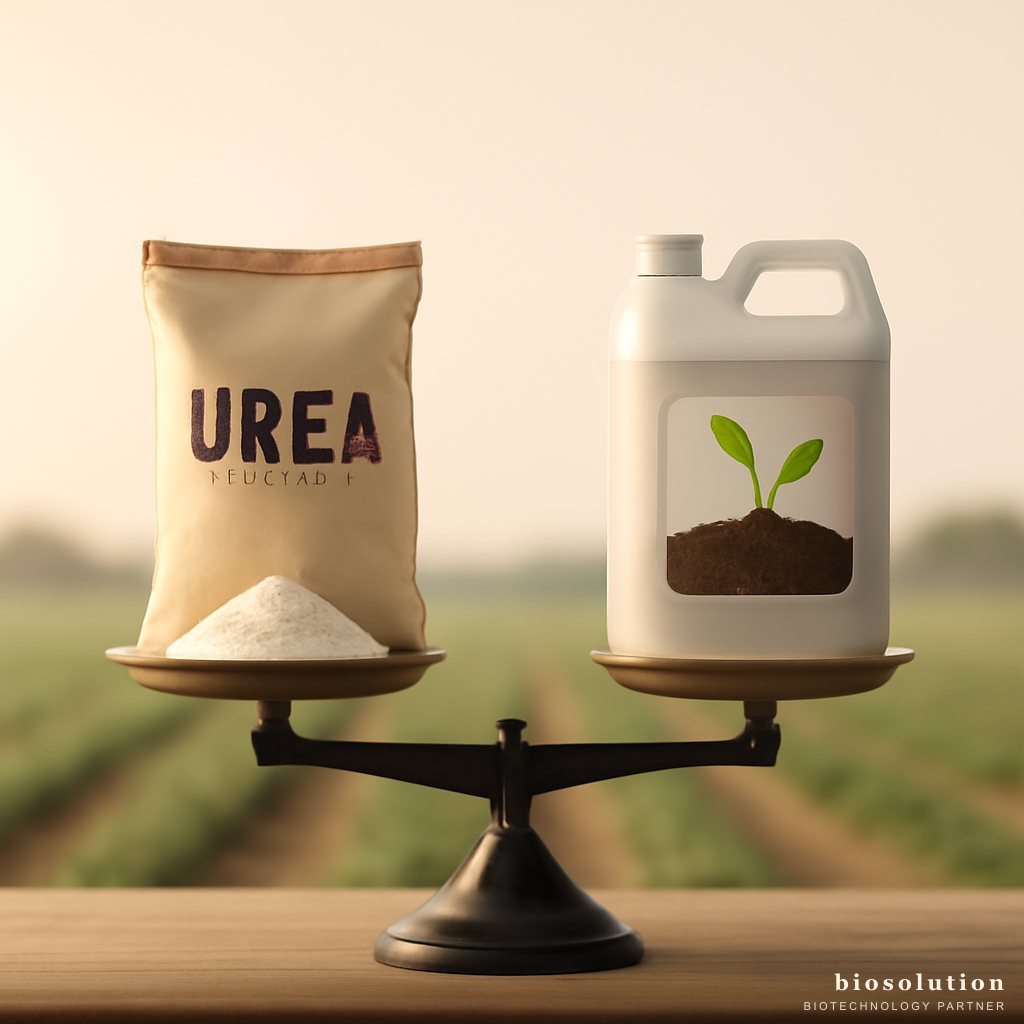
Reducing urea use is a major challenge for conventional farmers in Indonesia. Rising chemical fertilizer prices and their impact on soil fertility have led many farmers to seek alternatives. One proven effective solution is nitrogen-fixing biofertilizer. By utilizing live microbes, biofertilizer can naturally provide nitrogen to plants, making it a partial urea replacement. This article discusses the application schedule for 5-in-1 Liquid Biofertilizer Formula per growth phase so you can reduce urea by up to 50% without lowering crop yields.
Why Nitrogen-Fixing Biofertilizer is Effective as a Urea Replacement?
Urea fertilizer contains nitrogen in the form of ammonium, which is easily soluble and quickly lost through volatilization or leaching. In contrast, nitrogen-fixing biofertilizer uses bacteria that live around plant roots to fix nitrogen from the air (N₂) and convert it into ammonia (NH₃) that plants can absorb. This process is called biological nitrogen fixation. 5-in-1 Liquid Biofertilizer Formula contains Rhizobium sp. and Azospirillum sp., two superior strains capable of fixing N₂ both symbiotically and associatively. Rhizobium works on legume plants, while Azospirillum is effective on grasses like rice and corn. With a population of 10⁸ CFU/ml per strain, this consortium ensures a stable nitrogen supply throughout the growing season. As a result, farmers can reduce urea dosage by 30–50% without reducing yields, often even increasing yields by 20–30%.
Understanding Plant Growth Phases and Nitrogen Requirements
Plants require different amounts of nitrogen at each phase. In the early vegetative phase (0–30 DAP), plants need nitrogen for leaf and stem formation. The late vegetative phase (30–60 DAP) is the peak nitrogen demand for tillering and biomass production. Entering the generative phase (60–90 DAP), nitrogen is still needed for grain and fruit filling, but in more controlled amounts to avoid excessive vegetative growth. By understanding this pattern, we can schedule biofertilizer applications so that nitrogen supply from biological fixation is timely. Biofertilizer also contains Bacillus subtilis and Pseudomonas fluorescens which help solubilize phosphate and produce phytohormones, thereby increasing root growth and nutrient uptake efficiency.
Application Schedule for 5-in-1 Liquid Biofertilizer Formula per Growth Phase
Early Planting Phase (0–14 DAP)
In this phase, plants are just starting to grow and the root system is still shallow. Biofertilizer application should be done at planting or immediately after transplanting. Mix 5–10 ml of 5-in-1 Liquid Biofertilizer Formula per liter of water, then drench the root zone with 200–250 ml per plant. The best time is in the morning before 10 AM or in the afternoon after 4 PM to avoid UV rays that can damage microbes. This initial application aims to inoculate the rhizosphere with N-fixing bacteria and PGPR. At this phase, you can reduce the basal urea dose by 30% from the recommendation. For example, if you usually use 200 kg urea per hectare, reduce it to 140 kg.
Active Vegetative Phase (15–45 DAP)
This is a critical period where plants need large amounts of nitrogen. Repeat biofertilizer application every 10–14 days. At this phase, the dose can be increased to 10 ml per liter of water, drenching 300 ml per plant. Perform 2–3 applications during this phase. Azospirillum sp. will actively fix N₂ around the roots of grasses, while Rhizobium sp. will have started forming root nodules on legumes. Field observations show that regular application during this phase can maintain green leaf color without additional urea. You can reduce urea by up to 50% in this phase. If necessary, apply supplemental urea only if there are deficiency symptoms, such as yellowing leaves.
Early Generative Phase (46–70 DAP)
When plants start flowering and forming fruit or seeds, nitrogen demand decreases slightly but remains important for seed filling. Biofertilizer application is still done at a dose of 5–8 ml per liter of water, 1–2 times during this phase. The main focus is maintaining root health and micronutrient availability. Trichoderma sp. in the product will help suppress soil-borne pathogens that often appear in humid conditions. At this phase, you can stop urea application altogether if plant growth is optimal. Biofertilizer along with organic fertilizer is sufficient to meet N needs.
Ripening Phase (71 DAP to Harvest)
In this phase, plants no longer require additional nitrogen. Biofertilizer application is stopped. Excess nitrogen will actually delay ripening and reduce yield quality. Ensure the soil remains moist but not waterlogged to support the activity of existing microbes. Harvest results typically show increased weight and quality due to better nutrient balance.
Case Study: Rice and Corn
In rice, application of 5-in-1 Liquid Biofertilizer Formula with the above schedule produced 7.5–8 tons of dry grain per hectare with a 50% reduction in urea (from 250 kg to 125 kg per hectare). In corn, dry kernel yield reached 10–11 tons per hectare with a 40% reduction in urea. These data show that biofertilizer is not just a supplement, but can truly be a reliable partial urea replacement. Another advantage is improved soil structure due to microbial activity and the organic matter produced.
Conclusion
Reducing urea use with nitrogen-fixing biofertilizer is a smart step for sustainable agriculture. 5-in-1 Liquid Biofertilizer Formula with a consortium of five superior microbial strains provides a natural nitrogen supply throughout the growing season. By following the correct application schedule—from early to generative phases—you can save up to 50% on chemical fertilizer costs without losing yields. In fact, yields can increase by 20–30%. Don't hesitate to try it and experience the benefits yourself. If you want further consultation on an application schedule suitable for your crop type, contact our team via WhatsApp. See the product 5-in-1 Liquid Biofertilizer Formula for more details.