Introduction: The Challenge of Saline Soil in Coastal Areas
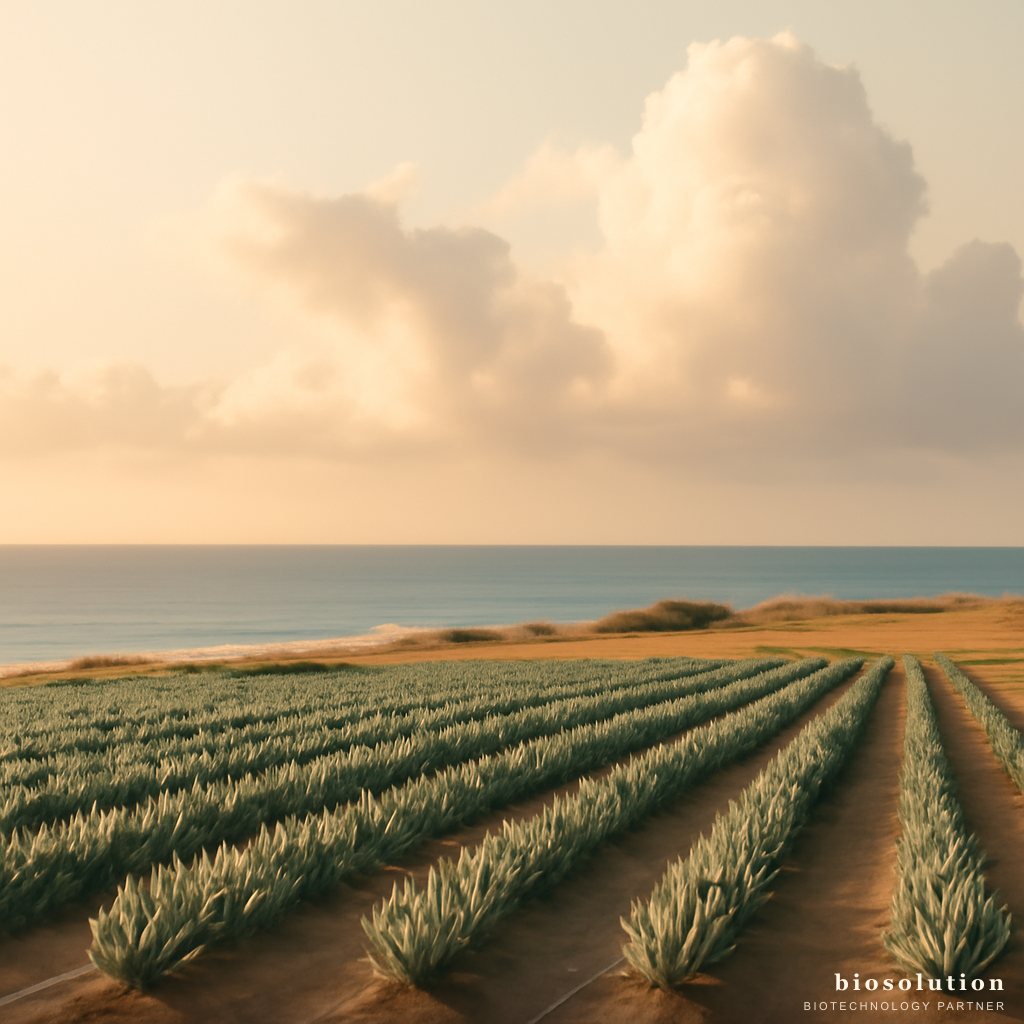
Improving coastal saline soil is a crucial step for farmers working in coastal areas. Saline soil has high salt levels that disrupt water and nutrient absorption by plants, causing stunted growth, yellowing leaves, and even crop failure. Contributing factors include seawater intrusion, brackish water irrigation, and poor drainage. In Indonesia, saline land area is estimated at 2.5 million hectares (Source: Ministry of Agriculture). Without treatment, land productivity continues to decline. However, with agricultural biotechnology, saline soil can be restored naturally. One effective solution is the Soil Structure Improvement Formula from Biosolution, which contains superior bacteria such as Azotobacter sp., Azospirillum sp., and Bacillus megaterium. The key to success lies in the proper application schedule according to the planting phase. This article will outline the application schedule per phase for maximum results.
Why Saline Soil Needs Structure Improvement?
Coastal saline soil generally has a dense structure, low porosity, and poor cation exchange capacity (CEC). Salt accumulation such as sodium (Na⁺) causes clay particles to swell and close pores, making it difficult for water and air to enter. As a result, plant roots struggle to develop, and beneficial soil microorganisms die. Improving coastal saline soil means restoring soil structure to a crumbly texture, increasing porosity, and reducing salt levels.
The Soil Structure Improvement Formula works through three main mechanisms:
- Azotobacter sp. and Azospirillum sp.: Fix nitrogen from the air and produce exopolysaccharides (EPS) that bind soil particles into stable aggregates, thereby increasing porosity.
- Bacillus megaterium: Solubilizes bound phosphate and potassium in the soil, making them available to plants. This bacterium also produces organic acids that help neutralize soil pH.
With regular application, previously hard and crusty soil becomes loose, drainage improves, and plant roots can penetrate deeper. As a result, plants are more tolerant to salinity stress.
Application Schedule of Soil Structure Improvement Formula per Planting Phase
For optimal benefits, application must be adjusted to the plant growth phase. Here is a schedule guide for annual crops such as rice, corn, or vegetables in coastal saline soil.
Phase 1: Land Preparation and Tillage (Week 0)
In this phase, the soil has just been plowed or hoed. The main goal is to inoculate bacteria into the soil so they immediately work to improve structure and suppress pathogen populations. Application is done by drenching or spraying the soil during tillage.
- Dosage: 10 ml per liter of water, enough to wet 1 m² of land.
- Method: Mix 10 ml of Soil Structure Improvement Formula into 1 liter of clean water (non-chlorinated). Spray evenly onto the tilled soil, then mix with a hoe or rake to distribute the bacteria evenly.
- Note: If the soil is too dry, sprinkle a little water before application. Avoid direct sunlight; morning or evening application is better.
Phase 2: Early Planting / Transplanting (Week 2)
After seeds are sown or seedlings are transplanted, bacteria need to be strengthened to support early root growth. In this phase, a second application is done.
- Dosage: 10 ml per liter of water, drench around the root zone (200 ml per plant).
- Benefits: Azospirillum sp. produces phytohormones (auxins, cytokinins) that stimulate root elongation, helping plants adapt to saline environments. Bacillus megaterium begins to solubilize bound phosphate, supporting root formation.
Phase 3: Active Vegetative (Week 4)
This phase is when plants grow rapidly, requiring many nutrients. The third application ensures nutrient availability and continued soil structure improvement.
- Dosage: 10 ml per liter of water, drench evenly in the root zone.
- Benefits: Azotobacter sp. and Azospirillum sp. fix nitrogen needed for leaf and stem formation. EPS produced further improves soil aggregation, increasing aeration and water infiltration.
Phase 4: Pre-Flowering / Primordia (Week 6)
Approaching the generative phase, plants need large amounts of phosphorus and potassium for flower and fruit formation. The fourth application focuses on nutrient solubilization.
- Dosage: 10 ml per liter of water, drench or spray onto the soil.
- Benefits: Bacillus megaterium actively solubilizes phosphate and potassium, ensuring adequate nutrient supply. Improved soil structure also facilitates root nutrient uptake.
Phase 5: Grain / Fruit Filling (Week 8)
In this phase, plants need continuous nutrients. The fifth application helps maintain nutrient availability and soil health.
- Dosage: 10 ml per liter of water, drench around the root zone.
- Benefits: Bacteria continue to improve the soil, reducing salinity effects that may reappear. Nitrogen from biological fixation supports grain filling.
Phase 6: Post-Harvest (Week 10+)
After harvest, the soil needs to be restored for the next planting season. The sixth application is done before land fallow or subsequent tillage.
- Dosage: 10 ml per liter of water, spray onto crop residues or soil.
- Benefits: Bacteria decompose organic residues into humus, increase soil organic matter, and maintain crumbly structure. This prepares the soil for the next planting season.
Tips for Successful Application for Maximum Results
Improving coastal saline soil is not just about schedule, but also technique and supporting conditions. Here are tips to make the Soil Structure Improvement Formula application more effective:
- Use clean water: Water containing chlorine or high chlorine can kill bacteria. Let well or tap water sit overnight before use.
- Apply in the morning or evening: Avoid extreme temperatures and direct UV light that can damage bacteria.
- Combine with organic matter: Adding compost or manure helps bacteria multiply faster.
- Maintain soil moisture: Soil that is too dry hinders bacterial movement. If dry season, light irrigation before application.
- Conduct soil testing: Before starting, test soil pH and salinity to determine appropriate dosage and frequency.
FAQ: Common Questions about Improving Coastal Saline Soil
1. How long does it take to see improvement in saline soil?
Soil structure improvement begins to be visible after 2-3 weeks of the first application, indicated by looser and easier-to-till soil. However, significant salinity reduction takes 1-2 growing seasons with regular application every 30 days.
2. Is the Soil Structure Improvement Formula safe for plants and the environment?
Very safe. This product contains natural bacteria that are not pathogenic. The bacteria used are native soil microbes that actually increase soil biodiversity. There are no harmful chemical residues.
3. Can this product be used together with chemical fertilizers?
Yes, it is even recommended. Chemical fertilizers can be applied at lower doses (50-70% of standard dose) because bacteria already provide nutrients. Avoid mixing directly with concentrated chemical fertilizers; apply separately 2-3 days apart.
4. Is the application still effective if the soil is still flooded with saltwater?
Application can still be done, but its effectiveness is reduced. It is better to improve drainage first so that saltwater can flow out. After that, bacterial application will be more optimal.
5. What is the minimum number of applications in one growing season?
At least 3 applications according to schedule: during tillage, vegetative phase, and generative phase. For maximum results, follow 6 applications as per the guide above.
Conclusion
Improving coastal saline soil requires a systematic and sustainable approach. The Soil Structure Improvement Formula from Biosolution, with superior bacteria Azotobacter sp., Azospirillum sp., and Bacillus megaterium, offers an effective natural solution. The key is to follow the correct application schedule—from tillage to post-harvest—3 to 6 times per season. With consistency, previously hard and salty soil can transform into productive land that supports optimal plant growth. For more information or consultation, contact the Biosolution team via WhatsApp or see the product Soil Structure Improvement Formula on our website.