Large-Area Granular Biofertilizer: Application Schedule per Growth Phase for Maximum Yield
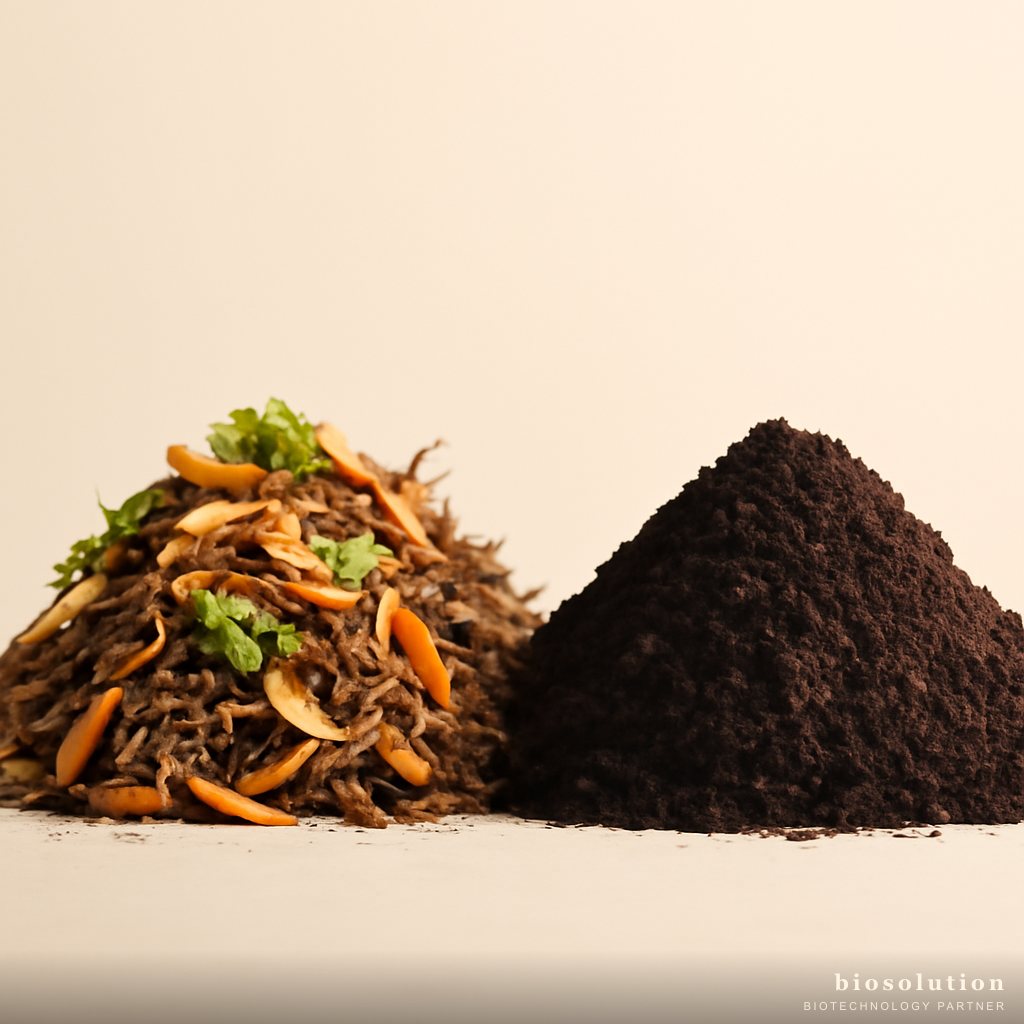
Large-area granular biofertilizer is a practical solution for large-scale plantations seeking application efficiency without compromising microbial quality. With a 2–4 mm granule formulation compatible with spreaders, this product overcomes the challenge of distributing biofertilizer across thousands of hectares. However, the key to success lies not only in the product but also in the precision of the application schedule. When is the best time to apply granular biofertilizer so that microbes work optimally throughout the growth phase? This article presents a technical guide based on product composition data and soil microbiology science.
Why Is the Application Schedule for Granular Biofertilizer Important?
Granular biofertilizer contains living microbes that require supportive environmental conditions to thrive and perform their functions. If application occurs outside critical phases, the effectiveness of nitrogen fixation, phosphate solubilization, or biocontrol can drop drastically. On large areas, scheduling errors mean wasted costs and time. Therefore, understanding plant growth stages and their compatibility with microbial activity is crucial. Biosolution's large-area granular biofertilizer contains five superior strains: Rhizobium sp., Bacillus subtilis, Azospirillum sp., Pseudomonas fluorescens, and Trichoderma sp. Each has a specific role optimal at certain phases.
Tillage Phase: Basic Microbial Preparation
The tillage phase is a critical moment for the first application of granular biofertilizer. At this stage, the soil is still loose and unplanted, allowing microbes to spread evenly and adapt to the environment. Application is done by spreading granules evenly on the soil surface, then mixing them during tillage. The recommended dosage is 100–250 kg per hectare, depending on crop type and soil conditions. For legumes, Rhizobium sp. will begin infecting roots after seed germination, so its presence from the start is crucial. Meanwhile, Bacillus subtilis and Trichoderma sp. begin colonizing the rhizosphere and suppressing potential soil pathogens.
Early Rainy Season Phase: Leveraging Natural Moisture
High soil moisture at the start of the rainy season strongly supports microbial activity. Granular biofertilizer applied during tillage will activate faster with rainwater. If the first application has not been done, the early rainy season is the right time for a follow-up application. Moisture helps granules break down and release microbes into the soil. Azospirillum sp., which is associative with roots, will begin fixing nitrogen from the air and supplying it to plants. At this phase, ensure good drainage to prevent waterlogging, which can hinder aerobic microbial activity such as that of Pseudomonas fluorescens.
Vegetative Phase: Peak Microbial Activity
The vegetative phase is a period of leaf and stem growth requiring high nitrogen. This is where the roles of Azospirillum sp. and Rhizobium sp. are crucial. In legumes, Rhizobium sp. forms root nodules and fixes N2 up to 200 kg N/ha per season. For non-legumes, Azospirillum sp. works associatively around the roots. Application of granular biofertilizer during the vegetative phase can be done by spreading around the root zone or using a spreader between plant rows. A dosage of 100–150 kg per hectare is sufficient to maintain microbial populations. Bacillus subtilis also actively solubilizes bound phosphate, increasing P availability for plants.
Generative Phase: Support for Flower and Fruit Formation
Entering the generative phase, plants require more phosphorus and potassium for flower, fruit, and seed formation. Bacillus subtilis and Pseudomonas fluorescens play roles in solubilizing inorganic and organic phosphate, making P available to plants. Application of granular biofertilizer at this phase should be done together with basal NPK fertilization, but not mixed directly because chemicals can inhibit microbes. An interval of 1–2 days after chemical application is safer. Trichoderma sp. also remains active as a biocontrol, preventing fungal pathogen attacks that often occur during high humidity in the generative phase.
Application Technique with Spreaders for Large Areas
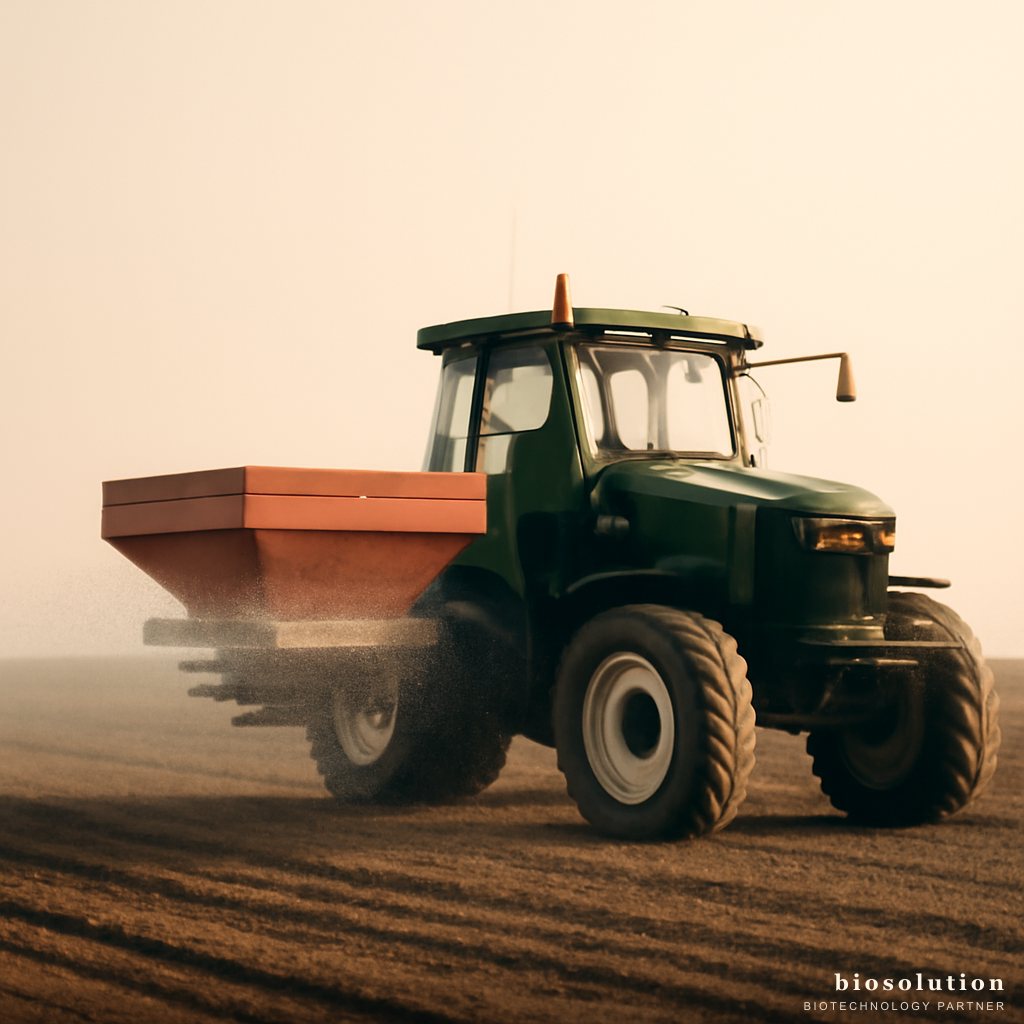
The main advantage of granular biofertilizer is ease of application using spreaders. The 2–4 mm granule size ensures uniform distribution without clogging nozzles. Here are the application steps:
- Calibrate the spreader according to the desired dosage (100–250 kg/ha).
- Fill the hopper with granules, avoiding overfilling to ensure even distribution.
- Adjust the machine speed and spread width according to field specifications.
- Apply when the soil is moist (after rain or irrigation) to accelerate microbial activation.
- If using a drip irrigation system, granules can be spread around the drippers.
With a spreader, one person can apply granular biofertilizer to tens of hectares per day, saving labor costs up to 70% compared to manual application.
Comparison with Liquid Biofertilizer: Large-Area Efficiency
Liquid biofertilizer requires repeated applications and adequate spray equipment, and has a shorter shelf life. In contrast, granular biofertilizer offers advantages:
- 24-month shelf life at room temperature without significant viability loss.
- Gradual nutrient release because the granule matrix protects microbes from drought and UV light.
- Increases soil organic C due to the organic carrier material.
- Single application per season is sufficient for annual crops, reducing work frequency.
Data show that application of granular biofertilizer on large areas can increase crop yields by 15–25% compared to controls, with up to 30% efficiency in chemical fertilizer use.
Conclusion
A precise application schedule for large-area granular biofertilizer—from tillage, early rainy season, vegetative, to generative phases—ensures each microbial strain works at its optimal moment. Biosolution's Large-Area Granular Biofertilizer Formula product, with 5 microbial strains and 24-month shelf life, is the right choice for B2B plantations prioritizing efficiency and maximum yield. For further consultation on specific dosages for your crops, contact the Biosolution technical team via WhatsApp or see product details on the product page.
FAQ
Q: Can granular biofertilizer be mixed with chemical fertilizers? A: It is best not to mix them directly in one application because chemicals can inhibit microbial viability. Allow a 1–2 day interval after chemical fertilizer application before spreading granules, or apply granules first followed by chemical fertilizer.
Q: How long does the effect of granular biofertilizer last in the soil? A: Microbes in the granules can persist for 3–6 months after application, depending on soil and climate conditions. For perennial crops, reapplication every 6 months is recommended to maintain microbial populations.
Q: Is this product safe for the environment? A: Very safe. All microbial strains used are non-pathogenic and registered with the Ministry of Agriculture. The organic-based granules also naturally improve soil fertility.
Q: Can it be used on paddy rice? A: Yes, but pay attention to flooding conditions. Azospirillum sp. and Bacillus subtilis are tolerant of mild anaerobic conditions. Application at early planting or after water recession is more effective.
Q: How should granules be stored properly? A: Store in a dry, cool place away from direct sunlight. Ideal storage temperature is below 30°C. Do not let granules get wet before application.