MOS Feed Mycotoxin Binder: Successful Integrator Case Study Applying Feed Mycotoxin Binder Formula
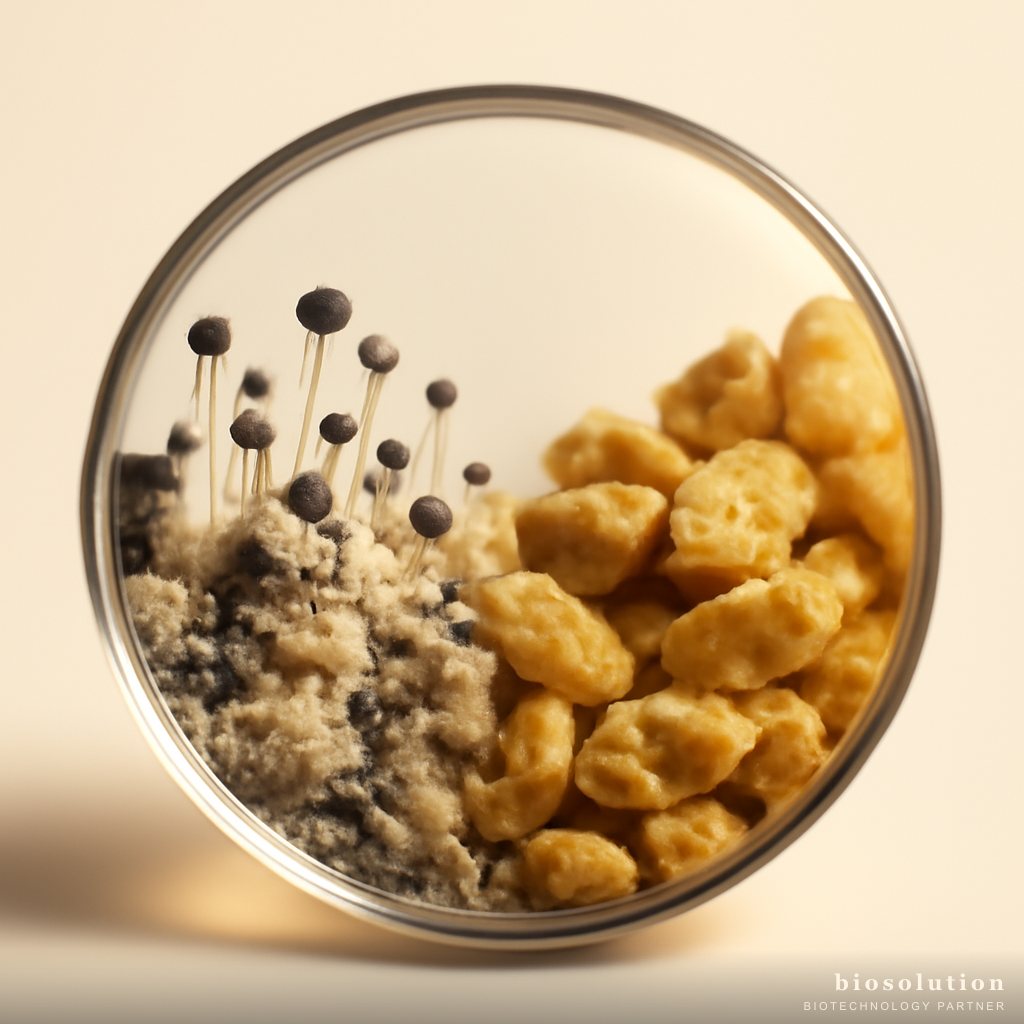
Mycotoxins in animal feed are a scourge for feed mills and integrators, especially during the rainy season with high humidity. Mycotoxin-producing fungi such as aflatoxin, ochratoxin, and fumonisin can reduce livestock performance, impair the immune system, and cause economic losses. To address this, MOS (Mannan-Oligosaccharide)-based mycotoxin binder technology from Saccharomyces cerevisiae cell walls has become a reliable solution. This article presents a case study of a major integrator in East Java that successfully implemented the Feed Mycotoxin Binder Formula from Biosolution to protect their commercial feed.
Why is MOS-Based Mycotoxin Binder Effective?
Understanding MOS Mechanism of Action
MOS is a compound derived from the cell wall of Saccharomyces cerevisiae yeast. Its chemical structure can bind various types of mycotoxins through hydrophobic bonds and physical interactions. Unlike inorganic binders such as bentonite, MOS is more selective and does not bind essential nutrients. Additionally, MOS acts as a prebiotic that supports the growth of beneficial bacteria in the livestock digestive tract.
Advantages of MOS for Feed Mills
- Multi-toxin binding: Effective against aflatoxin, ochratoxin, T-2 toxin, and fumonisin.
- Safe for livestock: Does not interfere with vitamin and mineral absorption.
- Stable during storage: Resistant to heat and extreme pH during feed processing.
Case Study: Broiler Integrator in East Java
Background
PT. Unggas Makmur Sejahtera (pseudonym), an integrator with a feed production capacity of 500 tons per month, experienced an increase in mycotoxin cases in imported corn feed during the 2024 rainy season. Broiler performance declined: FCR increased by 0.15 points, mortality rose by 3%, and harvest weight decreased by 200 grams per bird. After analysis, aflatoxin B1 contamination of 25 ppb and ochratoxin A of 15 ppb were found, exceeding safe limits.
Solution: Feed Mycotoxin Binder Formula
The integrator adopted the Feed Mycotoxin Binder Formula from Biosolution at a dose of 2 kg per ton of feed. This product contains Saccharomyces cerevisiae cell wall rich in MOS and β-glucan. Application was done during feed mixing at the feed mill, without altering the nutritional formulation.
Results Achieved
After 4 weeks of application, significant improvements were observed:
- FCR decreased from 1.65 to 1.55 (equivalent to normal baseline).
- Mortality decreased from 5% to 2%.
- Harvest weight increased by 150 grams per bird.
- Liver and intestinal quality scores improved on necropsy.
The feed mill manager, Mr. Andi, acknowledged: "Since using the Feed Mycotoxin Binder Formula, we no longer worry about the quality of corn during the rainy season. Livestock performance is maintained, and medication costs have dropped drastically."
Technology Behind the Feed Mycotoxin Binder Formula
Saccharomyces cerevisiae Cell Wall: Source of MOS and β-glucan
Yeast cell walls are specially extracted to preserve mannan and glucan structures. MOS acts as a molecular trap that binds mycotoxins in the digestive tract, then excreted with feces. β-glucan stimulates non-specific immunity, helping livestock fight toxic effects that may escape.
Proper Dosage and Application
This product is formulated as a fine powder that mixes easily. Recommended dosage:
- Prevention: 1 kg per ton of feed.
- Moderate to severe contamination: 2 kg per ton of feed.
No additional nutritional adjustments are needed, as the product is inert and does not bind vitamins or minerals.
Practical Considerations for Feed Mills and Integrators
Integration with Feed Biosecurity Program
Mycotoxin binders are not the only solution. It is also important to:
- Control warehouse humidity (<14% RH).
- Rotate feed stock using FIFO.
- Conduct routine mycotoxin testing (ELISA or HPLC).
However, with the Feed Mycotoxin Binder Formula, feed mills have an additional highly effective layer of protection.
Cost-Benefit Analysis
The additional cost of using the product is around IDR 15,000–30,000 per ton of feed (depending on dosage). Compared to potential losses from high FCR and mortality, this investment is very profitable. The case study above shows savings in feed and medication costs of up to 20%.
Comparison with Other Mycotoxin Binder Products
MOS vs. Bentonite
Bentonite is effective at binding aflatoxin, but less effective against ochratoxin and fumonisin. Additionally, bentonite can bind nutrients such as manganese and zinc if overdosed. MOS is more selective and multi-toxin.
MOS vs. Detoxifying Enzymes
Enzymes (e.g., aflatoxin-detoxifim) work specifically and require certain pH conditions. MOS works physically, does not depend on pH, and is stable under various feed conditions.
Conclusion
The application of the Feed Mycotoxin Binder Formula based on MOS from Biosolution has proven effective in the case study of an integrator in East Java. At a dose of 1–2 kg per ton of feed, this product can suppress the negative impacts of mycotoxins, maintain FCR, and reduce mortality. Saccharomyces cerevisiae cell wall technology provides feed safety assurance without interfering with nutrition. For feed mills and integrators facing mycotoxin challenges, this solution is worth considering as part of a feed biosecurity strategy.
Want to know more? Consult with the Biosolution team or see product details Feed Mycotoxin Binder Formula.
FAQ
What is MOS and how does it bind mycotoxins?
MOS (Mannan-Oligosaccharide) is a compound from the cell wall of Saccharomyces cerevisiae yeast that can bind various mycotoxins through hydrophobic bonds. MOS is not digested by livestock, so bound toxins are excreted with feces, preventing absorption in the intestine.
What is the correct dosage for broiler feed?
Preventive dose is 1 kg per ton of feed, while for moderate to severe contamination, 2 kg per ton. Ensure even mixing during blending. The product is safe for daily use with no side effects.
Is this product safe for all types of livestock?
Yes, the Feed Mycotoxin Binder Formula is formulated for all livestock, including chickens, pigs, cattle, and fish. The Saccharomyces cerevisiae cell wall content is GRAS (Generally Recognized as Safe) and does not disturb nutritional balance.
How to ensure the product is evenly mixed?
Use a standard feed mixer with a minimum mixing time of 5 minutes. The product is a fine powder, so it disperses easily. For large-scale feed mills, it is recommended to use a premix carrier before mixing into complete feed.
Does it need to be combined with other mycotoxin binders?
No, because MOS already covers a broad spectrum. However, if there is very high aflatoxin contamination (>50 ppb), it can be combined with calcium bentonite, but still pay attention to nutritional balance.