Newcastle Disease ND in Chickens: Prevention Management with Probiotics for Broilers
Newcastle Disease (ND) is one of the most detrimental viral diseases in broiler chickens. High mortality rates, decreased performance, and trade restrictions due to ND require farmers to have a comprehensive prevention strategy. In addition to vaccination and biosecurity, gut health management through probiotics has become an important pillar in preventing Newcastle Disease ND in chickens. Biosolution's Broiler Probiotic Formula offers an applicable solution that can be integrated into daily broiler farm programs.
Why Probiotics Are Effective for ND Prevention?
Probiotics do not directly kill the ND virus, but strengthen the mucosal immune system of the gut and reduce oxidative stress that triggers susceptibility to infection. The strains in the Broiler Probiotic Formula, Lactobacillus acidophilus, Bacillus subtilis, and Bacillus coagulans, have synergistic mechanisms:
Competitive Exclusion
Probiotic bacteria compete with pathogens (including ND virus entering via the fecal-oral route) for adhesion sites and nutrients in the gut. Lactobacillus acidophilus produces lactic acid which lowers gut pH, inhibiting the growth of gram-negative bacteria such as E. coli and Salmonella that can trigger secondary infections during ND.
Immunomodulation
Probiotics stimulate the production of secretory IgA and anti-inflammatory cytokines, enhancing humoral and cellular immune responses. Research shows that Bacillus subtilis supplementation increases antibody titers against the ND virus after vaccination.
Digestive Enzymes
Bacillus subtilis and Bacillus coagulans produce protease, amylase, and lipase that improve feed digestibility. With optimal nutrition, chickens have more energy for the immune system rather than fighting infection.
How to Apply the Broiler Probiotic Formula
The advantage of the Broiler Probiotic Formula is its application flexibility. Here is a detailed guide for each method:
Application via Drinking Water
The most practical method for farmers with nipple drinker or bell drinker systems. Dosage: 1 ml per liter of drinking water. Administer in the morning after feeding. Ensure drinking water is clean and chlorine-free (let tap water sit for 1 hour before mixing probiotics).
Tips: Use a dosing pump or clean bucket. Do not mix probiotics with vitamin C or organic acids simultaneously as they can alter pH and reduce bacterial viability.
Application via Feed
Dosage: 2 ml per kg of feed. Spray the probiotic solution evenly onto the feed, mix until homogeneous. Ideal for farmers using mash or crumble feed. For pellet feed, spore-forming Bacillus coagulans is heat-resistant (up to 90°C) and remains stable even through the pelleting process.
Frequency: Daily during the starter phase (days 1–14) to build a strong probiotic population. During the grower–finisher phase (day 15–harvest), frequency is reduced to 3 times per week (Monday, Wednesday, Friday).
Application via Drench
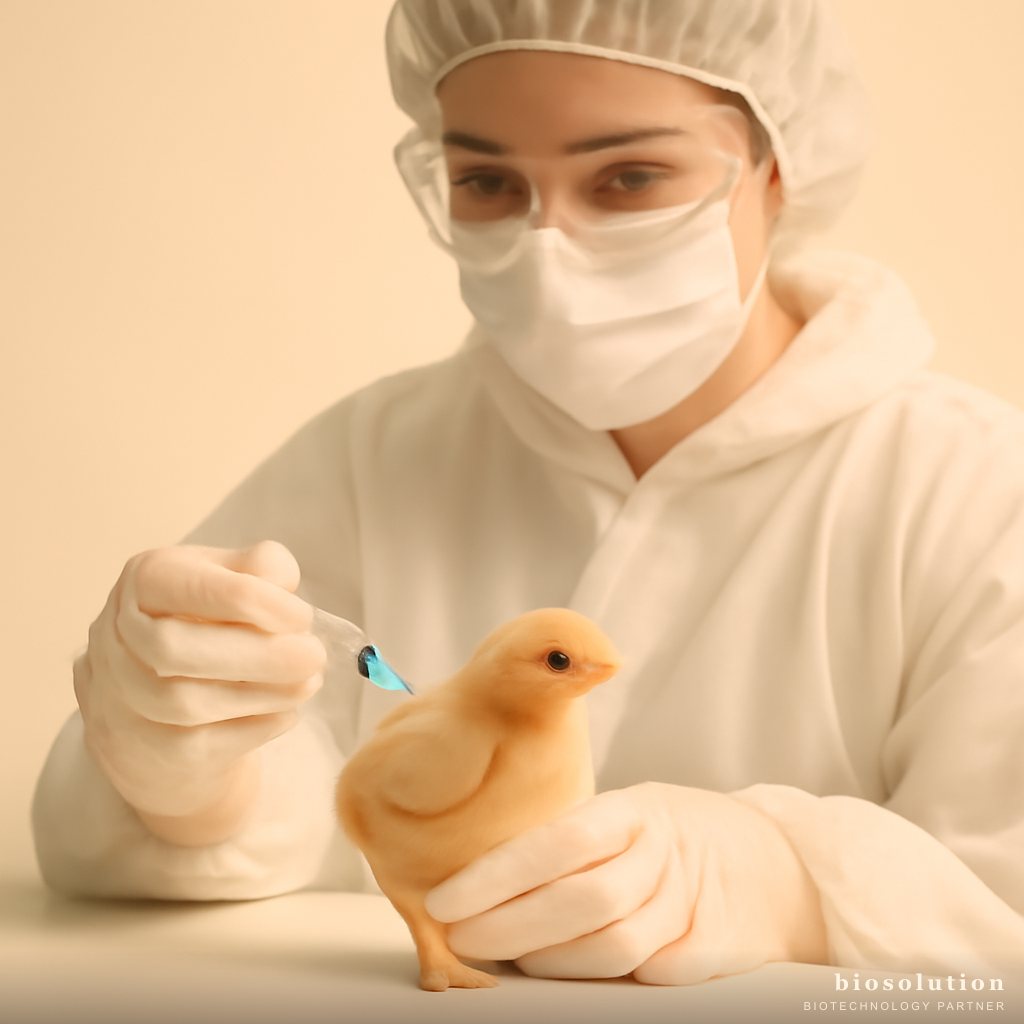
This method is rarely used in broilers due to extra labor, but is effective for sick or stressed chickens. Mix 1 ml of probiotic with 10 ml of water, then drench directly into the chicken's mouth. Suitable for individual treatment of chickens showing mild ND symptoms.
Optimal Dosage and Frequency
Based on product data, here are dosage recommendations for broiler chickens:
| Method | Dosage | Starter Frequency | Grower-Finisher Frequency |
|---|---|---|---|
| Drinking water | 1 ml/L | Daily | 3x/week |
| Feed | 2 ml/kg | Daily | 3x/week |
| Drench | 1 ml/bird | During stress | At early symptoms |
Administration time: Morning after feeding. This is because chickens tend to drink more after eating, so probiotics are optimally absorbed.
Role of Probiotics in ND Prevention Program
ND prevention cannot rely on a single method. Probiotics must be part of a holistic strategy:
Integration with Vaccination
Probiotics enhance ND vaccine efficacy. Administer probiotics 3 days before and 3 days after vaccination to reduce stress and strengthen immune response. Avoid giving probiotics simultaneously with vaccines (allow a 2-hour gap) because low pH can inactivate the vaccine virus.
Biosecurity
Probiotics do not replace biosecurity. Ensure disinfection of the coop, personnel traffic, and isolation of new chickens remain strict. However, probiotics can suppress pathogen populations in the gut environment, thereby reducing ND spread through feces.
Nutrition
Quality feed with balanced protein, energy, and micronutrients supports probiotic function. Additional amino acids such as methionine and lysine are important for IgA synthesis. Avoid unnecessary antibiotic use as it can kill probiotics.
Performance Data: FCR and ADG
The Broiler Probiotic Formula has been tested on broiler farms in West Java and East Java. Results show:
- FCR improvement of 8–12% from an average of 1.6 to 1.45-1.50 at 35-day harvest.
- ADG increase of 5–10% from 45 g/day to 48-50 g/day.
- Mortality <3% during 35 days of rearing, including reduced deaths due to ND and secondary infections.
- 0% antibiotic residue in meat, meeting export and food safety standards.
Main mechanism: Lactobacillus acidophilus lowers gut pH, inhibiting the growth of E. coli and Clostridium which are often causes of death in ND-infected chickens. Bacillus subtilis produces enzymes that improve feed digestibility, so chickens continue to grow even when appetite decreases during illness.
Case Study: Broiler Farm in Subang
Mr. Ahmad, a broiler farmer with 10,000 birds per cycle, has been using the Broiler Probiotic Formula since 2024. Previously, he often lost 5-7% of chickens due to ND despite vaccination. After using probiotics via drinking water daily during the starter phase, mortality dropped to 1-2%. FCR improved from 1.65 to 1.52. "Chickens are healthier, appetite remains good even in bad weather. I no longer need antibiotics," he said.
Conclusion
Prevention of Newcastle Disease ND in chickens requires an integrated approach. Biosolution's Broiler Probiotic Formula provides a practical and effective solution to strengthen gut immunity, improve FCR, and reduce outbreak risk. With application via drinking water or feed, farmers can easily integrate probiotics into their daily program. For optimal results, consult with Biosolution's technical team via WhatsApp for dosage and schedule adjustments according to your coop conditions.
FAQ
Can probiotics replace ND vaccine?
No. Probiotics do not replace vaccination but complement it. Vaccination remains mandatory to form specific immunity against the ND virus. Probiotics strengthen non-specific immunity and improve vaccine efficacy by suppressing stress and enhancing immune response.
How long before results are seen with probiotics?
Improvement in FCR and reduction in mortality are usually seen after 1-2 rearing cycles (35-70 days). However, effects on gut health and appetite can be felt within the first 3-5 days of administration.
Can probiotics be mixed with medication or vitamins?
It is best not to mix them in the same container. Allow at least a 2-hour gap between probiotic administration and medication or vitamins. Chlorine in water should also be removed by letting water sit for 1 hour before mixing probiotics.
Are probiotics safe for chickens already infected with ND?
Yes, probiotics are safe and can help reduce symptom severity by suppressing secondary infections and maintaining appetite. However, sick chickens still need to be isolated and receive supportive treatment as advised by a veterinarian.
How to store dissolved probiotics?
The probiotic solution must be used within 24 hours if stored at room temperature, or 48 hours if refrigerated (4°C). Do not store the solution for more than 48 hours as bacterial viability decreases drastically.