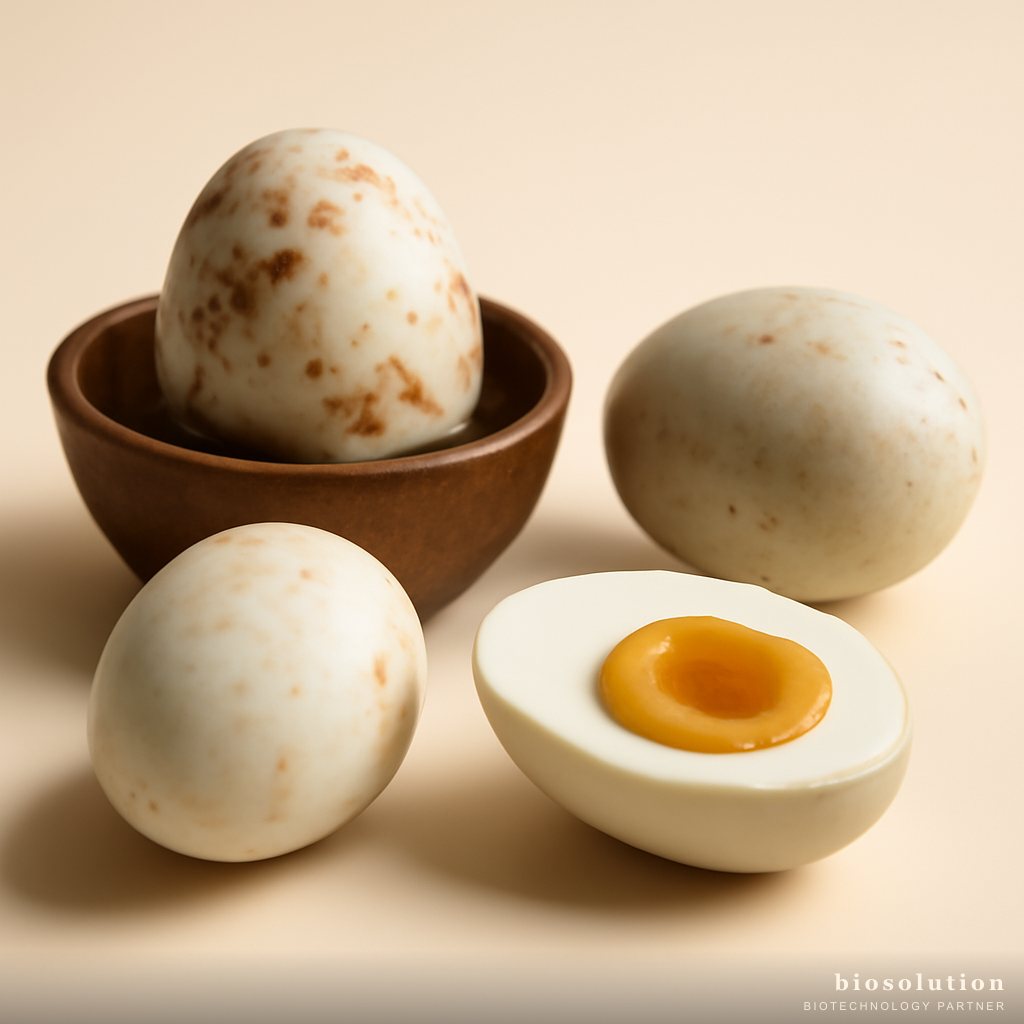
Overcoming Thin and Cracked Eggshells in Laying Hens with Probiotic Formula
Thin and cracked eggshells are a frequent problem faced by commercial layer farmers. This condition not only reduces egg quality but also causes economic losses due to broken and rejected eggs. Many farmers rely on additional calcium supplements, but results are often suboptimal due to impaired nutrient absorption. This is where probiotics, especially Biosolution's Layer Probiotic Formula, come in as an innovative microbiology-based solution to improve shell quality naturally and sustainably.
Why Are Eggshells Thin and Cracked?
Eggshells are primarily composed of calcium carbonate (CaCO₃) secreted by the shell gland in the hen's reproductive tract. Shell formation requires adequate calcium, phosphorus, and vitamin D, as well as optimal physiological conditions. Some main causes of thin and cracked eggshells include:
- Nutritional deficiency: Lack of calcium, phosphorus, or vitamin D3 in feed.
- Absorption disorders: Damage to the intestinal mucosa due to infection or gut microbiota imbalance (dysbiosis) hinders mineral absorption.
- Stress: Heat stress, high stocking density, or poor management increases cortisol production, which inhibits shell formation.
- Hen age: Older hens (>70 weeks) have reduced calcium absorption efficiency.
- Disease: Viral (ND, IB) or bacterial (Salmonella, E. coli) infections can disrupt calcium metabolism.
These factors are interrelated and often cannot be addressed simply by increasing calcium dosage. A holistic approach that improves the digestive tract as the center of nutrient absorption is needed.
The Role of Probiotics in Improving Shell Quality
Probiotics are live microorganisms that, when administered in adequate amounts, confer health benefits to the host. In laying hens, probiotics work through several mechanisms that directly or indirectly affect shell thickness:
- Enhancing calcium absorption: Probiotics produce phytase enzymes and organic acids that help dissolve calcium in feed, making it more easily absorbed in the small intestine.
- Balancing gut microbiota: By inhibiting pathogenic bacteria such as Salmonella and E. coli, probiotics maintain intestinal mucosal integrity and prevent diarrhea, which can disrupt nutrient absorption.
- Reducing inflammation: Some probiotic strains modulate immune responses, suppressing chronic inflammation in the digestive tract that can drain energy and nutrients.
- Increasing vitamin K production: Vitamin K plays a role in calcium metabolism and shell matrix formation.
Thus, probiotics not only address absorption issues but also create an optimal gut environment for thick and uniform shell formation.
Layer Probiotic Formula: Composition and Mechanism
Biosolution's Layer Probiotic Formula is specifically designed for laying hens with three superior bacterial strains:
- Lactobacillus bulgaricus: This strain produces lactic acid that lowers gut pH, inhibiting the growth of pathogenic bacteria like Salmonella. Additionally, lactic acid helps dissolve minerals, including calcium, making them more available for absorption.
- Lactobacillus acidophilus: Plays a role in stabilizing gut microbiota. L. acidophilus adheres to the intestinal wall and forms a protective biofilm, preventing pathogen colonization. This strain also produces antimicrobial bacteriocins.
- Bacillus coagulans: The main advantage of this strain is its ability to form spores that are resistant to heat and stomach acid. The spores germinate in the small intestine and produce enzymes that enhance feed digestion, including phytase that releases bound calcium. B. coagulans also stimulates vitamin K production and increases intestinal villi density, expanding the absorption area.
These three strains work synergistically: Lactobacillus creates an acidic environment that supports enzyme activity, while Bacillus provides long-term effects due to its spores that can persist in the digestive tract.
Data and Results: Improvement in Shell Thickness
Although specific data from Biosolution's internal trials are not included here, scientific research has shown that probiotic supplementation in laying hens can increase shell thickness by 5–10% and significantly reduce the percentage of cracked eggs. A study published in Poultry Science (2019) reported that administering Bacillus coagulans to laying hens increased serum calcium concentration and improved shell quality (external source).
In general, farmers using the Layer Probiotic Formula report:
- Egg production increases by 3–5%
- Thicker and more uniform shells
- Drastic reduction in cracked egg cases
- Sustained production persistency until the end of the rearing period
Application Method and Correct Dosage
For optimal results, the Layer Probiotic Formula is administered through drinking water at a dose of 1 ml per liter of water, daily during the production period, preferably in the morning. Ensure drinking water is clean and does not contain excessive chlorine (let tap water stand for 1 hour before mixing with probiotics).
Application steps:
- Prepare clean drinking water in a tank or bucket.
- Mix the Probiotic Formula according to dosage (e.g., 10 ml for 10 liters of water).
- Stir well and give to hens in the morning after feeding.
- Clean drinkers daily to prevent contamination.
Probiotics can be combined with vaccination and treatment programs, but do not mix with antibiotics or disinfectants at the same time. Allow a minimum 4-hour interval.
Case Study: Successful Farmer
Mr. Surya, a layer farmer in West Java, complained about thin and many cracked eggshells since his hens entered week 50. After using the Layer Probiotic Formula for 2 weeks, he saw significant changes: the percentage of cracked eggs dropped from 8% to 2%, and shell thickness increased. He also noted a 4% increase in egg production. According to him, investing in probiotics is far more efficient than increasing calcium dosage that is not absorbed.
Conclusion
Thin and cracked eggshells are not a problem that must be accepted. With a probiotic-based approach, farmers can naturally improve shell quality without side effects. Biosolution's Layer Probiotic Formula, with its combination of Lactobacillus bulgaricus, Lactobacillus acidophilus, and Bacillus coagulans, offers an integrated solution to enhance calcium absorption, balance gut microbiota, and ultimately produce eggs with thick and uniform shells.
For more information or consultation, contact our team via WhatsApp. See the product Layer Probiotic Formula for full details.