Pre-Stocking Pond Bottom Preparation: 8 Effective Formulas for a New Cycle
Pre-stocking pond bottom preparation is a crucial step that determines the success of shrimp or fish farming. Without proper preparation, stocked seed are at high risk of stress, disease, and even mass mortality. This article presents 8 effective formulas covering technical, biological, and daily water parameter monitoring aspects such as ammonia, pH, oxygen, and salinity. By following this guide, new cycle farmers can start cultivation with more confidence.
Why is Pond Bottom Preparation Important?
Pond bottom preparation is not just about drying and filling water. This process aims to create an optimal environment for seed, minimize pathogens, and ensure natural nutrient availability. A well-prepared pond will have a stable bottom, clear water, and a dominant population of beneficial microbes. This directly affects survival rate (SR), growth, and feed conversion ratio (FCR).
Risks of Poor Preparation
- Ammonia and nitrite buildup due to incomplete decomposition of organic residues.
- Extreme pH fluctuations causing stress to seed.
- Low dissolved oxygen especially at night.
- Outbreak of pathogenic bacteria such as Vibrio spp. triggering diseases.
Therefore, pre-stocking pond bottom preparation must be done systematically and measurably.
8 Formulas for Pre-Stocking Pond Bottom Preparation
1. Drying and Liming
After harvest, dry the pond for 5-7 days until the soil cracks. The goal is to oxidize organic compounds and kill residual pathogens. Next, apply lime using dolomite or agricultural lime at a dose of 1-2 tons per hectare (depending on soil pH). Lime helps stabilize the pond bottom pH in the range of 7.5-8.5.
2. Tilling the Bottom Soil
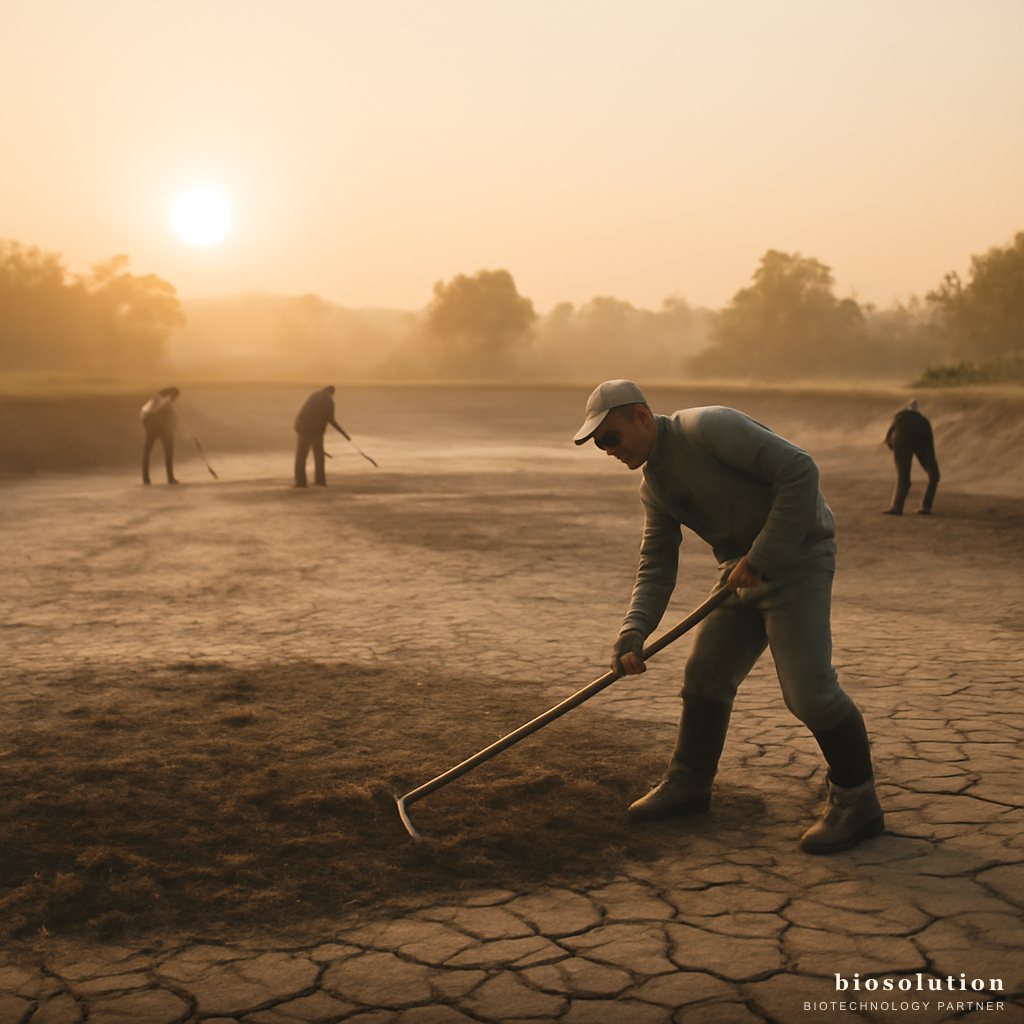
Use a tractor or hoe to turn over the bottom soil layer to a depth of 10-15 cm. This accelerates the decomposition of organic matter and releases toxic gases such as H2S. After that, level the pond bottom again.
3. Application of Bottom Probiotics
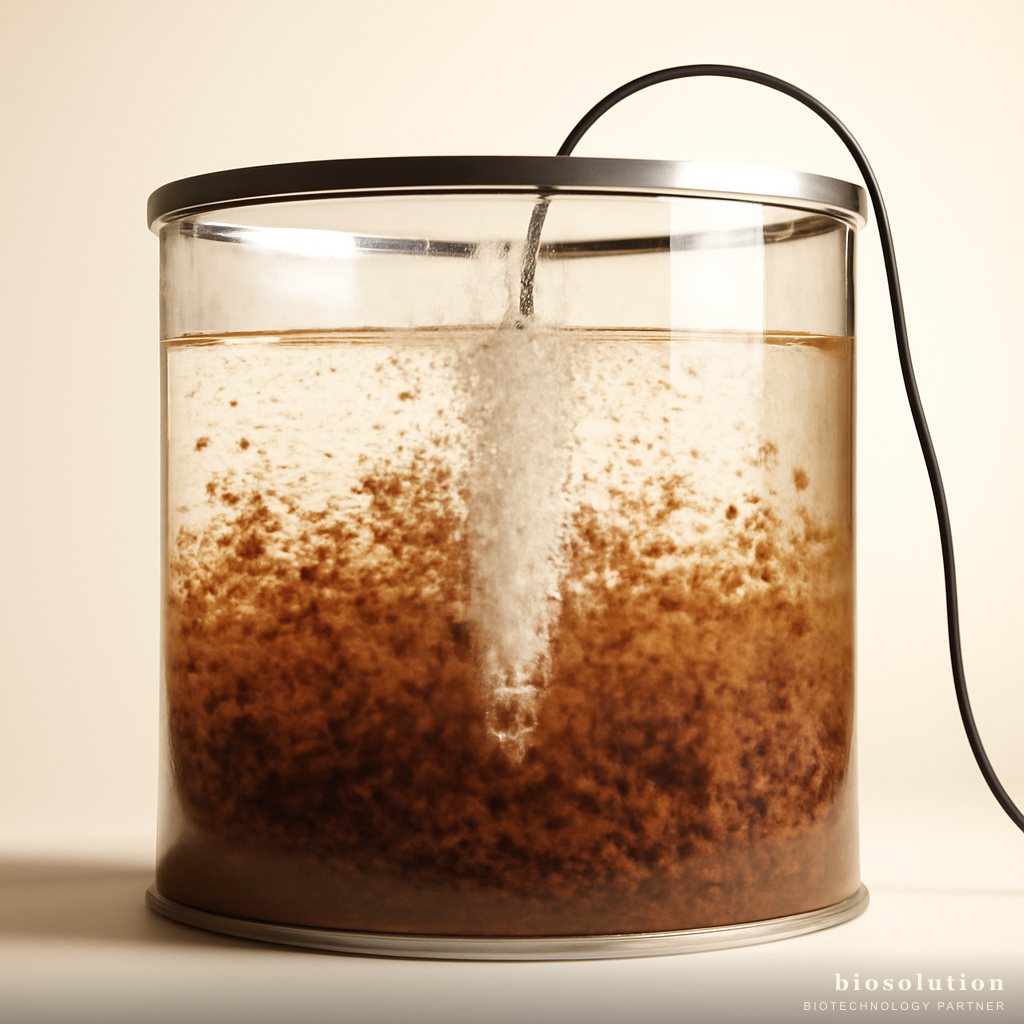
One key formula is the application of probiotics containing beneficial bacteria such as Bacillus subtilis and Thiobacillus sp. Pond Bottom Preparation Formula from Biosolution is specifically designed for this stage. Bacillus subtilis acts as a decomposer breaking down organic residues into simple compounds, while Thiobacillus sp. helps stabilize pH by oxidizing sulfides. Extracellular enzymes in this formula accelerate the decomposition process. The application dose is 5 L per hectare, spread when the pond is dry, in the morning before water filling.
4. Initial Water Filling and Chlorination
Fill the pond with water to a height of 30-40 cm, then add chlorine at 10-15 ppm to kill wild organisms. Let it sit for 3-5 days until chlorine dissipates (neutralized with thiosulfate). This process ensures the pond is free from competitors and disease vectors.
5. Water Fertilization
After chlorine is gone, fertilize to stimulate plankton growth. Use urea at 5-10 ppm and TSP at 2-5 ppm, or organic fertilizers like soybean meal. Gradual fertilization is needed to achieve water transparency of 30-40 cm.
6. Daily Water Parameter Monitoring
This is the most critical formula. Every day, measure and record the following parameters:
- Ammonia (NH3): Ammonia level must be <0.1 ppm. High ammonia causes gill damage and reduced appetite.
- pH: Ideally 7.5-8.5. Daily fluctuation should not exceed 0.5. Low pH activates heavy metals, high pH increases ammonia toxicity.
- Dissolved oxygen (DO): Minimum 4 ppm in the morning, ideally >5 ppm. Low DO causes stress and increases disease susceptibility.
- Salinity: For vaname shrimp, optimal salinity is 15-25 ppt. Drastic salinity changes trigger unsynchronized molting.
Use calibrated digital measuring instruments. Record data in a logbook for trend analysis. If any parameter is off, immediately take corrective action: additional aeration for low DO, liming for low pH, or water exchange for high ammonia.
7. Biofilm Cultivation
Biofilm is a microbial layer attached to the pond bottom surface. To accelerate its formation, install substrates such as bamboo or nets, and apply advanced probiotics. Biofilm serves as a natural feed source and shelter for seed, and aids the nitrogen cycle.
8. Biological Test (Nursery)
Before mass stocking, conduct a biological test by placing a few seed in a hapa net inside the pond. Observe for 24-48 hours. If there is no mortality or stress symptoms, the pond is ready for stocking.
The Role of Probiotics in Pond Preparation
Probiotics such as Pond Bottom Preparation Formula play a vital role. Bacillus subtilis bacteria produce protease, amylase, and lipase enzymes that accelerate the decomposition of feed residues and waste. Thiobacillus sp. oxidizes H2S (toxic) into harmless sulfate. This combination creates a clean and stable pond bottom, reducing the risk of early diseases such as white feces syndrome (WFS) and early mortality syndrome (EMS).
According to research from FAO, the use of probiotics in aquaculture can increase SR by up to 20% and lower FCR. With routine application every cycle, farmers can maintain pond quality sustainably.
Case Study: Success of a Farmer in Lampung
Mr. Budi, a vaname shrimp farmer in Lampung, applied the 8 formulas above on a 2-hectare pond. He used Pond Bottom Preparation Formula during the drying stage. As a result, water parameters remained stable for the first 30 days: ammonia <0.05 ppm, pH 7.8-8.2, DO 5-6 ppm, salinity 20 ppt. SR reached 90% with FCR 1.2. Previously, without proper preparation, SR was only 60% and Vibrio attacks were frequent.
Conclusion
Pre-stocking pond bottom preparation is an initial investment that determines the profitability of the cultivation cycle. By following 8 effective formulas—from drying, probiotic application, to daily water parameter monitoring—farmers can create an optimal environment for seed. Parameters such as ammonia, pH, oxygen, and salinity must be closely monitored to avoid future problems. Use quality probiotic products like Pond Bottom Preparation Formula for best results. If you need further consultation, contact our technical team via WhatsApp.
FAQ
1. When is the best time to prepare the pond?
The best time is 2-3 weeks before seed stocking. The drying, liming, and probiotic application processes require time for bacteria to work optimally. Avoid rushed preparation as it can cause unstable water parameters.
2. How to lower high ammonia during preparation?
High ammonia can be reduced by increasing aeration, reducing feeding (if seed are present), and adding probiotics containing nitrifying bacteria. Partial water exchange is also effective if clean water source is available.
3. Are probiotics safe for shrimp seed?
Yes, probiotics such as Bacillus subtilis and Thiobacillus sp. are safe and even beneficial. They are non-pathogenic and help suppress harmful bacteria. Ensure the product is officially registered and follow recommended doses.
4. How long does it take to prepare the pond?
Overall, pond preparation takes 10-14 days, depending on initial conditions. Drying 5-7 days, liming and tilling 1-2 days, water filling and chlorination 3-5 days, and fertilization and monitoring 2-3 days.
5. What should be done if water pH is too low?
Low pH can be raised by liming with dolomite or quicklime. Apply gradually while measuring to avoid overshooting. Aeration also helps stabilize pH by increasing CO2 release.