Premium Gourami Pond Probiotic: Effective Strategy to Reduce Long Rearing Period
Premium gourami cultivation is synonymous with long rearing periods—up to 12-18 months—so the risk of declining water quality and disease outbreaks is higher. Premium gourami farmers often face challenges such as ammonia accumulation, slow growth, and unexpected mortality. However, with the proper application of premium gourami pond probiotics, these challenges can be scientifically addressed. This article presents a case study of how a probiotic formula based on Bacillus subtilis and Nitrosomonas sp. successfully reduced the long rearing period while producing premium-grade harvests.
Why Premium Gourami Requires Special Pond Management?
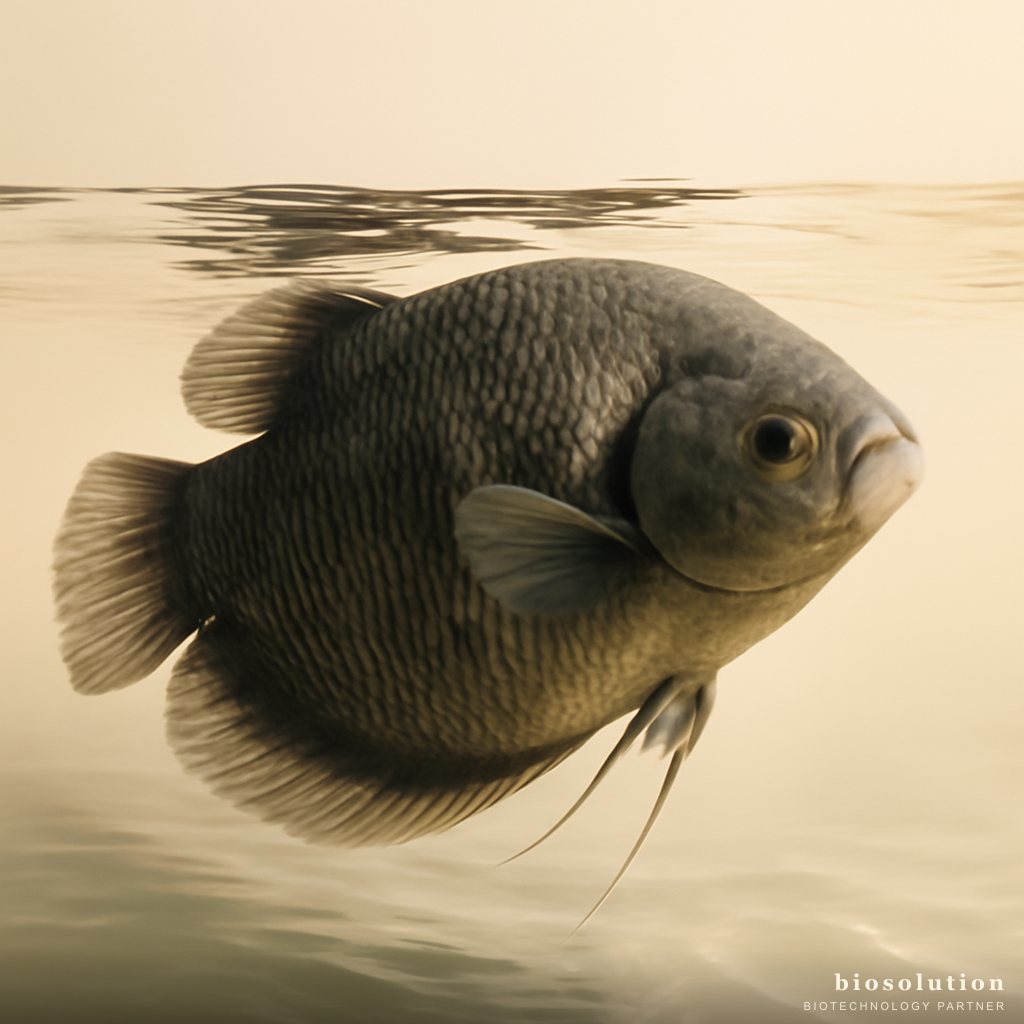
Gourami (Osphronemus goramy) is known for its relatively slow growth compared to other freshwater fish. In intensive cultivation systems, high feed loads cause accumulation of feed residue and feces, producing toxic ammonia. If not managed, ammonia will suppress appetite and growth, even causing death. Premium gourami ponds must have stable water quality with ammonia levels <0.02 mg/L, dissolved oxygen >4 mg/L, and pH 6.5-8.0. Without intervention, these parameters are difficult to maintain for months.
Role of Probiotics in Pond Ecosystem
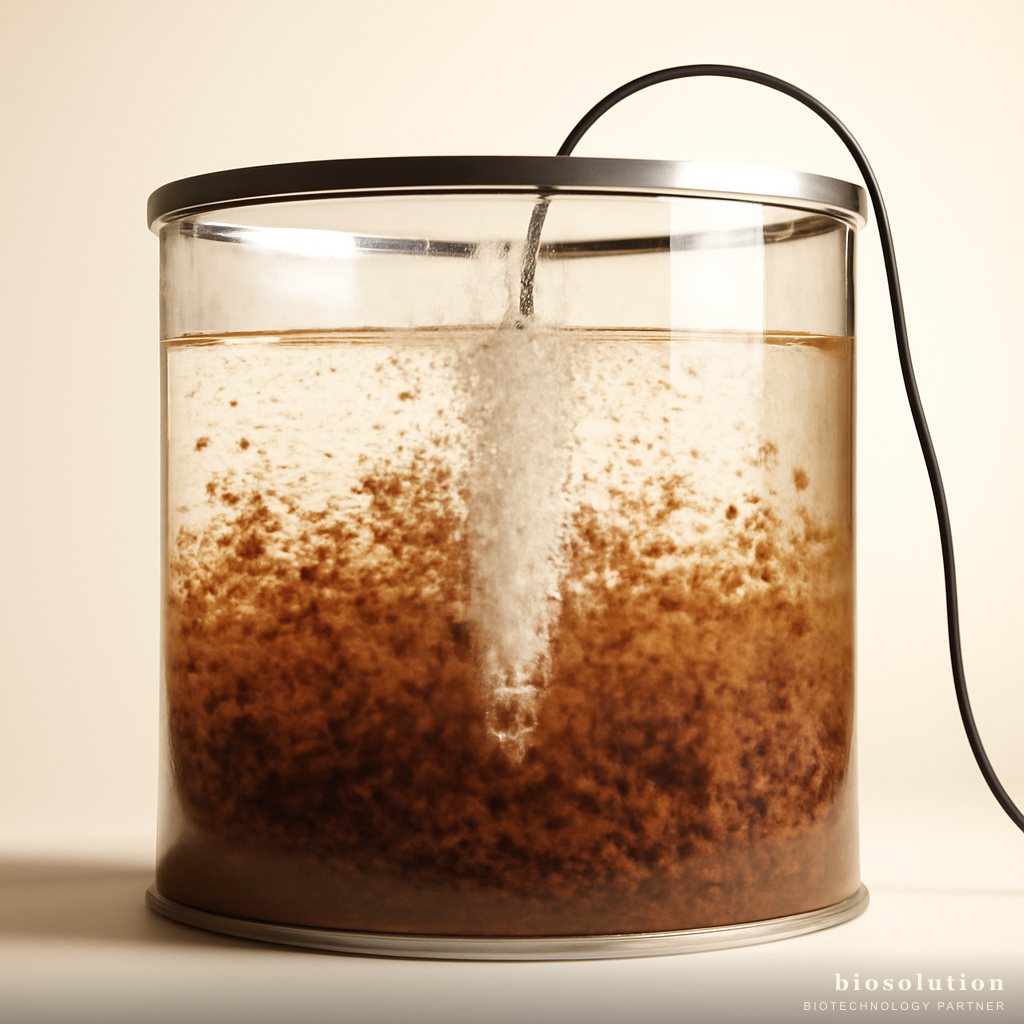
Pond probiotics work by decomposing organic matter, oxidizing ammonia, and suppressing pathogenic bacteria. In the context of premium gourami, two main strains proven effective are:
- Bacillus subtilis: This Gram-positive bacterium produces protease, amylase, and lipase enzymes that degrade feed residue and feces into simple compounds. Additionally, B. subtilis produces antimicrobial compounds such as subtilisin that inhibit the growth of Aeromonas hydrophila and Pseudomonas, which cause diseases.
- Nitrosomonas sp.: This chemoautotrophic bacterium oxidizes ammonia (NH₃) into nitrite (NO₂⁻), which is then further oxidized by Nitrobacter into non-toxic nitrate (NO₃⁻). This nitrification process is vital for maintaining low ammonia levels.
Case Study: Application of Gourami Pond Probiotic Formula
A premium gourami farm in West Java with a pond area of 2,000 m² applied a gourami pond probiotic formula regularly during one rearing cycle (14 months). Previously, the farmer experienced rearing periods up to 18 months with a 25% mortality rate due to branchiomycosis disease and poor water quality. After using probiotics at a dose of 2 L per 1000 m³ of water every 10 days in the morning, the results were as follows:
- Reduction in ammonia levels: From an average of 0.15 mg/L to 0.01 mg/L within 4 weeks.
- Increased growth rate: Average harvest weight increased by 12% compared to the previous cycle.
- Reduced rearing period: From 18 months to 14 months, equivalent to a 22% saving in feed costs.
- Decreased mortality rate: From 25% to 8%.
The farmer also reported that the pond water color became more greenish-blue (indicating balanced phytoplankton) and the ammonia odor significantly decreased. This proves that premium gourami pond probiotics not only improve water quality but also increase production efficiency.
Scientific Mechanism Behind Success
Decomposition of Organic Matter by Bacillus subtilis
Bacillus subtilis can form spores, making it resistant to fluctuating pond conditions. Once applied, these bacteria germinate and produce extracellular enzymes that break down complex polymers (proteins, carbohydrates, fats) into monomers easily absorbed by phytoplankton and other heterotrophic bacteria. This process reduces the organic load at the pond bottom, preventing the formation of toxic gases such as H₂S and methane.
Ammonia Oxidation by Nitrosomonas sp.
Ammonia originates from fish excretion and decomposition of organic matter. Nitrosomonas sp. oxidizes ammonia into nitrite via the enzyme ammonia monooxygenase. Although nitrite is also toxic, the presence of Nitrobacter (usually already present in the pond) will immediately oxidize it into nitrate. With regular probiotic dosing, the Nitrosomonas population is maintained so ammonia does not accumulate. Studies show that adding Nitrosomonas at 10⁴ CFU/mL can reduce ammonia by up to 80% within 48 hours.
Application Guide for Premium Gourami Pond Probiotics
Based on field experience and technical recommendations, here is the proper application guide:
- Pond Preparation: Clean the pond of feed residue and sludge. Ensure aeration is functioning well.
- Initial Dose: Apply 2 L of probiotic per 1000 m³ of water in the morning after feeding.
- Frequency: Repeat every 10 days. During rainy season or when temperature drops, frequency can be increased to every 7 days.
- Monitoring: Measure ammonia, nitrite, and pH levels weekly. If ammonia remains high, increase the dose by 20%.
- Combination with Feed Management: Use quality feed with 28-30% protein content and provide it in measured amounts (3-5% of fish body weight per day).
Economic Benefits of Using Probiotics
Premium gourami farmers who switched to probiotics report increased profit margins due to:
- Lower feed costs: Shorter rearing period means less total feed.
- Higher selling price: Premium-grade gourami (weight >800 grams/fish) commands 20-30% higher prices.
- Reduced treatment costs: With better fish health, expenses for antibiotics and disinfectants can be reduced by up to 60%.
As an illustration, with a probiotic investment of IDR 500,000 per month for a 1,000 m² pond, farmers can save up to IDR 2,000,000 per month in feed costs and achieve earlier harvests.
Conclusion
The application of premium gourami pond probiotics containing Bacillus subtilis and Nitrosomonas sp. has proven effective in reducing long rearing periods, improving water quality, and producing premium-grade harvests. The case study shows that with a dose of 2 L per 1000 m³ every 10 days, farmers can reduce ammonia by up to 90%, increase growth by 12%, and decrease mortality by up to 68%. For optimal results, combine probiotics with feed management and regular monitoring.
Consult your specific pond needs with our technical team via WhatsApp for appropriate dosage recommendations. See the Gourami Pond Probiotic Formula product for more information.
FAQ
1. Are premium gourami pond probiotics safe for consumption fish?
Yes, the Bacillus subtilis and Nitrosomonas sp. strains used are non-pathogenic microbes and have been registered with the Ministry of Marine Affairs and Fisheries. Probiotics leave no harmful residues and actually improve fish meat quality by reducing oxidative stress.
2. How long does it take to see the effects of probiotics after application?
Water quality improvement is usually noticeable within 3-7 days, indicated by reduced ammonia odor and turbidity. Better fish growth becomes apparent after 2-4 weeks as pond conditions stabilize.
3. Can probiotics be mixed with feed?
For premium gourami ponds, direct broadcasting into the pond is more effective because probiotics work throughout the water body. However, if you want to increase the dose, probiotics can be mixed with feed at a ratio of 10 mL/kg feed, left for 15 minutes, then given.
4. What should be done if ammonia levels remain high after application?
Check aeration—ensure dissolved oxygen >4 mg/L. If aeration is adequate, increase the probiotic dose by 50% and temporarily reduce feeding. Perform a 10-20% water change if ammonia >0.5 mg/L.
5. Can probiotics be used together with disinfectants?
It is best not to. Disinfectants such as chlorine or formalin will kill probiotic bacteria. Allow a minimum of 48 hours after disinfectant application before applying probiotics.