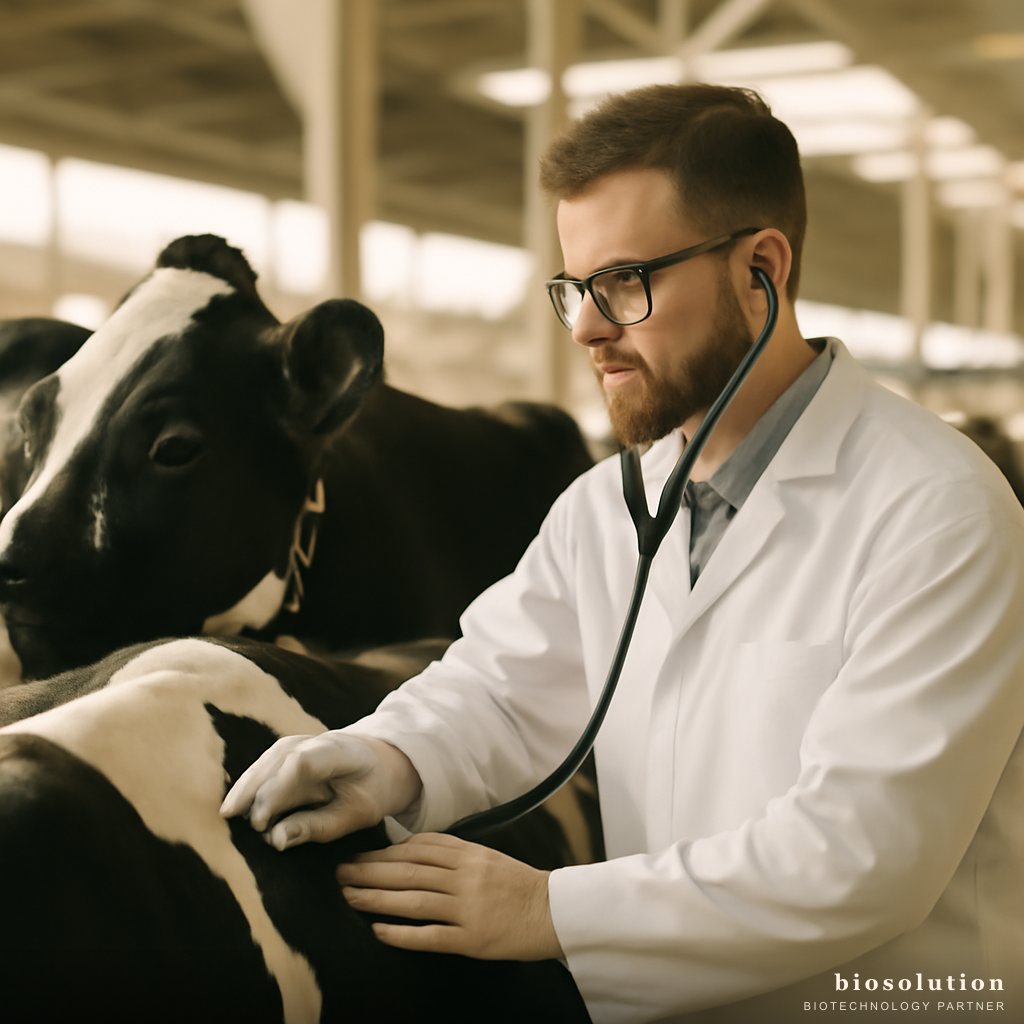
Prevent Rumen Acidosis in High-Concentrate Feedlot Cattle: Main Causes and Economic Impacts
Intensive feedlot cattle operations rely on high-concentrate diets to achieve maximum average daily gain (ADG) in a short time. However, this strategy carries a serious risk: rumen acidosis. This condition not only threatens cattle health but also erodes farmer profits. Understanding the causes and economic impacts of rumen acidosis in high-concentrate feedlot cattle is key to feedlot success. This article thoroughly reviews the mechanism of acidosis, the losses incurred, and probiotic-based solutions to prevent it.
Why Does Rumen Acidosis Occur in High-Concentrate Feedlot Cattle?
Rumen acidosis is a drop in rumen pH below normal (usually <5.5) due to excessive accumulation of volatile fatty acids (VFAs) and lactic acid. In feedlot cattle fed high-concentrate diets (easily fermentable carbohydrates), rumen fermentation occurs very rapidly. Rumen microbes such as Streptococcus bovis and Lactobacillus spp. ferment starch into lactic acid, drastically lowering pH. If pH drops below 5.0, cellulolytic bacteria die, VFA production is disrupted, and metabolic acidosis occurs.
Main triggers of acidosis include:
- Abrupt feed changes: Transition from forage to high concentrate without adaptation.
- Low fiber content: Lack of physically effective fiber (peNDF) reduces saliva production and natural buffers.
- Irregular feeding frequency: Causes overeating in a short time.
- Environmental stress: High temperature or overcrowding.
In intensive feedlots, cattle often receive rations with concentrate proportions >70%. Without proper management, the risk of subclinical or clinical acidosis is very high.
Economic Impacts of Rumen Acidosis in Feedlots
Rumen acidosis not only causes death (feedlot mortality) but also substantial losses through:
Reduced Production Performance
Cattle experiencing subclinical acidosis show a 10–30% decrease in ADG due to reduced feed intake and poor feed efficiency. In acute acidosis, cattle may stop eating entirely, become dehydrated, and eventually die. Data show that subclinical acidosis can suppress ADG by up to 0.2 kg/day.
Treatment and Labor Costs
Managing acidosis requires medications (buffers, antibiotics, intravenous fluids) and extra labor. Farmers must isolate sick cattle, provide therapy, and monitor conditions. These costs can reach tens of millions of rupiah per incident.
Reduced Carcass Quality
Cattle that have experienced acidosis tend to have paler meat, high meat pH, and low marbling. This lowers carcass grade and selling price. Even recovered cattle often suffer liver damage (liver abscesses) due to bacterial translocation from the rumen.
Mortality and Early Culling
In feedlots, mortality rates due to acidosis can reach 2–5% per cycle. Cattle that do not die may become stunted and culled before reaching ideal slaughter weight. The financial loss from losing productive cattle is enormous.
Overall, economic losses from rumen acidosis in high-concentrate feedlot cattle are estimated to reach billions of rupiah per year in Indonesia. Therefore, prevention is a priority.
Role of Probiotics in Stabilizing Rumen pH
One effective prevention strategy is the use of probiotics. Probiotics are live microorganisms that provide health benefits to the host. In feedlot cattle, probiotics work by:
- Suppressing overgrowth of lactic acid bacteria such as Streptococcus bovis.
- Increasing populations of lactate-utilizing bacteria such as Megasphaera elsdenii and Selenomonas ruminantium.
- Stimulating natural buffer production through increased saliva.
- Accelerating rumen adaptation to high-concentrate diets.
The beef cattle probiotic consortium from Biosolution contains superior strains specifically formulated for feedlots. The combination of lactic acid bacteria and lactate-utilizing bacteria helps maintain stable rumen pH, even during high concentrate consumption.
Intensive Feedlot Cattle Probiotic Formula: The Right Solution for Feedlots
Biosolution presents the Intensive Feedlot Cattle Probiotic Formula designed to overcome the challenges of rumen acidosis. This product contains a beef cattle probiotic consortium and cellulase enzymes that work synergistically.
Composition and Mechanism of Action
- Beef cattle probiotic consortium: Contains Lactobacillus acidophilus, Bifidobacterium spp., and Megasphaera elsdenii proven to stabilize rumen pH. L. acidophilus helps digest lactose and produce controlled amounts of lactic acid, while M. elsdenii consumes excess lactate and converts it into beneficial VFAs.
- Cellulase enzymes: Break down crude fiber from concentrates (e.g., bran, meal) so they are more easily fermented without producing excess acid. This improves fiber digestibility and feed efficiency.
Application Method
The product is applied by mixing 30 ml per head per day into the concentrate. Administration is done daily during the fattening period, ideally in the morning. This dose is safe and effective for feedlot cattle weighing 200–400 kg.
Proven Benefits
- ADG increases by 10–14% in feedlots: Field data show significant improvement in daily weight gain.
- 30% faster concentrate adaptation: Cattle adapt more quickly during feed transition, reducing initial acidosis risk.
- Reduces feedlot mortality: Death rates drop drastically due to controlled rumen pH.
- More economical carcass: Meat quality improves, carcass grade is better.
With this probiotic, farmers need not worry about acidosis disrupting productivity.
Holistic Rumen Acidosis Prevention Strategies
In addition to probiotics, feed and environmental management are also important. Here are preventive steps:
Feed Transition Management
- Conduct gradual adaptation over 10–14 days by increasing concentrate proportion by 5–10% per day.
- Provide at least 10% forage of total ration to maintain physical fiber.
Feeding Frequency
- Feed 2–3 times daily in small portions to avoid consumption spikes.
- Ensure feed is always available (ad libitum) so cattle do not go hungry.
Feed Quality
- Use quality concentrate ingredients, avoid easily fermentable materials like high sugar.
- Add natural buffers such as sodium bicarbonate (0.5–1% of ration) during initial adaptation.
Health Monitoring
- Observe acidosis symptoms: decreased appetite, diarrhea, lethargy, and increased drinking frequency.
- Measure rumen pH periodically using rumenocentesis or oral pH meters in suspected cattle.
Barn Environment
- Provide adequate feed and water spaces, avoid competition.
- Reduce heat stress with ventilation and shade.
By integrating probiotics and good management, the risk of rumen acidosis can be minimized.
Case Study: Probiotic Success in a Feedlot
A feedlot in East Java with 500 PO (Peranakan Ongole) cattle experienced subclinical acidosis that reduced ADG from 1.2 kg to 0.8 kg per day. After applying Biosolution's Intensive Feedlot Cattle Probiotic Formula for 30 days, ADG returned to 1.3 kg/day, and mortality rate dropped from 3% to 0.5%. Treatment costs also decreased by 70%. These results demonstrate the effectiveness of probiotics in maintaining rumen health.
Conclusion
Rumen acidosis in high-concentrate feedlot cattle is a serious threat causing reduced ADG, increased mortality, and economic losses. Prevention through probiotics, such as Biosolution's Intensive Feedlot Cattle Probiotic Formula, has proven effective in stabilizing rumen pH and improving cattle performance. With a dose of 30 ml/head/day, this product helps faster concentrate adaptation, increases ADG by 10–14%, and reduces mortality. For optimal results, combine with good feed management. Want to know more? Consult your feedlot needs via WhatsApp or see the product Intensive Feedlot Cattle Probiotic Formula for complete information.