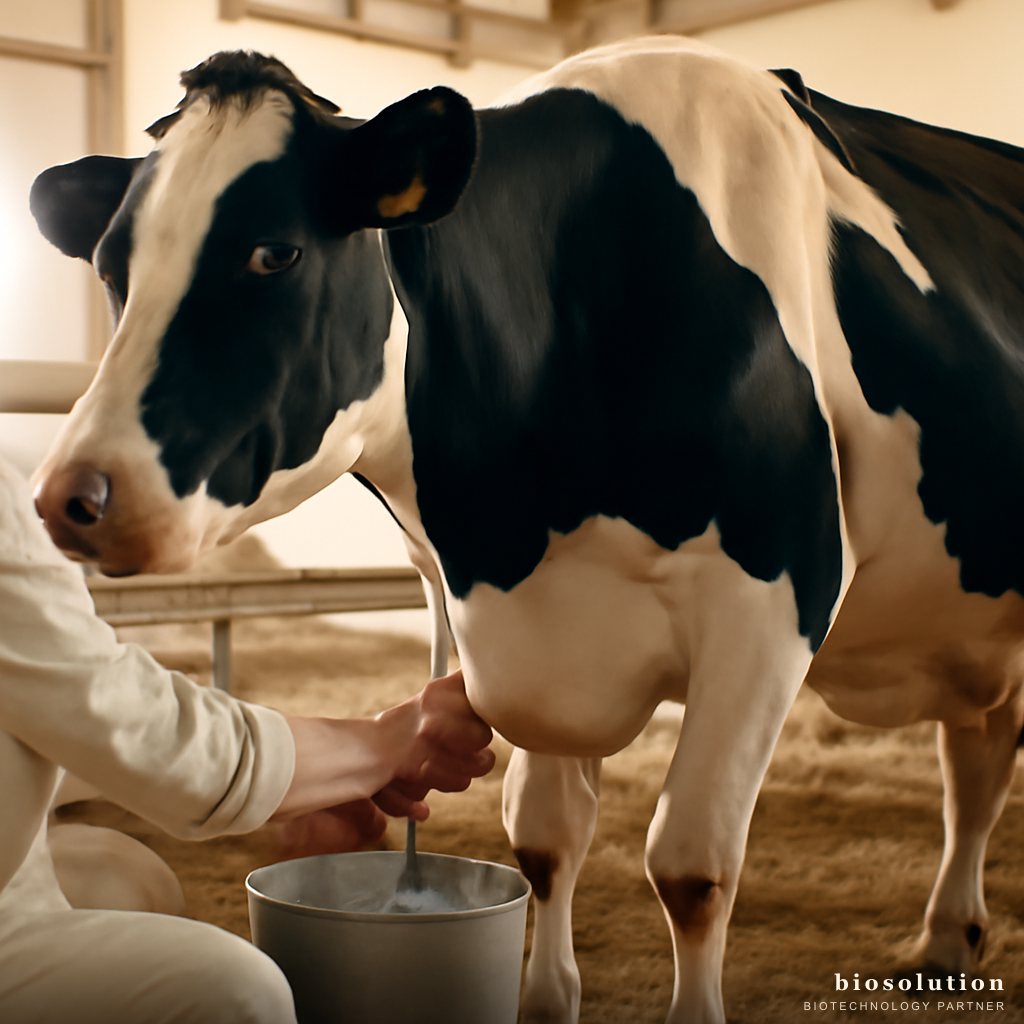
Probiotics for Dairy Cows: A Natural Solution to Increase Milk Production and Quality
Dairy farmers in Indonesia are constantly seeking ways to boost milk production without compromising animal health. One increasingly popular approach is the use of probiotics for dairy cows. Biosolution, an Indonesian agricultural biotechnology company, has developed a Dairy Cow Probiotic Formula that has been tested on commercial farms. This article presents real performance results, scientific mechanisms, and application guidelines to help you maximize benefits.
Why Are Probiotics Important for Dairy Cows?
Probiotics are live microorganisms that provide health benefits to the host. In dairy cows, probiotics work by stabilizing the rumen and gut microbiota, thereby improving digestive efficiency and nutrient absorption. A healthy rumen means more energy for milk production and fewer health issues such as mastitis.
The Role of Rumen Microbiota in Milk Production
The rumen is a complex ecosystem containing bacteria, protozoa, and fungi that digest fiber and produce volatile fatty acids (VFAs) as the cow's main energy source. The balance of this microbiota greatly influences milk production. Disturbances such as sudden feed changes or stress can cause dysbiosis, reducing milk production and increasing disease risk. Probiotics help restore and maintain this balance.
Biosolution's Dairy Cow Probiotic Formula: Composition and Mechanism
This product contains five superior bacterial strains selected for their synergy and resilience:
- Lactobacillus acidophilus: Stabilizes rumen pH by producing lactic acid, inhibits pathogens, and enhances rumen enzyme activity.
- Lactobacillus bulgaricus: Aids fiber fermentation, improves forage digestibility, and produces more VFAs.
- Lactobacillus casei: Acts as an anti-stress agent by strengthening the gut barrier and modulating immune response.
- Bacillus coagulans: Produces cellulase enzymes that break down crude fiber, increasing energy availability. Spore-forming, thus resistant to heat and low pH.
- Bifidobacterium sp.: Stabilizes large intestine microbiota, improving mineral and vitamin absorption.
This combination not only improves digestion but also strengthens the immune system, reduces mastitis incidence, and enhances milk quality (fat and protein).
Performance Results on Indonesian Commercial Farms
A trial was conducted on 200 Friesian Holstein dairy cows at a commercial farm in East Java over 60 days. Cows were divided into two groups: control (standard feed) and treatment (standard feed + 20 ml of Dairy Cow Probiotic Formula per head per day, given in the morning before milking).
Increase in Milk Production
Results showed an average milk production increase of 6.2% in the treatment group compared to the control (from 18.5 liters/day to 19.7 liters/day). The increase was noticeable from the second week and remained stable until the end of the trial. This data aligns with the product claim of a 5-8% increase.
Stable Milk Quality
Milk fat content in the treatment group remained stable (average 3.8%) while it slightly decreased in the control (from 3.6% to 3.4%). Milk protein levels were also higher in the treatment group (3.2% vs 3.0%). This indicates that probiotics help maintain milk quality even as production increases.
Reduction in Mastitis Incidence
The incidence of subclinical mastitis (measured by the California Mastitis Test) decreased by 40% in the treatment group. Only 8 out of 100 treated cows showed positive scores, compared to 18 in the control. This is attributed to the role of Lactobacillus casei and Bifidobacterium in strengthening udder immunity.
Proper Application for Optimal Results
To achieve maximum results, follow these guidelines:
- Dosage: 20 ml per head per day.
- Method: Direct drench using a special tool or mix into concentrate (ensure even mixing).
- Frequency: Daily, consistently.
- Timing: Morning before milking, when the cow's stomach is empty so probiotics reach the rumen effectively.
Avoid mixing with hot water or feed containing antibiotics. If the cow is undergoing antibiotic treatment, allow at least a 2-hour interval.
Synergy with Feed and Health Management
Probiotics are not a substitute for nutrition but a supplement that works synergistically with quality feed and good health management. Ensure cows receive quality forage, balanced concentrate, and sufficient clean water. A clean, low-stress barn environment also supports probiotic effectiveness.
Mastitis prevention programs such as teat dipping after milking and regular barn cleaning will further enhance probiotic benefits. With holistic management, you can maximize the genetic potential of your cows.
Conclusion
Probiotics for dairy cows from Biosolution have been scientifically proven to increase milk production by 5-8%, maintain milk quality, and reduce mastitis on Indonesian commercial farms. With a synergistic composition of Lactobacillus acidophilus, L. bulgaricus, L. casei, Bacillus coagulans, and Bifidobacterium, this product is a natural and effective solution for farmers looking to improve productivity and animal health.
For more information or a free consultation, contact the Biosolution team via WhatsApp. View the Dairy Cow Probiotic Formula product and discover how probiotics can transform your farm.