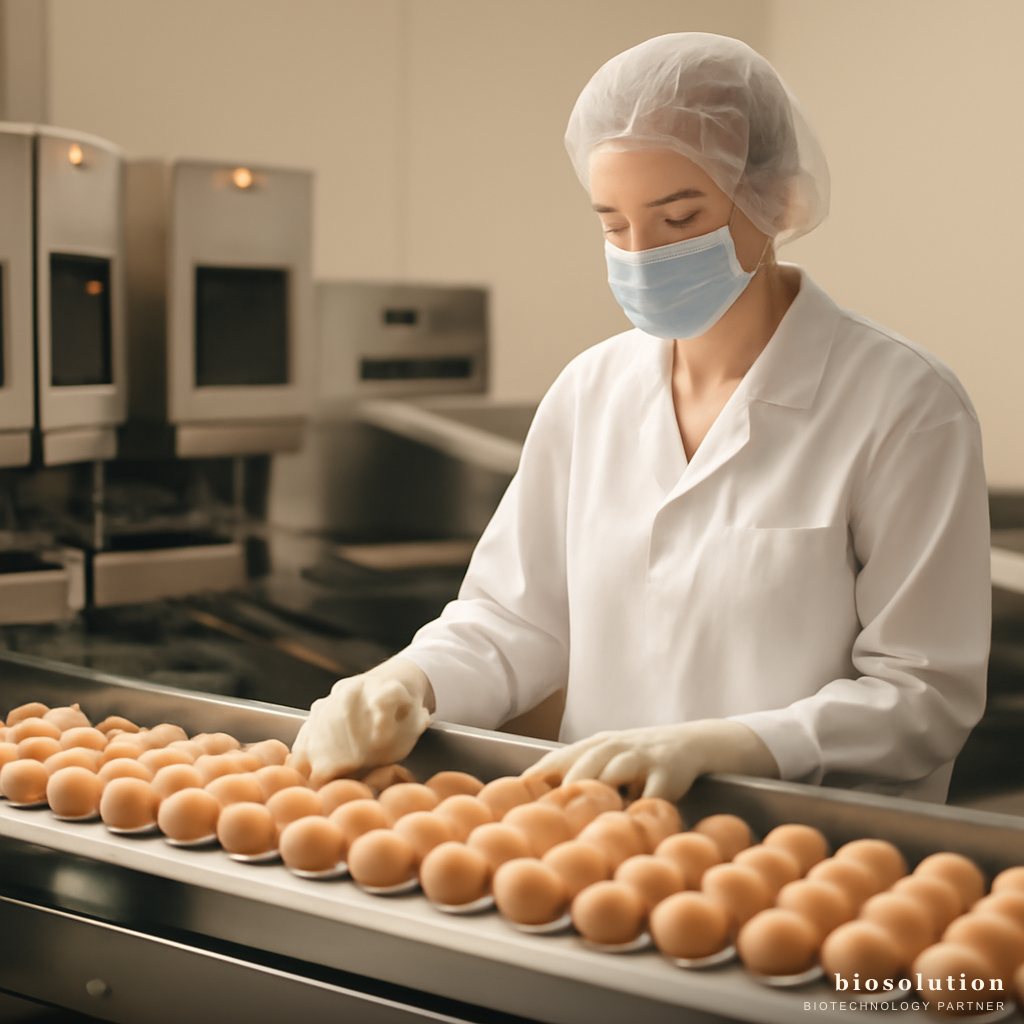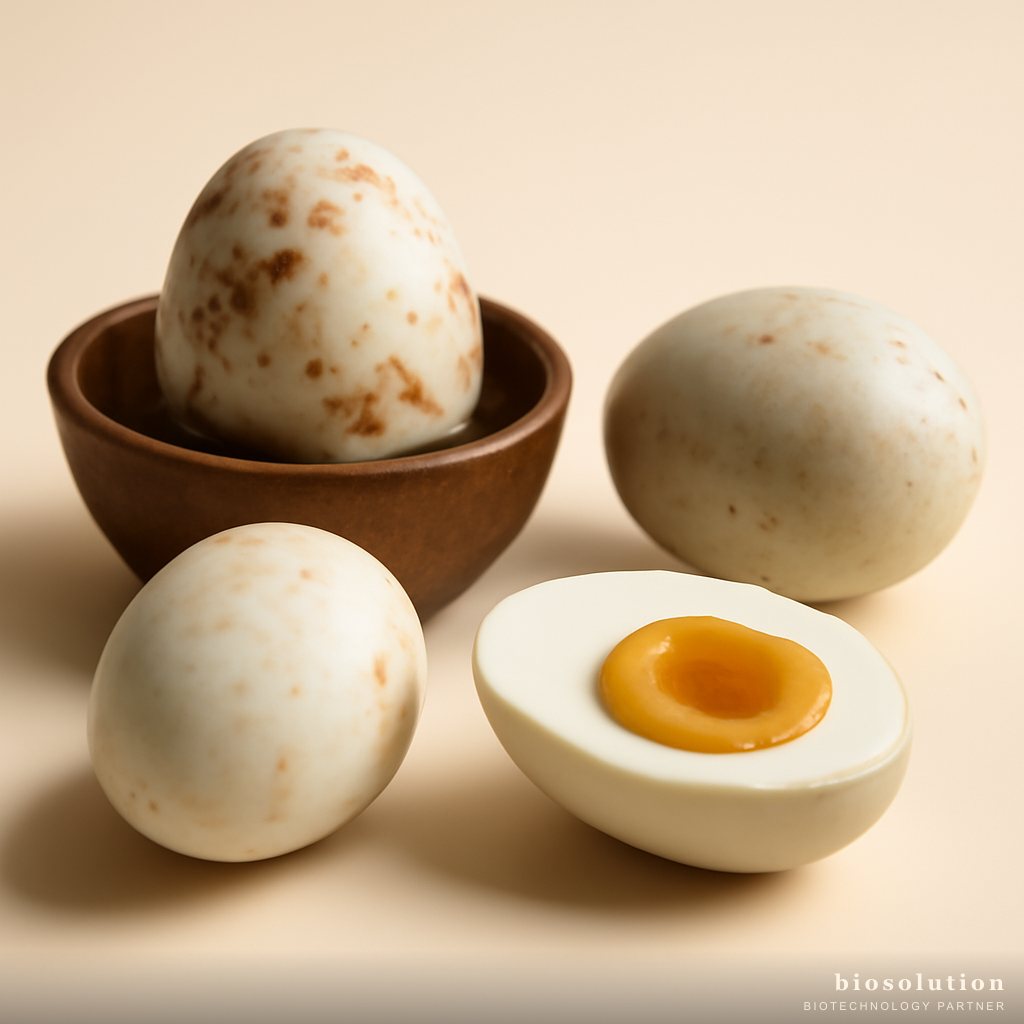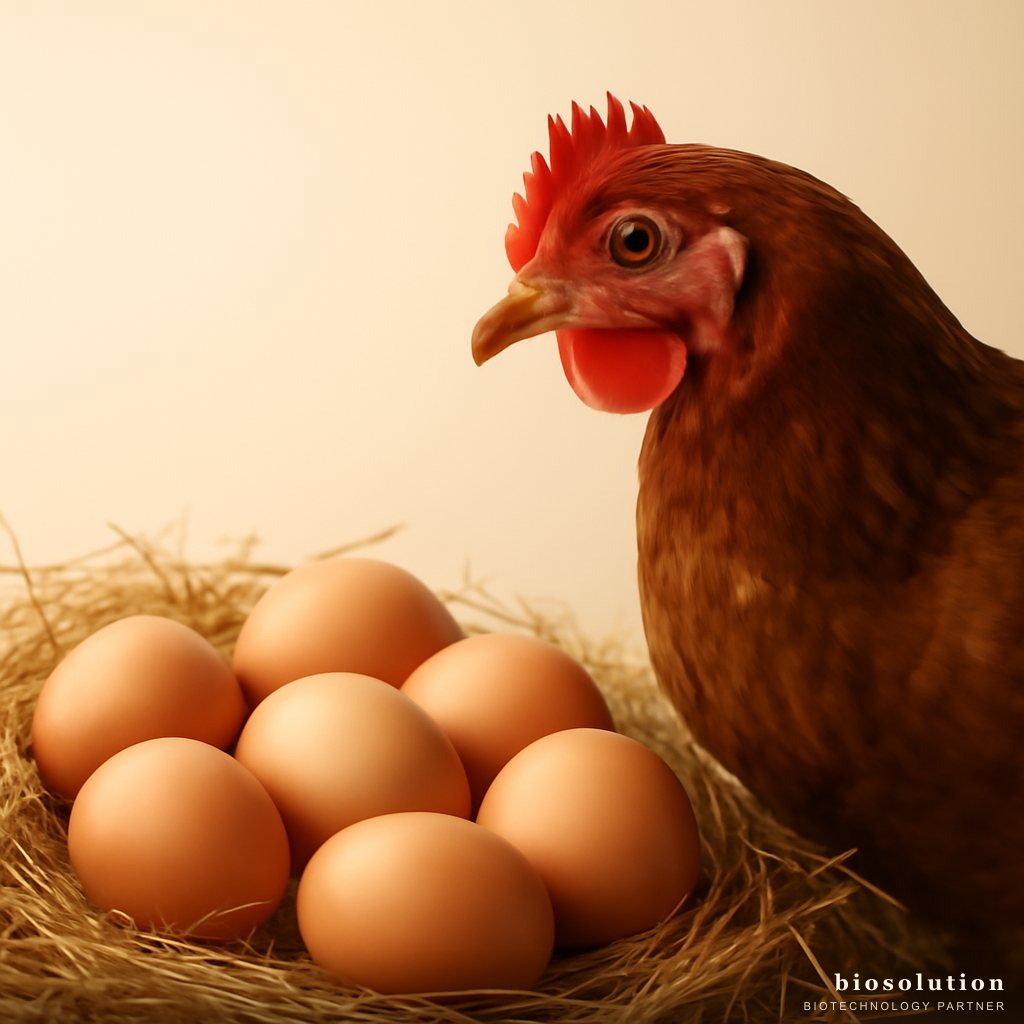
Probiotics for Laying Hens to Increase Egg Production & Quality
Probiotics for laying hens are a natural solution increasingly adopted by layer farmers to improve egg production and quality. In the modern poultry industry, challenges such as production decline due to stress, digestive disorders, and eggshell problems often erode profit margins. This article presents a real case study from an integrator that successfully overcame these issues by applying the Probiotic Formula for Laying Hens from Biosolution. Using a microbiology-based scientific approach, this probiotic not only increases egg production but also improves eggshell quality and maintains production persistence.
Why Are Probiotics Important for Laying Hens?
Laying hens have specific nutritional needs and gut microbiota balance to maximize egg production. Disruptions in the digestive tract due to pathogen infections such as Salmonella or E. coli can reduce nutrient absorption, especially calcium which is crucial for eggshell formation. Probiotics work by strengthening the population of good bacteria in the gut, suppressing pathogens, and improving nutrient absorption efficiency. In laying hens, the impact is directly seen in increased egg production, reduced cracked eggs, and more uniform eggshells.
A study from Universitas Gadjah Mada (2022) showed that supplementation of Lactobacillus and Bacillus probiotics in laying hens increased egg production by up to 5% within 8 weeks. This aligns with data obtained from the application of the Biosolution Probiotic Formula for Laying Hens at an integrator farm in East Java.
Probiotic Formula for Laying Hens: Composition and Mechanism of Action
The Biosolution Probiotic Formula for Laying Hens contains three superior microbial strains designed to work synergistically:
- Lactobacillus bulgaricus: Plays a role in lactic acid production and anti-Salmonella activity. Lactic acid lowers gut pH, creating an unfavorable environment for pathogenic bacteria. L. bulgaricus also produces bacteriocins that directly inhibit the growth of Salmonella.
- Lactobacillus acidophilus: This strain is known to adhere to the intestinal wall and form a protective biofilm. Its function is to stabilize gut microbiota, prevent diarrhea, and enhance local immunity.
- Bacillus coagulans: The spores of this bacterium are resistant to heat and low pH, allowing them to reach the gut in an active state. B. coagulans produces enzymes that aid in the absorption of calcium and phosphorus, two essential minerals for eggshells. Additionally, this bacterium produces lactic acid and B-complex vitamins.
These three strains work synergistically: Lactobacillus creates an acidic environment that supports Bacillus sporulation, while Bacillus helps absorb minerals needed for eggshell production. The product is very easy to apply: simply mix 1 ml per liter of drinking water daily during the production period, given in the morning.
Case Study: Successful Integrator with Probiotic Formula for Laying Hens
An integrator farm in East Java with a population of 50,000 ISA Brown laying hens experienced a production decline from a peak of 95% to 87% at 40 weeks of age. Additionally, the percentage of cracked eggs reached 8%, and eggshells appeared thin. After consulting with the Biosolution technical team, they decided to apply the Probiotic Formula for Laying Hens to the entire population.
Results after 4 weeks:
- Egg production increased from 87% to 91% (a 4% increase).
- The percentage of cracked eggs decreased from 8% to 3%.
- Eggshells became thicker and more uniform, evidenced by an insignificant decrease in Haugh unit value.
- Chicken droppings were firmer, indicating better nutrient absorption.
Mechanism that occurred:
- Lactobacillus bulgaricus and L. acidophilus suppressed the population of Salmonella and E. coli in the gut, reducing inflammation.
- Bacillus coagulans increased the activity of phytase and protease enzymes, making calcium and phosphorus more available.
- Increased calcium absorption directly strengthened eggshells, reducing cracks.
- Stabilization of gut microbiota reduced oxidative stress, maintaining production persistence.
These results are consistent with research published by FAO on the role of probiotics in improving poultry performance.
Benefits of Probiotics for Egg Production and Quality
Based on field data and literature, probiotics for laying hens provide real benefits:
- Increased egg production by 3–5%: Occurs due to improved nutrient absorption efficiency and reduced energy wasted fighting pathogens.
- Thicker and more uniform eggshells: Optimal calcium absorption produces eggshells with uniform thickness, reducing losses from cracked eggs.
- Reduced cracked egg cases: Data shows a decrease of up to 50% in farms that consistently apply probiotics.
- Maintained production persistence: Hens remain productive longer, with a flatter production curve after the peak.
This product can be combined with a good feed program and cage management. For optimal results, ensure drinking water is clean and does not contain excess chlorine that could kill probiotic bacteria.
Application Method and Integration with Farm Management
Applying the Probiotic Formula for Laying Hens is very simple: a dose of 1 ml per liter of drinking water, given daily in the morning. This product is stable at room temperature and does not settle, so it can be mixed directly in the water tank. For farms with nipple drinker systems, ensure there is no high residual chlorine. It is recommended to flush the drinking water system before the first application.
Integration with feed management: Probiotics work optimally if hens receive quality feed with a calcium content of 3.5–4%. Using probiotics does not reduce nutritional requirements but increases absorption efficiency. For stressed hens (due to weather or vaccination), the dose can be increased to 2 ml per liter for 3 days.
Conclusion
Probiotics for laying hens, especially the Biosolution Probiotic Formula for Laying Hens, have proven effective in increasing egg production and quality based on an integrator case study. With a combination of Lactobacillus bulgaricus, Lactobacillus acidophilus, and Bacillus coagulans, this product offers a natural solution without antibiotic residues. Layer farmers can adopt this technology to increase profitability while maintaining hen health. For more information, consult your farm's needs with the Biosolution technical team via WhatsApp or visit the product page Probiotic Formula for Laying Hens.