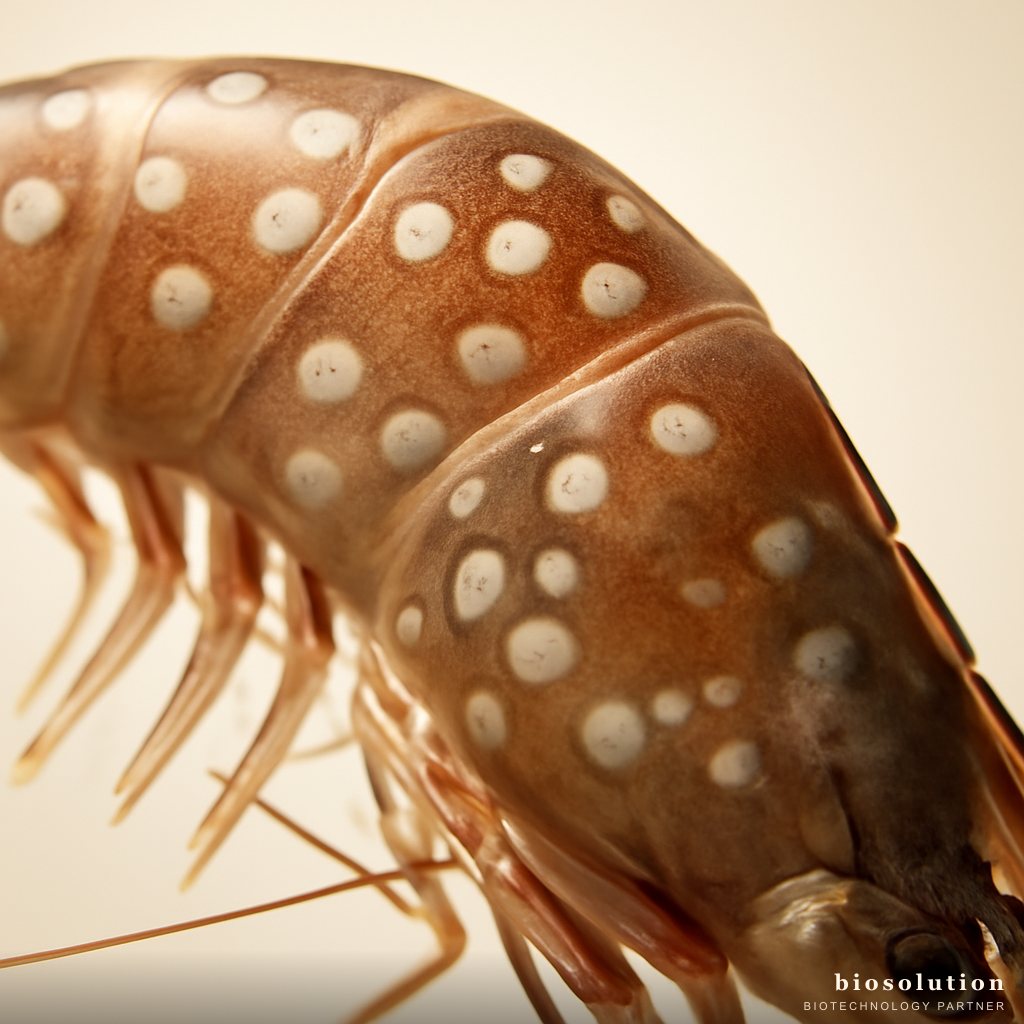
Probiotics for Polyculture Milkfish Ponds: Water Quality Management per Cultivation Phase
Polyculture cultivation of milkfish with shrimp is increasingly popular in Indonesia because it can increase land productivity. However, the main challenge faced by farmers is maintaining stable water quality throughout the cycle. Fluctuations in ammonia, nitrite, and dissolved oxygen often cause stress in fish and shrimp, even mass mortality. This is where the role of probiotics for polyculture milkfish ponds becomes crucial. By utilizing beneficial bacteria such as Bacillus subtilis, Nitrosomonas sp., and Nitrobacter sp., water quality can be managed biologically without harmful chemicals. This article will discuss probiotic application strategies per cultivation phase, from pond preparation to harvest, based on technical data from Biosolution products.
Role of Probiotics in the Nitrogen Cycle of Polyculture Ponds
One of the main problems in polyculture ponds is the accumulation of organic waste from feed residue and fish/shrimp metabolism. The ammonia (NH3) produced is toxic to aquatic biota, especially at high pH and temperature. In the natural nitrogen cycle, ammonia is oxidized to nitrite (NO2-) by Nitrosomonas sp. bacteria, then nitrite is oxidized to nitrate (NO3-) by Nitrobacter sp.. Nitrate is much less toxic and can be utilized by phytoplankton. However, these nitrifying bacteria grow slowly and are sensitive to environmental changes. Therefore, regular addition of probiotics containing Nitrosomonas sp. and Nitrobacter sp. can accelerate the nitrification process, keeping ammonia and nitrite levels low.
Additionally, Bacillus subtilis acts as a decomposer that breaks down complex organic materials (proteins, carbohydrates, fats) into simple compounds. This process reduces the accumulation of pond bottom sludge and suppresses the growth of pathogenic bacteria such as Vibrio spp. Thus, probiotics for polyculture milkfish ponds not only improve water quality but also create a healthier environment for milkfish and shrimp.
Probiotic Application in the Pond Preparation Phase
Before stocking, pond preparation is a crucial initial step for cultivation success. In this phase, the main goal is to establish a dominant population of beneficial bacteria in the pond bottom and water column. Using probiotics from the start can accelerate sludge mineralization and reduce toxic compounds such as H2S (hydrogen sulfide).
Sterilization and Bacterial Inoculation
After drying and liming, the pond is filled with water to a depth of 10-20 cm. Then, probiotics are applied at a dose of 3 L per hectare, according to the product recommendation Milkfish Pond Probiotic Formula. Application is done in the morning when water temperature is still low (25-30°C) to minimize bacterial stress. Let it sit for 3-5 days before raising the water to full level. During this period, Bacillus subtilis bacteria will begin decomposing organic residues, while Nitrosomonas and Nitrobacter start colonizing biological filter media.
Biofilm and Plankton Formation
Probiotic addition also stimulates phytoplankton growth as natural feed. Phytoplankton produce oxygen through photosynthesis, thus increasing dissolved oxygen levels. A good plankton balance also suppresses harmful algal blooms. With routine application every 10 days, water quality remains stable when fry are stocked.
Water Quality Management in the Early Maintenance Phase (0-30 Days)
In the first 30 days, milkfish and shrimp fry are still vulnerable to water quality changes. High stocking density (e.g., 5,000 milkfish and 10,000 shrimp per hectare) increases organic waste load. Probiotics act as a "biofilter" maintaining ammonia concentration < 0.1 mg/L and nitrite < 0.5 mg/L.
Ammonia and Nitrite Monitoring
Measure ammonia and nitrite every 3 days. If an increase is detected, immediately apply probiotics at an additional dose of 1-2 L per hectare spot-treated in areas indicated for waste accumulation. Bacillus subtilis will quickly break down uneaten feed, reducing ammonia sources.
Feeding and Probiotic Schedule
Arrange a measured feeding schedule (feeding rate 3-5% biomass per day). Probiotics can be mixed into feed to improve digestion efficiency of milkfish and shrimp, although the main Biosolution product is intended for water quality improvement. This combination maximizes growth and reduces feed conversion ratio (FCR).
Probiotic Strategy in the Growth Phase (30-90 Days)
Entering the growth phase, fish and shrimp biomass increases significantly. The organic waste load also increases. In this period, the frequency of probiotic application needs to be increased to every 7-10 days, or according to pond conditions.
Bottom Sludge Management
Accumulated bottom sludge becomes a source of ammonia and H2S. Bacillus subtilis in probiotics produces protease, amylase, and lipase enzymes that accelerate decomposition. Apply probiotics evenly on the pond surface, especially in areas frequently fed. A dose of 3 L per hectare remains effective, but if sludge is thick (> 10 cm), the dose can be increased to 4-5 L per hectare.
Dissolved Oxygen Stabilization
Organic decomposition by beneficial bacteria actually increases oxygen demand (BOD). To compensate, ensure aeration runs optimally (paddlewheels or blowers). Well-grown phytoplankton also help supply oxygen during the day. Probiotics help maintain plankton balance so dissolved oxygen remains > 4 mg/L.
Handling Water Quality Issues in the Pre-Harvest Phase (90-120 Days)
Approaching harvest, waste accumulation peaks. The risk of death due to ammonia or nitrite stress is high. Probiotics become a lifesaver by keeping water parameters within safe limits.
Overcoming Ammonia Spikes
If an ammonia spike occurs (e.g., after heavy rain causing water stratification), immediately apply probiotics at a dose of 5 L per hectare. Nitrosomonas will oxidize ammonia faster. Avoid excessive lime use as it can increase pH and worsen ammonia toxicity.
Maintaining Ideal Water Color
Greenish-brown water color indicates sufficient phytoplankton. If water becomes too green (blooming), reduce feeding and apply probiotics to break down excess nutrients. If water is turbid or reddish-brown (diatoms), add probiotics to suppress pathogenic bacteria.
Advantages of Milkfish Pond Probiotic Formula for Polyculture
The product Milkfish Pond Probiotic Formula from Biosolution is specifically designed for polyculture milkfish ponds. The content of Bacillus subtilis as a decomposer, Nitrosomonas sp. for ammonia oxidation, and Nitrobacter sp. for nitrite oxidation works synergistically. A dose of 3 L per hectare every 10 days has proven effective in various pond scales.
Measurable Benefits
- More consistent milkfish growth with uniform harvest weight.
- Harvest yield increases 15-20% compared to without probiotics (internal data).
- Mortality decreases drastically, especially in critical phases.
- Supports polyculture with shrimp without mutual interference.
Practical Application Method
Simply sprinkle directly into the pond in the morning. No special equipment needed. The product is safe for biota and the environment, leaving no harmful residues.
Conclusion
Water quality management per cultivation phase is the key to success in polyculture milkfish ponds. With routine application of probiotics for polyculture milkfish ponds, farmers can maintain pond ecosystem balance, reduce disease risk, and increase productivity. The Biosolution formula containing Bacillus subtilis, Nitrosomonas sp., and Nitrobacter sp. provides the right solution for every phase, from preparation to harvest. For further consultation on dosage and application schedule according to your pond conditions, contact the Biosolution technical team via WhatsApp.
FAQ
1. Are milkfish pond probiotics safe for shrimp in polyculture systems?
Yes, probiotics containing Bacillus subtilis, Nitrosomonas sp., and Nitrobacter sp. are safe for shrimp. These bacteria are not pathogenic and actually help maintain water quality so shrimp grow healthily. Biosolution products have been tested in various polyculture ponds without side effects.
2. What is the correct probiotic dosage for polyculture milkfish ponds?
The standard dose is 3 L per hectare every 10 days. However, if the pond has a high organic load (stocking density >10,000 individuals/ha), the dose can be increased to 4-5 L per hectare. Application should be done in the morning when water temperature is optimal for bacterial growth.
3. When is the best time to apply probiotics?
The best time is in the morning (06:00-09:00) because water temperature is still low and dissolved oxygen is sufficiently high. Avoid application during rain or extreme weather as it can reduce bacterial effectiveness. Ensure aeration runs normally after application.
4. Can probiotics be mixed with feed?
Although the main product is intended for water quality, Bacillus subtilis can be mixed into feed to improve digestion. However, for optimal results, apply probiotics directly to the pond as instructed. Consult with a Biosolution technician for the right combination.
5. How long does it take to see the effect of probiotics on water quality?
Water quality improvement is usually visible within 3-7 days after the first application. Decrease in ammonia and nitrite can be detected within 2-3 days. For maximum results, apply routinely every 10 days throughout the cultivation cycle.