Probiotik Bebek Pedaging FCR: 3 Cara Aplikasi Tepat untuk Pertumbuhan Optimal
Probiotik bebek pedaging FCR telah menjadi solusi andalan peternak modern untuk meningkatkan efisiensi pakan dan mempercepat pertumbuhan. Namun, efektivitas probiotik sangat bergantung pada cara aplikasinya. Artikel ini mengupas tiga metode aplikasi Formula Probiotik Bebek Pedaging dari Biosolution: via air minum, campuran pakan, dan drench. Dengan memahami teknik yang tepat, Anda bisa memaksimalkan manfaat probiotik dan menekan biaya produksi.
Why Probiotik Bebek Pedaging FCR is Important?
Probiotics are live microorganisms that provide health benefits to the host. In broiler ducks, probiotics work by balancing gut microbiota, improving nutrient absorption, and stimulating immunity. As a result, feed conversion ratio (FCR) improves by 5–8%, growth is more uniform, and mortality decreases. The Formula Probiotik Bebek Pedaging product from Biosolution contains three superior strains: Lactobacillus acidophilus, Lactobacillus casei, and Bacillus coagulans. These strains are selected for their ability to produce lactic acid, adhere to intestinal mucosa, produce enzymes, and withstand the rapid digestive tract conditions of ducks.
Application Method 1: Through Drinking Water
Advantages of Drinking Water Application
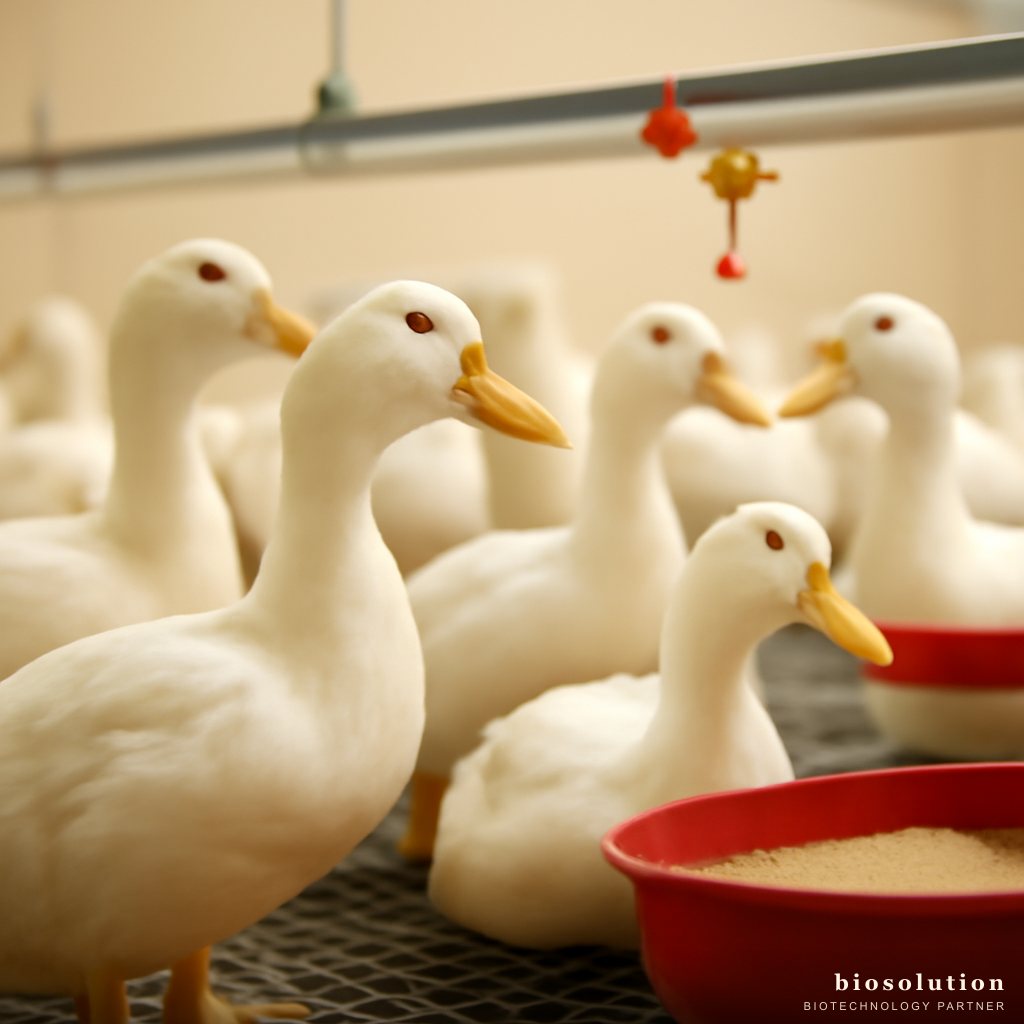
Applying probiotics through drinking water is the most common and practical method. Ducks naturally drink several times a day, so probiotics can be evenly distributed throughout the population. This method also minimizes handling stress as there is no need to catch ducks individually.
Dosage and Frequency
For Formula Probiotik Bebek Pedaging, the recommended dosage is 1.5 ml per liter of drinking water, given daily in the morning. Ensure the drinking water is clean and does not contain excessive chlorine (let tap water sit for 30 minutes before mixing probiotics). Use a clean tank or bucket, stir gently, then distribute to the duck drinkers.
Tips for Successful Drinking Water Application
- Consistency: Administer at the same time each day, ideally in the morning after the first feeding.
- Water volume: Calculate the total daily water requirement of ducks (usually 2–3 times feed consumption). Mix probiotics according to the dosage for that volume.
- Cleanliness: Clean drinkers daily to prevent biofilm that can reduce probiotic effectiveness.
- Monitoring: Observe water consumption; if it suddenly decreases, check duck health or water quality.
Application Method 2: Through Feed (Top Dress or Mixed)
Advantages of Feed Application
Applying probiotics through feed ensures each duck receives the correct dosage, especially if the drinking system is uneven. This method is suitable for farms using dry feed (mash or crumble) and can be combined with starter, grower, or finisher feed.
Dosage and Mixing Method
The probiotic dosage for feed application is 1.5 ml per kg of feed. Since the probiotic is liquid, it is best mixed with a small amount of water (about 10% of feed weight) and then sprayed onto the feed while stirring. Alternatively, dilute the probiotic with water (1:10) and spray evenly. Let the feed sit for 15–30 minutes before feeding to allow probiotics to adhere.
Advantages and Disadvantages
- Advantages: More controlled dosage, suitable for ducks that are reluctant to drink (e.g., when sick).
- Disadvantages: Requires extra labor for mixing, and probiotics can degrade if feed is exposed to excessive heat (>40°C).
Tips for Successful Feed Application
- Avoid heat: Do not mix probiotics with freshly heat-processed feed. Wait until cool.
- Mix evenly: Use a feed mixer or stir manually with a clean shovel.
- Feed promptly: Feed mixed with probiotics should be consumed within 24 hours.
- Combine with drinking water: If needed, administer probiotics via feed in the morning and via drinking water in the afternoon to maintain a total dosage of 1.5 ml/kg/day.
Application Method 3: Drench (Direct Oral Liquid)
When is Drench Necessary?
Drench is a method of administering probiotics directly into the duck's mouth using a syringe or special drenching tool. This method is typically used for sick or stressed ducks, or during the early phase of rearing (DOC) to ensure immediate probiotic colonization.
Dosage and Drench Technique
The drench dosage for broiler ducks is 0.5–1 ml per bird per day, given for 3–5 consecutive days. Use a syringe without a needle, insert the tip into the corner of the duck's mouth, and spray slowly towards the esophagus. Ensure the duck swallows; avoid choking.
Advantages and Disadvantages
- Advantages: Accurate dosage, directly enters the digestive tract, effective for sick ducks that refuse to eat or drink.
- Disadvantages: Time-consuming and labor-intensive, requires careful handling to avoid stress.
Tips for Successful Drench
- Use sterile equipment: Clean the syringe with hot water or alcohol before use.
- Hold the duck gently: Hold the duck's head with thumb and index finger, tilt slightly upward.
- Perform in the morning: When ducks are still calm.
- Combine with therapy: If ducks are sick, probiotic drench can be combined with electrolytes or vitamins as per veterinarian advice.
Comparison of the Three Application Methods
| Method | Advantages | Disadvantages | Recommendation |
|---|---|---|---|
| Drinking water | Practical, even distribution, minimal stress | Depends on water consumption | Daily routine |
| Feed | Controlled dosage, suitable for ducks reluctant to drink | Labor-intensive, risk of degradation | Alternative if drinking water is ineffective |
| Drench | Accurate, immediate effect | Time-consuming, handling stress | DOC, sick ducks, or early rearing |
The choice of method depends on farm conditions. For large-scale rearing, drinking water is the primary choice. However, during early stages or outbreaks, drench can be a lifesaver.
Factors Affecting Probiotic Effectiveness
Regardless of the application method, several key factors influence the success of a probiotic program:
- Water quality: Water with high chlorine (>5 ppm) or extreme pH (<5 or >9) can kill probiotics. Use well water or boiled water that has been left to stand.
- Hygiene: Dirty environment increases pathogen load, reducing probiotic effectiveness. Ensure optimal pen sanitation.
- Feed quality: Feed containing antibiotics or antimicrobials can suppress probiotics. Avoid concurrent use of antibiotics without consultation.
- Duck stress: Heat stress, high density, or vaccination can reduce probiotic response. Administer probiotics routinely to maintain gut stability.
- Probiotic storage: Store Formula Probiotik Bebek Pedaging in a cool place (15–25°C), avoid direct sunlight. Do not freeze.
Case Study: Probiotic Application in a Broiler Duck Farm
A broiler duck farm in East Java with a population of 5,000 ducks applied Formula Probiotik Bebek Pedaging via drinking water from DOC. Dosage of 1.5 ml/liter water was given every morning. Results after 35 days of rearing:
- FCR: 1.65 (previously 1.78) → improvement of 7.3%
- Average harvest weight: 2.1 kg (previously 1.95 kg) → increase of 7.7%
- Mortality: 2.1% (previously 4.5%) → decrease of 53%
- Barn odor significantly reduced, decreasing complaints from nearby residents.
The farmer also reported that ducks were more active and had increased appetite. The drinking water method was chosen because it was easy to apply by 2 workers. The additional cost of probiotics was around IDR 150 per duck, but offset by feed efficiency and reduced mortality.
Conclusion
Probiotik Bebek Pedaging FCR is a smart investment to increase productivity. Three application methods—drinking water, feed, and drench—provide flexibility for farmers. The drinking water method is recommended for routine rearing due to its practicality and even distribution. However, in special conditions such as DOC or sick ducks, drench or feed application can be alternatives. Always follow correct dosage and storage methods to ensure probiotics work optimally.
Want further consultation on probiotic application in your farm? Contact the Biosolution team via WhatsApp at +6281234567890 or visit the product page Formula Probiotik Bebek Pedaging for complete information.