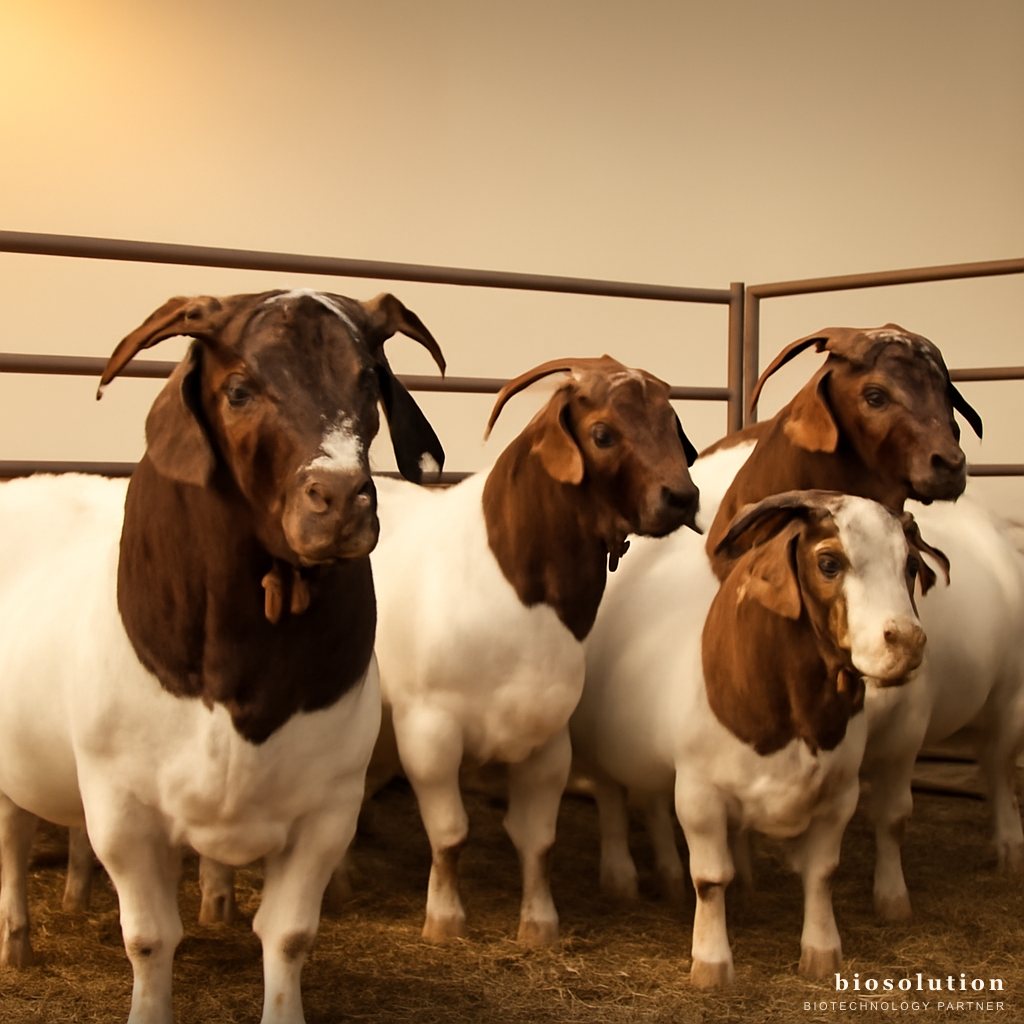
Probiotik for Qurban Slaughter Goats: Cost Comparison of Fattening with Antibiotics vs Probiotics
Ahead of the qurban and aqiqah holidays, slaughter goat farmers face the challenge of producing animals with ideal weight, good carcass, and efficient feed costs. So far, many farmers rely on antibiotics to accelerate growth and prevent disease. However, long-term antibiotic use not only leaves harmful residues for consumers but also increases production costs. Now, a more natural and economical solution is available: probiotik for qurban slaughter goats. This article will thoroughly examine the cost comparison between fattening with antibiotics versus probiotics, based on technical data and farmer experiences in the field.
Why Probiotik for Qurban Slaughter Goats is More Efficient?
Probiotics are live microorganisms that provide health benefits to livestock. In the context of fattening slaughter goats, probiotics work by balancing the gastrointestinal microflora, improving feed digestibility, and stimulating the immune system. As a result, goats fatten faster, feed is more efficient, and treatment costs decrease. Compared to antibiotics, which are only curative and growth promoters with side effects, probiotics offer a more sustainable preventive approach.
Mechanism of Action of Probiotics in Slaughter Goats
Biosolution's Probiotik Formula for Slaughter Goats contains three superior strains:
- Lactobacillus acidophilus: The main probiotic that produces lactic acid, suppresses pathogenic bacteria, and enhances nutrient absorption.
- Bacillus subtilis: Produces protease, amylase, and cellulase enzymes that help digest crude fiber, so feed is better utilized. Also acts as a biocontrol against harmful fungi and bacteria.
- Bacillus megaterium: Able to solubilize phosphorus and other minerals, increasing the bioavailability of essential nutrients for bone and muscle growth.
With a dose of 10 ml per head per day (drench or mixed with concentrate) during the fattening period, this probiotic can increase ADG (Average Daily Gain) by 12–18% and improve FCR (Feed Conversion Ratio) by 6–10%. This means that for every kilogram of weight gain, less feed is needed.
Cost Comparison: Antibiotics vs Probiotics
To provide a real picture, we simulate the fattening cost of 10 slaughter goats (e.g., Kacang or Boer goats) over a 60-day fattening period.
Cost Components Considered:
- Feed cost: Forage + concentrate. Assumed daily feed requirement per head is 3% of body weight (average initial weight 20 kg → 0.6 kg feed/day). Feed price Rp5,000/kg.
- Antibiotic/probiotic cost: Price of injectable antibiotic (e.g., oxytetracycline) Rp50,000 per dose, given twice during fattening (day 1 and day 30) + additional costs if disease occurs. Probiotic Rp30,000 per liter (10 ml/head/day → 1 liter for 100 head/day or Rp300/head/day).
- Other treatment costs: Antibiotics often trigger resistance and secondary diseases, requiring additional medication. Probiotics naturally suppress disease.
- Final weight and selling price: Qurban goat price per kg live weight Rp80,000.
Comparison Table (per 10 head over 60 days):
| Cost Component | Antibiotics | Probiotics |
|---|---|---|
| Feed (kg) | 10 head x 0.6 kg x 60 days = 360 kg x Rp5,000 = Rp1,800,000 | Same, because feed requirement is the same, but FCR is better so feed is more efficient. With 8% FCR improvement, feed needed is equivalent to 331 kg = Rp1,656,000 |
| Antibiotics | 2 doses x Rp50,000 = Rp100,000 + additional costs (e.g., antidiarrheal) Rp50,000 = Rp150,000 | 0 |
| Probiotics | 0 | 10 head x 10 ml x 60 days = 6,000 ml = 6 liters x Rp30,000 = Rp180,000 |
| Total production cost | Rp1,950,000 | Rp1,836,000 |
| Final weight (kg) | Standard ADG 0.1 kg/day → final weight = 20 + (0.1x60) = 26 kg/head. Total 260 kg | ADG increases 15% → 0.115 kg/day → final weight = 20 + (0.115x60) = 26.9 kg/head. Total 269 kg |
| Revenue (selling price) | 260 kg x Rp80,000 = Rp20,800,000 | 269 kg x Rp80,000 = Rp21,520,000 |
| Profit | Rp18,850,000 | Rp19,684,000 |
| Profit difference | - | + Rp834,000 |
It can be seen that probiotic use not only reduces feed costs (Rp144,000 cheaper) and medication costs but also increases final weight, resulting in higher revenue. Net profit increases by approximately Rp834,000 per 10 head. This projection does not yet include reduced mortality and labor costs because goats are healthier.
Case Study: Qurban Farmer in Central Java
Mr. Budi, a slaughter goat farmer in Boyolali, has been using Probiotik Formula for Slaughter Goats for 50 qurban goats over two seasons. Previously, he relied on injectable antibiotics and high-concentrate feed. "In the past, goats often had diarrhea and lost appetite. Medication costs could reach Rp200,000 per head per period. After using probiotics, goats eat more eagerly, feces are solid, and weight increases consistently. My calculations show feed costs dropped 15% due to better FCR," he said.
Mr. Budi also added that his goats get sick less often, so he doesn't need to spend extra on antibiotics. "Most importantly, the meat is safer to consume because it's residue-free. Qurban buyers become more trusting."
Impact on Carcass Quality and Market Acceptance
Besides cost efficiency, probiotics also improve carcass quality. Carcasses are fuller, intramuscular fat is better, and meat is more tender. This is because probiotics help optimize nutrient absorption, so muscles develop maximally. For qurban and aqiqah needs, goats with good carcasses are more in demand and can be sold at a premium price.
Probiotics also eliminate the risk of antibiotic residues in meat. In an era of consumer awareness about food safety, antibiotic-free meat is a unique selling point. Farmers using probiotics can market their goats as "organic" or "naturally healthy," making it easier to gain buyer trust.
How to Start Fattening with Probiotics
Simple steps to apply probiotics to slaughter goats:
- Prepare the pen: Ensure it is clean and well-ventilated.
- Select seeds: Healthy goats, initial weight 15-25 kg.
- Provide quality feed: Fresh forage + concentrate (70:30).
- Apply probiotics: Mix 10 ml of Probiotik Formula for Slaughter Goats per head per day into drinking water or concentrate. Give every morning.
- Monitor growth: Weigh weekly to see ADG.
- Vaccination and health management: Still perform routine vaccinations, but probiotics will reduce disease frequency.
For maximum results, combine with Fast Fattening Formula for Aqiqah & Qurban specially designed to accelerate growth and improve carcass quality.
Conclusion
The use of probiotics for qurban slaughter goats is proven to be more efficient than antibiotics in terms of production costs, weight gain, and carcass quality. By reducing feed costs by up to 8%, increasing ADG by 12-18%, and eliminating treatment costs, farmers can achieve higher profits. Additionally, antibiotic residue-free meat is preferred by the market. For qurban and aqiqah farmers looking to improve efficiency and competitiveness, switching to probiotics is a smart move.
Want a cost simulation for your farm? Contact the Biosolution team via WhatsApp for a free consultation and get product recommendations. Consult Now or see the product Probiotik Formula for Slaughter Goats.