Productive Peatland: Application Schedule of Oil Palm Biofertilizer Formula per Growth Phase for Maximum Yield
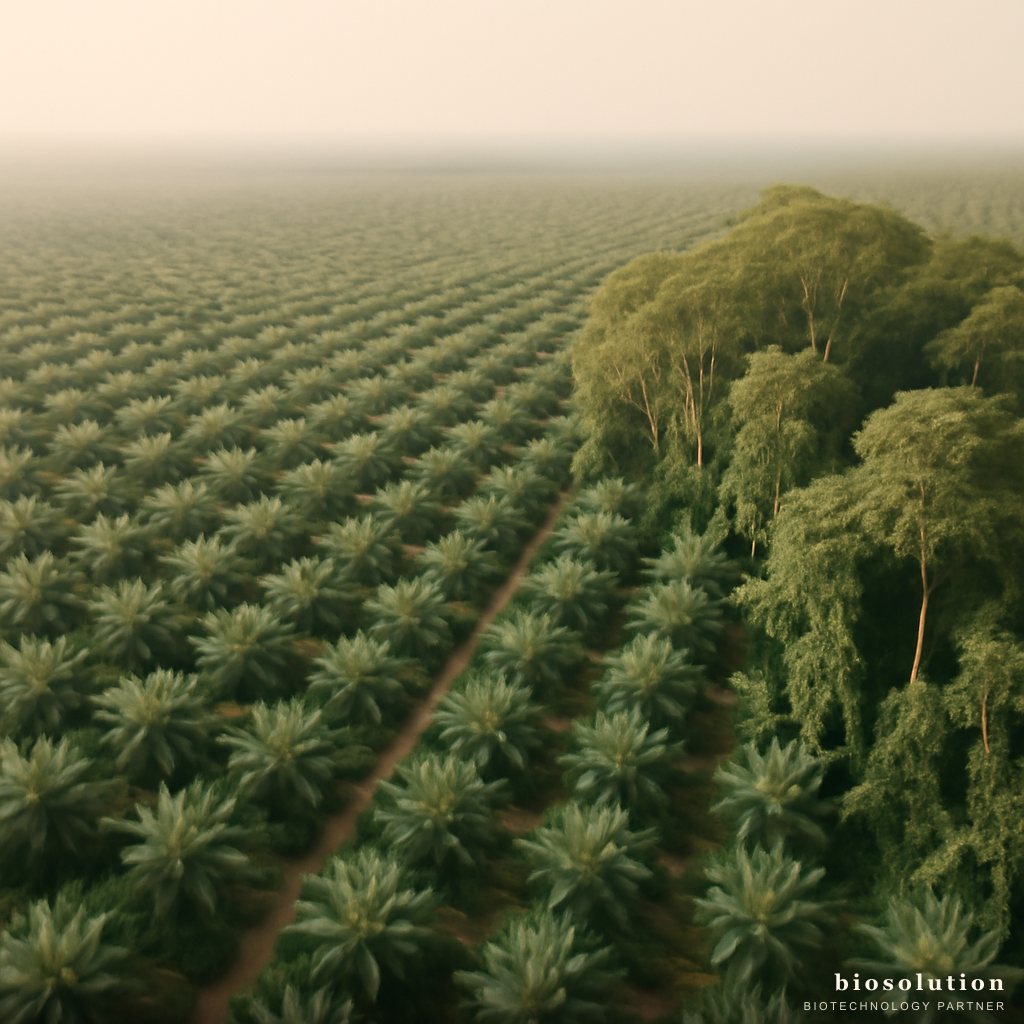
Peatlands in Indonesia, especially in Sumatra and Kalimantan, are often considered marginal lands that are difficult to manage. However, with the right approach, peatlands can become productive peatland for oil palm plantations. The key is soil management that considers the unique characteristics of peat: low pH, limited nutrient availability, and disease risk such as Ganoderma. The Oil Palm Biofertilizer Formula from Biosolution is a microbiology-based solution to address these challenges. This article will discuss the biofertilizer application schedule per growth phase so you can get maximum results from peatland.
Why Peatlands Require a Special Approach?
Peat has a high organic matter content (>65%) but is poor in macronutrients such as nitrogen (N), phosphorus (P), and potassium (K). In addition, peat pH is very acidic (3-4), so nutrient availability is low. Soil microorganisms in natural peat are dominated by anaerobic microbes that are less beneficial for plants. This condition causes slow oil palm growth, low Fresh Fruit Bunch (FFB) production, and susceptibility to Ganoderma boninense attacks.
To turn peatland into productive land, intervention with superior microorganisms is needed that can:
- Fix nitrogen from the air (done by Azotobacter sp.)
- Solubilize bound phosphorus (done by Bacillus subtilis)
- Naturally control pathogens (done by Trichoderma harzianum and Bacillus subtilis)
The Oil Palm Biofertilizer Formula contains these three microbes in one ready-to-use product. With routine application every 3 months, peat soil will be biologically improved, so oil palms grow healthier and more productive.
Composition of Oil Palm Biofertilizer Formula and Its Roles
Trichoderma harzianum: Biocontrol and PGPR
Trichoderma harzianum is an antagonistic fungus effective against Ganoderma in oil palm. Its mechanisms include mycoparasitism (infecting pathogen hyphae), production of lytic enzymes (chitinase, glucanase), and space competition. In addition, Trichoderma also acts as a Plant Growth-Promoting Rhizobacteria (PGPR) by producing growth hormones such as auxins and gibberellins. In peatlands, Trichoderma helps decompose organic matter, releasing bound nutrients.
Azotobacter sp.: Nitrogen Fixer
Azotobacter is a non-symbiotic nitrogen-fixing bacterium capable of fixing N₂ from the air and converting it into ammonia available to plants. In N-poor peat, the role of Azotobacter is very important to reduce dependence on urea fertilizer. Research shows that Azotobacter inoculation can increase total N in peat soil by up to 30% in one season.
Bacillus subtilis: Phosphate Solubilizer and Biocontrol
Bacillus subtilis produces organic acids (citric acid, lactic acid) that solubilize phosphorus bound in Fe-P and Al-P forms, which are dominant in acidic peat soils. This bacterium also produces antibiotics (subtilosin, surfactin) that suppress root pathogen growth. The combination of Bacillus subtilis with Trichoderma provides double protection against diseases.
Application Schedule per Growth Phase
The Oil Palm Biofertilizer Formula is applied by drenching the palm circle, at a dose of 20 ml per tree, every 3 months. The best time is morning or evening when the temperature is not too hot. Here is the detailed schedule:
Nursery Phase (0-12 months)
In this phase, oil palm seedlings are very susceptible to diseases. The first application is done when seedlings are 1 month old in the pre-nursery. Mix 20 ml of biofertilizer with 5 liters of water, drench into the growing media in polybags. Repeat every 3 months until seedlings are ready for field planting (12 months). Benefits: increases seedling vigor, prevents Ganoderma early, and accelerates root growth.
Immature Phase (1-3 years)
After transplanting, the first application is done 1 week after planting (WAP). Drench 20 ml per tree dissolved in 10 liters of water onto the palm circle. Continue every 3 months. In this phase, the main focus is root and trunk formation. Azotobacter will provide N, Bacillus solubilizes P, and Trichoderma protects against soil pathogens. The result is faster vegetative growth, greener leaves, and sturdier trunks.
Mature Phase (3-7 years)
Oil palm starts producing in the 3rd year. The application schedule remains every 3 months: January, April, July, October. Dose 20 ml per tree. In this phase, biofertilizer helps increase FFB size and number. Field trial data shows a 10-15% increase in FFB production after 2 years of routine application. In addition, Ganoderma attacks are significantly reduced because Trichoderma continuously colonizes the rhizosphere.
Old Phase (>7 years)
In old oil palms, roots are deep and production begins to decline. Biofertilizer application remains important to maintain root health and extend economic life. Same schedule: every 3 months. The dose can be increased to 30 ml per tree if soil conditions are very poor. Bacillus subtilis helps decompose organic residues, Azotobacter supplies N, and Trichoderma suppresses Ganoderma which is more aggressive in old palms.
Benefits of Routine Application on Peatlands
Increased FFB Production
With routine application, FFB production increases by 10-15% compared to without biofertilizer. This is due to better nutrient availability and optimal plant health.
Reduced Ganoderma Attacks
Trichoderma harzianum and Bacillus subtilis work synergistically to suppress Ganoderma. Data shows a reduction in disease incidence by up to 50% after 3 years of application.
Improved Peat Soil Quality
Microbial activity increases soil aggregation, porosity, and cation exchange capacity (CEC). Peat becomes looser, better aerated, and pH slowly increases towards neutral.
30% Reduction in Chemical Fertilizers
With N supply from Azotobacter and P from Bacillus, the dose of chemical fertilizers (urea, SP-36) can be reduced by 30% without reducing yield. This saves production costs and is environmentally friendly.
Synergy with Other Cultivation Practices
For optimal results, biofertilizer application must be integrated with:
- Balanced chemical fertilization (based on soil analysis results)
- Water management (good drainage to avoid waterlogging)
- Weed control (clean palm circles)
- Frond pruning (to reduce humidity)
Biofertilizer does not completely replace chemical fertilizers, but reduces dependence and increases fertilization efficiency.
Conclusion
Peatlands can become productive peatland if managed with the right biological approach. The Oil Palm Biofertilizer Formula with Trichoderma harzianum, Azotobacter sp., and Bacillus subtilis is the right solution to increase oil palm productivity on peat. With an application schedule every 3 months per growth phase, you can experience up to 15% increase in FFB, reduced Ganoderma attacks, and savings on chemical fertilizers. Start application from the nursery phase for maximum results. For further consultation, contact the Biosolution team via WhatsApp or see the product Oil Palm Biofertilizer Formula.