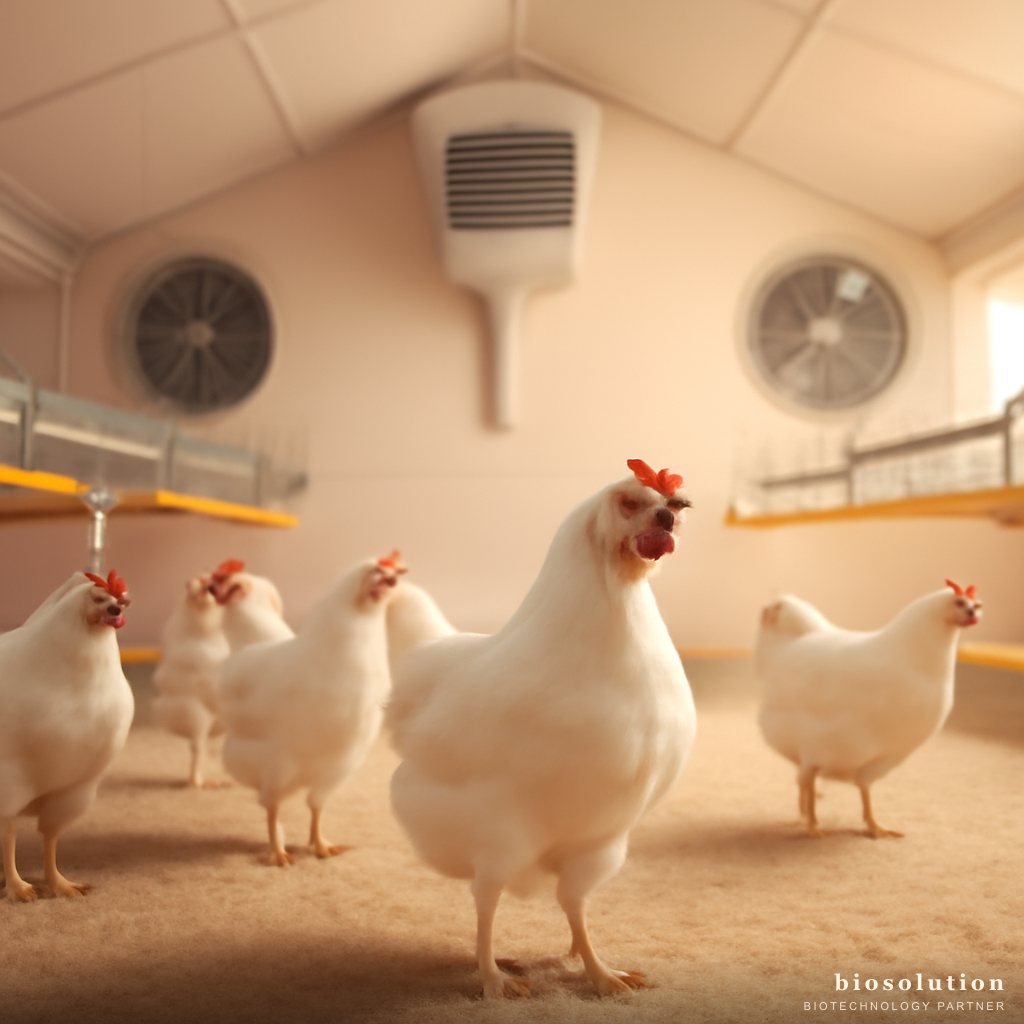
Reduce Ammonia Barn Odor with Broiler Probiotic Formula
The pungent ammonia smell in chicken barns is not just a comfort issue but also an indicator of poor feed efficiency and livestock health risks. Every farmer wants to reduce ammonia barn odor effectively so that chickens grow optimally and the work environment is more comfortable. A natural solution now widely adopted is the use of probiotics, especially the Broiler Probiotic Formula from Biosolution. With a combination of Lactobacillus acidophilus, Bacillus subtilis, and Bacillus coagulans, this product not only suppresses ammonia odor but also improves feed conversion ratio (FCR) and average daily gain (ADG).
Why is Ammonia Dangerous for Broilers?
Ammonia (NH₃) is produced from the fermentation of incompletely digested protein in the gut by pathogenic bacteria. High ammonia levels in barn air (>25 ppm) cause respiratory tract irritation, suppress appetite, and reduce body weight. In broilers, a low FCR target (1.5–1.7) heavily depends on gut health. If ammonia is high, chicken energy is wasted fighting oxidative stress instead of muscle growth. Data shows that a 10 ppm reduction in ammonia can increase ADG by up to 5%.
How Probiotics Reduce Ammonia
Probiotics work through three main pathways to suppress ammonia production:
1. Competitive Exclusion
Lactobacillus acidophilus and Bacillus subtilis compete with pathogenic bacteria (such as E. coli and Clostridium) for attachment sites on the gut wall. By dominating the gut surface, pathogenic bacteria have no opportunity to ferment residual protein into ammonia.
2. Gut pH Reduction
Lactobacillus acidophilus produces lactic acid which lowers gut pH. The acidic environment (pH 4–5) inhibits the growth of ammonia-forming bacteria that prefer alkaline conditions (optimal pH 7–8). Lower pH also increases the activity of host digestive enzymes, so protein is more completely absorbed and not fermented.
3. Digestive Enzymes from Bacillus
Bacillus subtilis and Bacillus coagulans produce protease, amylase, and cellulase enzymes that break down complex proteins into easily absorbed peptides and amino acids. Thus, the substrate for ammonia fermentation is drastically reduced. Studies show that using Bacillus subtilis in feed can reduce nitrogen excretion by 15–20%.
Advantages of Biosolution's Broiler Probiotic Formula
The Broiler Probiotic Formula is specially designed for broilers with three superior strains:
- Lactobacillus acidophilus: The main lactic acid bacterium that lowers gut pH and suppresses E. coli and Salmonella.
- Bacillus subtilis: Produces digestive enzymes and biocontrols pathogens, also produces subtilisin that inhibits Clostridium perfringens.
- Bacillus coagulans: Heat-resistant spores up to 90°C, suitable for pelleted feed, and remain active through the digestive tract.
This combination creates synergy: Lactobacillus creates an acidic environment, Bacillus digests feed more efficiently, and Bacillus coagulans ensures stability during storage.
Proven Performance Data
- FCR Improvement 8–12%: From an average of 1.65 to 1.50–1.55.
- ADG Increase 5–10%: Harvest weight at 35 days increases by 50–100 grams per bird.
- Mortality <3%: Because the gut is healthier, disease resistance increases.
- 0% antibiotic residue: Safe to use without withdrawal period.
Proper Application Method
For maximum results, follow these application guidelines:
- Method: Via drinking water or feed.
- Dosage: 1 ml per liter of drinking water, or 2 ml per kg of feed.
- Frequency: Daily during the starter period (days 1–14); 3 times a week during grower–finisher (days 15–harvest).
- Best time: Morning after feeding, so probiotics work immediately when the gut is active.
Tips: Ensure drinking water is free from chlorine (let it sit for 30 minutes if it contains chlorine). For feed, spray the probiotic evenly and mix until homogeneous.
Case Study: Ammonia Reduction in a Medium-Scale Farm
A broiler farm in West Java with a population of 10,000 birds applied the Broiler Probiotic Formula for two cycles (70 days). The results:
- Barn ammonia concentration dropped from an average of 35 ppm to 15 ppm (57% reduction).
- FCR improved from 1.70 to 1.58 (7% improvement).
- Average harvest weight increased by 80 grams per bird.
- Mortality decreased from 4% to 2.5%.
The farmer reported that barn odor was drastically reduced, making the work environment more comfortable and neighbors no longer complained.
Integration with Barn Management
Probiotics work optimally when supported by good barn management:
- Ventilation: Ensure smooth air circulation to remove already formed ammonia.
- Stocking density: Do not exceed 12–15 birds per square meter.
- Feed: Use quality feed with easily digestible protein.
- Cleanliness: Clean feeders and drinkers regularly.
Probiotics are not a substitute for management, but a complement that improves digestive efficiency from within.
Comparison with Other Products
Compared to single-strain probiotics, the Broiler Probiotic Formula has the advantage of being more stable multi-strain. For example, products containing only Lactobacillus are not heat-resistant and do not produce as many digestive enzymes as Bacillus. Meanwhile, products with only Bacillus cannot significantly lower gut pH. The combination of both provides a better synergistic effect in suppressing ammonia and improving performance.
If you also raise native chickens or KUB, see the Native Chicken Probiotic Formula product specially formulated for local genetic and feed needs.
Conclusion
Reduce ammonia barn odor effectively by applying Biosolution's Broiler Probiotic Formula. Through mechanisms of competitive exclusion, gut pH reduction, and digestive enzyme production, this probiotic not only suppresses ammonia by up to 57% but also improves FCR by 8–12% and ADG by 5–10%. Easy application dosage and safety without residue make it an ideal solution for farmers transitioning to antibiotic-free (AGP-free) systems.
For further consultation on dosage and application management, contact Biosolution's technical team via WhatsApp. Also get complete product information on Broiler Probiotic Formula.
FAQ
1. How long after probiotic administration does ammonia odor start to decrease? Ammonia odor reduction is usually noticeable within 3–7 days after regular application. In starter chicks, the effect is faster because the gut is still clean and probiotics dominate immediately. In adult chickens, it may take up to 10 days to suppress established pathogenic bacterial populations. For optimal results, use daily during the starter period and 3 times a week during grower–finisher.
2. Is it safe to give probiotics together with vaccines? Yes, probiotics are safe to give together with vaccination, especially oral vaccines. In fact, some strains like Lactobacillus can enhance immune response to vaccines. However, avoid giving together with antibiotics; allow at least a 4-hour gap after antibiotics. If chickens are being treated with antibiotics, probiotics can be given after treatment to restore gut flora.
3. How should probiotics be stored to remain active? Store probiotics in a cool, dry place at 15–25°C, away from direct sunlight. Keep tightly closed after use. Bacillus coagulans in spore form is very stable, but Lactobacillus is more sensitive. Do not store probiotic mixtures with water for more than 24 hours as viability decreases. For feed, mix just before feeding.
4. Can this probiotic be used for laying hens? This formula is specifically designed for broilers. For laying hens, use Layer Probiotic Formula which has a composition adjusted for calcium needs and egg production. However, if necessary, the dosage can be halved, but results may not be optimal.
5. Are there any side effects of using probiotics? Probiotics are very safe with minimal side effects. At the start of use, there may be an increase in water consumption as chickens adjust. There are no reports of toxic effects or residues. This product has passed safety tests and does not contain GMOs. Ensure dosage according to recommendations; excess dosage does not significantly increase benefits, only wastes product.