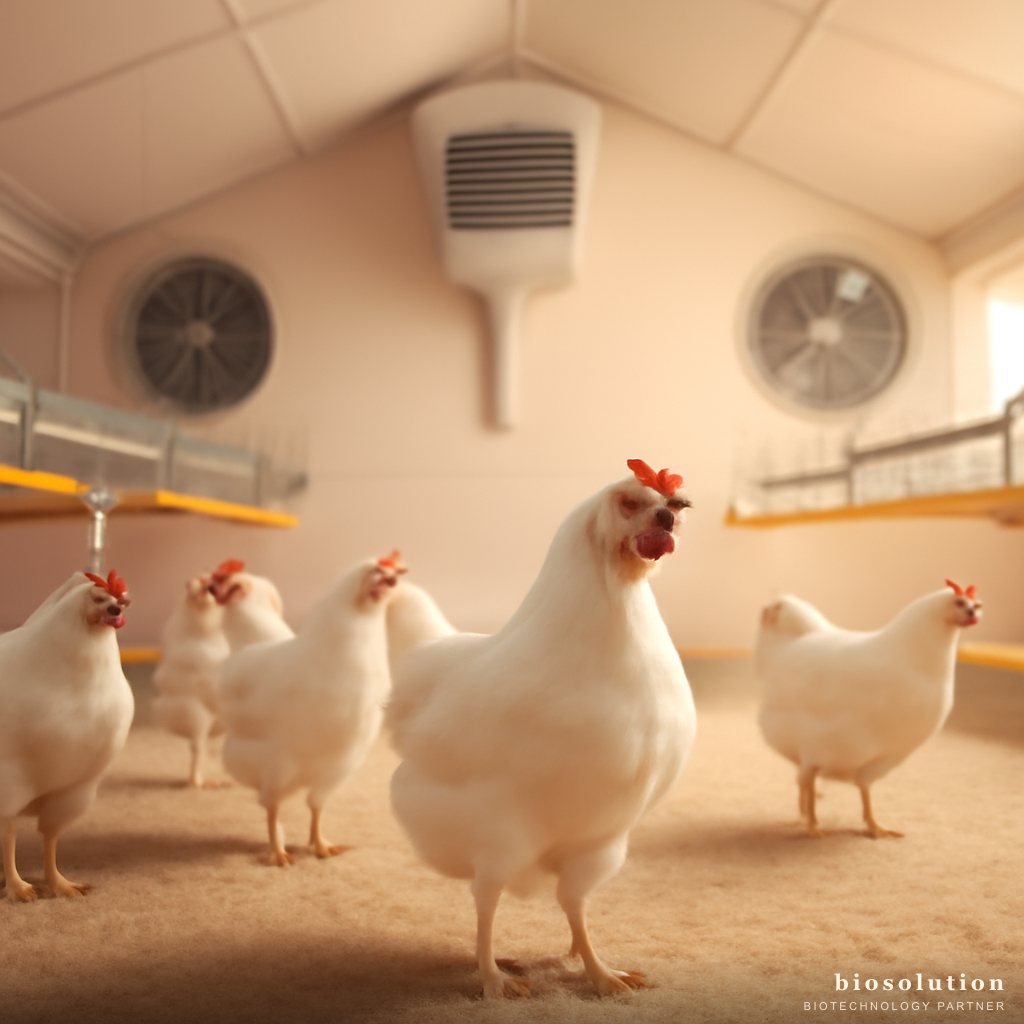
Reduce Ammonia Smell in Chicken Coops with Broiler Probiotics: A Guide to Choosing Strains & Certifications
The pungent ammonia smell in chicken coops is not just a comfort issue. Ammonia (NH₃) comes from the fermentation of incompletely digested feed protein by pathogenic bacteria in the gut. In high concentrations, ammonia irritates the respiratory tract of chickens, reduces body weight, and worsens feed conversion ratio (FCR). To reduce ammonia smell in chicken coops, the most rational approach is to improve gut health through probiotics. However, not all probiotics are equally effective. This article will discuss strain criteria and certifications that must be considered so that your probiotic investment truly delivers results.
Why is Ammonia Harmful to Chickens and the Coop Environment?
Ammonia is formed when urease-positive bacteria in the large intestine break down uric acid and residual protein. In chickens, uric acid is the end product of nitrogen metabolism excreted through feces. If the population of pathogenic bacteria such as Escherichia coli and Clostridium is high, ammonia production skyrockets. Ammonia gas dissolved in respiratory mucosal fluid forms irritating ammonium hydroxide. In the short term, chickens experience watery eyes, sneezing, and decreased appetite. In the long term, damage to respiratory tract cilia makes chickens susceptible to chronic respiratory diseases, such as CRD (Chronic Respiratory Disease).
Additionally, accumulated ammonia in the coop also damages the farmer's working environment. The ammonia threshold for chickens is 25 ppm; at 50 ppm, chicken performance begins to decline drastically. Data from FAO and research in the Journal of Applied Poultry Research show that every 10 ppm increase in ammonia above 25 ppm can reduce body weight by 2–5%. Therefore, reducing ammonia smell in chicken coops is not just about comfort but also production efficiency.
Mechanism of Probiotics in Suppressing Ammonia Production
Probiotics work through several mechanisms to reduce ammonia from the gut:
1. Competitive Exclusion
Probiotic bacteria such as Lactobacillus acidophilus and Bacillus subtilis compete with pathogenic bacteria for adhesion sites on the gut mucosa. By dominating the gut surface, probiotics prevent pathogens from producing urease enzymes that break down uric acid into ammonia.
2. Lowering Gut pH
Lactobacillus acidophilus ferments carbohydrates into lactic acid, thereby lowering gut pH. This acidic environment inhibits the growth of urease-positive bacteria, which are generally neutrophilic or alkaliphilic. Laboratory data show that lowering gut pH from 7.0 to 5.5 can suppress urease activity by up to 40%.
3. Production of Digestive Enzymes
Bacillus subtilis and Bacillus coagulans produce protease, amylase, and lipase enzymes. These enzymes help break down feed protein into amino acids that are more easily absorbed in the small intestine. Consequently, less protein escapes to the large intestine and is fermented into ammonia. Test results on the Broiler Probiotic Formula show an 8–12% improvement in FCR, correlating with a reduction in ammonia emissions of up to 30%.
4. Immunomodulation
Probiotics stimulate the production of secretory IgA in the gut mucosa. IgA helps bind and neutralize pathogenic bacteria, thereby reducing the population of urease-positive bacteria. This mechanism reduces the nitrogen load that must be excreted while suppressing ammonia formation.
Criteria for Effective Probiotic Strains to Reduce Ammonia
Not all probiotic strains have the same ability to suppress ammonia. Here are criteria to consider:
1. Ability to Produce Lactic Acid
Lactobacillus strains such as Lactobacillus acidophilus are the strongest lactic acid producers. Lactic acid lowers gut pH and inhibits the growth of Gram-negative urease-producing bacteria. Ensure the probiotic product contains at least one Lactobacillus species with a minimum concentration of 10⁸ CFU/g.
2. Production of Urease-Inhibitor Enzymes
Some Bacillus subtilis strains produce enzymes that inhibit the urease activity of pathogenic bacteria. Look for probiotics that have been tested in vitro to suppress urease activity by at least 30%.
3. Stability to Heat and Low pH
For application in pelleted feed, probiotics must be heat-resistant. Bacillus coagulans forms spores that withstand temperatures of 80°C for 30 minutes. Meanwhile, Lactobacillus acidophilus must be protected with microencapsulation technology to survive passage through stomach acid.
4. Strong Adhesion Ability
The strain must have high affinity for the chicken gut mucosa. In vitro adhesion tests on chicken intestinal epithelial cells (e.g., IEC-6 cells) can be an indicator. Probiotics with high adhesion will be more effective in competitive exclusion.
5. Safety and Efficacy Certifications
In Indonesia, probiotics for feed must be registered with the Ministry of Agriculture and have a registration number. Certifications such as SNI, ISO, or toxicity tests from independent laboratories add quality assurance. Ensure the product has been tested on broilers with documented results, such as improved FCR and reduced mortality.
Choosing the Right Probiotic for Broiler Farms
Farmers are often confused when choosing between liquid or powder probiotics, single strain or multi-strain. Based on research, multi-strain probiotics containing a combination of Lactobacillus and Bacillus provide synergistic effects. Lactobacillus works quickly in the small intestine, while Bacillus works in the large intestine and produces stable spores. The Broiler Probiotic Formula from Biosolution contains all three superior strains: Lactobacillus acidophilus, Bacillus subtilis, and Bacillus coagulans.
Proper Application Method
Probiotics are administered through drinking water or feed. The recommended dose for the Broiler Probiotic Formula is 1 ml/L of drinking water or 2 ml/kg of feed. Frequency: daily during the starter period (days 1–14), then 3 times a week during the grower and finisher periods. The best time is in the morning after feeding, so that the probiotics come into direct contact with the newly ingested feed.
Success Indicators
After 7–10 days of use, farmers will notice a significant reduction in ammonia smell. Chicken feces become firmer and less sticky. FCR begins to improve, and chickens are more active. In the long term, mortality decreases and harvest weight increases. Data from users of the Broiler Probiotic Formula show an 8–12% improvement in FCR and a 5–10% increase in ADG.
Case Study: Ammonia Reduction in a Medium-Scale Farm
A broiler farm in West Java with a population of 10,000 birds applied the Broiler Probiotic Formula for 35 days. Before treatment, the ammonia concentration in the coop was recorded at 35 ppm in the third week. After 14 days of probiotic administration, ammonia dropped to 12 ppm. FCR, which was initially 1.65, became 1.52, and harvest weight increased by 8%. The farmer reported that the chickens were healthier, appetite increased, and medication costs decreased by 30%.
These results align with research in the Journal of the Indonesian Veterinary Association, which states that multi-strain probiotics can reduce coop ammonia by up to 40% within 2 weeks. Additionally, the use of probiotics supports the AGP-free (antibiotic growth promoter free) program, which is now a market demand.
FAQ: Common Questions About Ammonia Smell and Probiotics
1. Can probiotics completely eliminate ammonia smell?
Probiotics do not eliminate ammonia 100%, but they can suppress its concentration to below the 25 ppm threshold. With good coop management (ventilation, density, sanitation), ammonia smell can be significantly minimized.
2. How long does it take to see the effect of probiotics?
The effect of ammonia reduction begins to be seen after 5–7 days of regular use. Improvements in FCR and body weight are usually observed in the second week.
3. Are probiotics safe to mix with medications or vaccines?
It is best to administer probiotics 2–3 hours apart from antibiotics or vaccines given through drinking water. However, probiotics can be combined with vitamins and electrolytes.
4. Can probiotics be used for laying hens?
Yes, probiotics are also effective for laying hens. However, the strain composition may need adjustment. For laying hens, we recommend Formula Probiotik Ayam Kampung which is specifically formulated for laying hens and KUB chickens.
5. How should probiotics be stored?
Store probiotics in a cool, dry place, away from direct sunlight. The ideal storage temperature is 4–8°C for liquid forms and below 30°C for powder forms. Do not freeze.
Conclusion
Reducing ammonia smell in chicken coops with probiotics is a strategic step to improve chicken welfare, feed efficiency, and farm productivity. The key to success lies in selecting the right probiotic strains: Lactobacillus acidophilus to lower gut pH, Bacillus subtilis for digestive enzymes, and Bacillus coagulans for thermal stability. Ensure the product has official certification from the Ministry of Agriculture and clear efficacy tests. With quality probiotics, you not only reduce ammonia smell but also increase farm profitability.
If you would like to discuss your farm's specific needs, the Biosolution team is ready to help through free consultation. Contact us via WhatsApp for product recommendations.