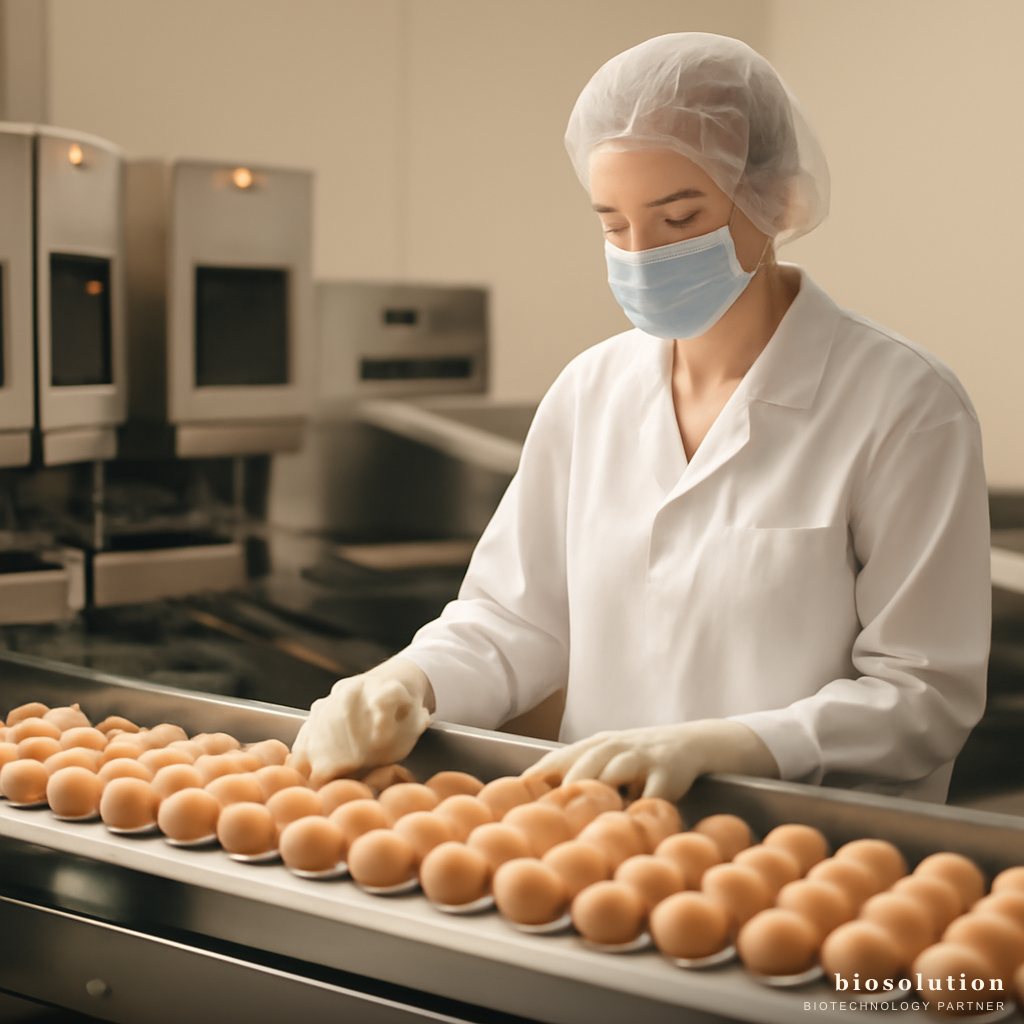
Salmonella in Layer Eggs: Probiotics vs Antibiotics, Which Is More Cost-Effective?
Salmonella in layer eggs poses a serious threat to food safety and farm profitability. Infection with Salmonella enterica not only causes economic losses due to decreased egg production and quality but also risks transmitting disease to consumers. For years, antibiotics have been the mainstay for controlling Salmonella. However, antibiotic resistance and consumer demand for residue-free products are driving farmers to seek alternatives. One solution now widely adopted is probiotics. This article thoroughly examines the cost comparison between antibiotics and probiotics in reducing Salmonella risk in layer egg production, focusing on long-term efficiency and food safety.
Direct Costs of Using Antibiotics to Control Salmonella
Antibiotics such as enrofloxacin or amoxicillin are often used therapeutically or preventively in laying hens. Direct costs include drug purchase, application costs (labor, equipment), and withdrawal period losses. For example, treating Salmonella with enrofloxacin for 5 days costs around IDR 500,000–1,000,000 per 1,000 birds per cycle. However, this does not include losses from eggs that cannot be sold during the withdrawal period (usually 7–14 days). Additionally, repeated antibiotic use can trigger resistance, requiring higher doses or more expensive drugs. A study by FAO (2020) shows that antibiotic resistance in Salmonella on Indonesian poultry farms reaches 40–60%, increasing treatment costs by up to 30%.
Hidden Costs: Resistance and Food Safety
Antibiotic resistance not only increases treatment costs but also threatens farm reputation. Farmers found with antibiotic residues in eggs may face sanctions or even business closure. Moreover, consumers are increasingly aware of the dangers of antibiotic residues, driving demand for antibiotic-free eggs. Data from the Ministry of Agriculture (2023) shows that organic or antibiotic-free eggs can command prices 20–30% higher. In other words, continuous antibiotic use is economically detrimental in the long run.
Probiotics as an Alternative: Costs and Benefits
Probiotics, such as Formula Probiotik Ayam Petelur from Biosolution, offer a different approach. This product contains Lactobacillus bulgaricus which produces lactic acid to inhibit Salmonella, Lactobacillus acidophilus which stabilizes gut microbiota, and Bacillus coagulans which forms heat-resistant spores to optimize calcium absorption. Probiotic application costs are very competitive: a dose of 1 ml per liter of drinking water daily, costing around IDR 100–200 per bird per month. For 1,000 birds, the monthly cost is only IDR 100,000–200,000, far lower than antibiotics used only during illness. However, probiotics must be given consistently for optimal effect.
Cost Efficiency: Probiotics vs Antibiotics in Salmonella Control
To compare fairly, we need to calculate costs per production cycle (e.g., 12 months). Assume 2–3 Salmonella outbreaks per cycle requiring antibiotics. Antibiotic cost per cycle: 3 outbreaks x IDR 750,000 (average) = IDR 2,250,000, plus egg losses during withdrawal (14 days x 80% production x 1,000 birds x IDR 1,500/egg = IDR 16,800,000). Total direct and indirect losses could reach IDR 19 million per cycle per 1,000 birds. Meanwhile, probiotics at IDR 150,000/month x 12 months = IDR 1,800,000 per cycle, with no production losses. Even if probiotics do not 100% prevent Salmonella, a 70% reduction in incidence (based on studies on Lactobacillus spp.) is already highly beneficial.
Mechanism of Probiotics in Suppressing Salmonella
Probiotics work through several mechanisms. Lactobacillus bulgaricus and Lactobacillus acidophilus produce organic acids that lower gut pH, preventing Salmonella growth. They also compete for adhesion sites on gut receptors, blocking Salmonella colonization. Bacillus coagulans produces spores resistant to heat and stomach acid, and aids calcium absorption to strengthen eggshells. With balanced gut microbiota, the chicken's immune system improves, making them more resistant to infection. A study in Poultry Science (2021) showed that probiotic supplementation in laying hens reduced Salmonella counts in the gut by up to 3 log CFU/g.
Additional Benefits of Probiotics: Egg Production and Quality
Beyond controlling Salmonella, probiotics offer other economic benefits. Formula Probiotik Ayam Petelur has been shown to increase egg production by 3–5%, thicken eggshells, reduce cracked eggs, and maintain production persistence. This means farmers not only save on treatment costs but also increase revenue. For example, a 3% production increase in 1,000 birds with 80% daily production (800 eggs) means an additional 24 eggs per day, or 720 eggs per month. At IDR 1,500/egg, that's additional revenue of IDR 1,080,000/month. This clearly covers probiotic costs and yields net profit.
Case Study: Probiotic Implementation on a Layer Farm
A layer farm in East Java with 10,000 laying hens experienced recurring Salmonella problems. After switching to Formula Probiotik Ayam Petelur for 6 months, Salmonella incidence dropped by 80%, egg production increased by 4%, and shells were thicker. Antibiotic treatment costs plummeted, and the farmer reported operational cost savings of up to 40% per cycle. This case shows that investing in probiotics yields a positive return on investment (ROI) in a short time.
Challenges and Solutions in Probiotic Adoption
Although probiotics offer many advantages, some farmers remain hesitant because their effects are not as fast as antibiotics. However, it must be understood that probiotics are preventive, not curative. To address this, farmers can combine probiotics with strict biosecurity management. Additionally, choosing high-quality probiotics with proven effective strains is crucial. Biosolution provides products with three superior strains that have been scientifically tested. For further consultation, farmers can contact the Biosolution technical team via WhatsApp.
Conclusion
The cost comparison between antibiotics and probiotics in controlling Salmonella in layer eggs clearly shows that probiotics are more efficient and sustainable. Antibiotics may seem cheap initially, but hidden costs from resistance, residues, and production losses make them more expensive. Probiotics like Formula Probiotik Ayam Petelur not only suppress Salmonella but also improve productivity and egg quality. With low application costs and long-term benefits, probiotics are a smart solution for modern farmers who want to stay competitive in the antibiotic-free era. For more details, contact the Biosolution team now.
FAQ
Can probiotics completely replace antibiotics?
Probiotics cannot replace antibiotics for treating acute infections. However, as a preventive measure, probiotics are very effective at suppressing Salmonella populations, thereby reducing the need for antibiotics. On well-managed farms, probiotics can reduce Salmonella incidence by up to 70%, so antibiotics are only used in emergency cases.
How long does it take for probiotics to show results?
Probiotic effects are usually seen after 2–4 weeks of regular use. Improvements in eggshell quality and egg production can be observed within 1–2 months. For Salmonella suppression, longer time is needed as probiotics gradually balance gut microbiota.
Are probiotics safe for laying hens currently producing eggs?
Very safe. Probiotics have no withdrawal period, so eggs remain safe for consumption. Biosolution products are registered and meet food safety standards.
What is the proper method of probiotic application?
Mix 1 ml of probiotic per liter of drinking water, give daily in the morning. Ensure drinking water is clean and not contaminated with excess chlorine. For optimal results, administer consistently throughout the production period.
Can probiotics be combined with Salmonella vaccination?
Yes, probiotics can actually enhance vaccine effectiveness by strengthening mucosal immune responses. Consult a veterinarian for the appropriate dosing schedule.