Shrimp Pond Water Quality: Managing Ammonia with the Right Probiotics in Each Cultivation Phase
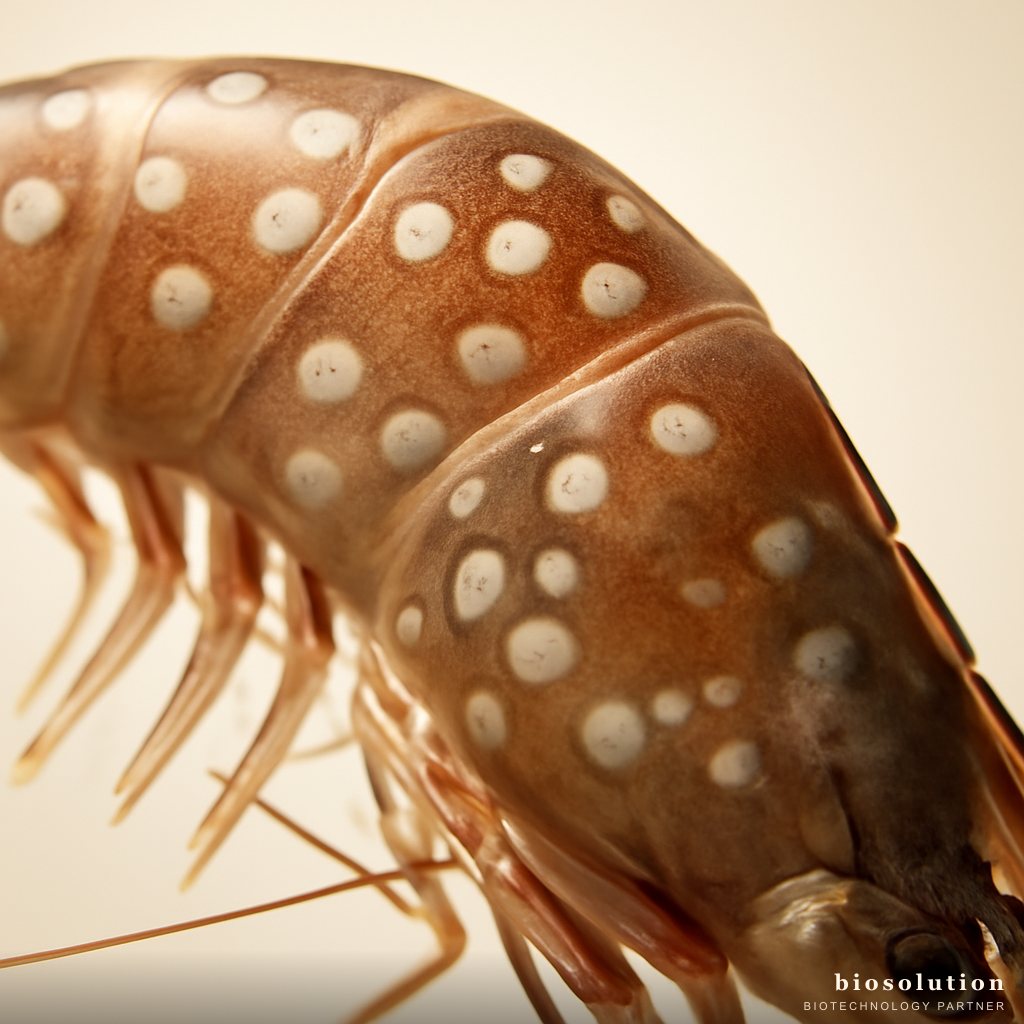
Shrimp pond water quality, particularly ammonia levels, is a critical parameter determining the success of intensive vaname shrimp farming. High ammonia not only suppresses appetite and growth but also triggers mass mortality. Many farmers suffer huge losses due to undetected ammonia spikes. However, with a probiotic-based water quality management approach tailored to each cultivation phase, this risk can be significantly reduced. This article discusses ammonia management strategies in shrimp ponds using probiotic formulas containing nitrifying bacteria and organic decomposers, such as those found in Vaname Shrimp Pond Probiotic Formula.
Why Is Ammonia a Major Problem in Shrimp Ponds?
Ammonia (NH3) is a toxic compound produced from uneaten feed, shrimp feces, and decomposition of organic matter. At high pH and temperature, un-ionized ammonia (NH3) is highly toxic, even at concentrations above 0.1 ppm can cause gill damage, stress, and death. Vaname shrimp chronically exposed to ammonia show decreased survival rate (SR) and slow growth.
The main sources of ammonia in ponds are uneaten feed (about 20-30% of total feed) and shrimp excretion. In intensive systems with high stocking density, the ammonia load is very large. Without proper management, ammonia accumulates and triggers the growth of pathogenic bacteria such as Vibrio spp. Therefore, maintaining shrimp pond water quality from ammonia is a top priority.
The Role of Probiotics in the Pond Nitrogen Cycle
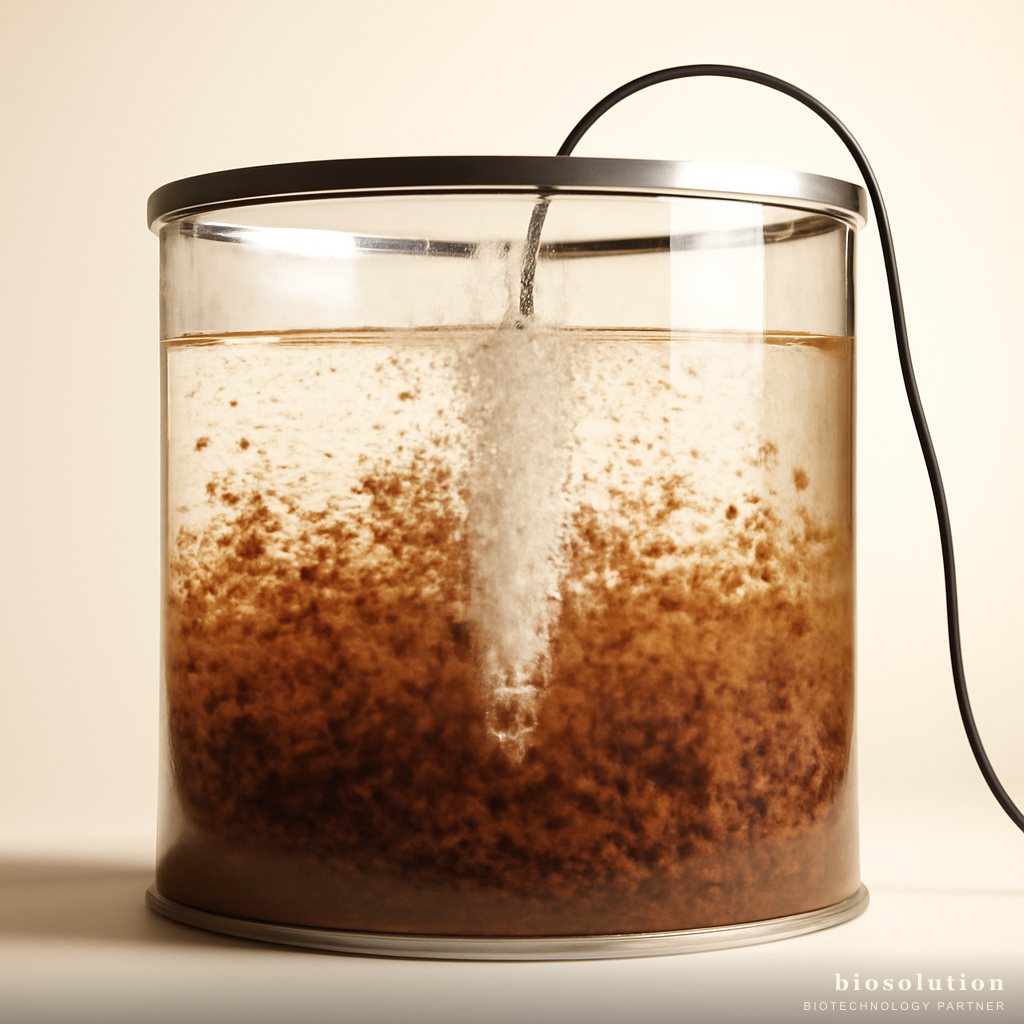
Shrimp pond probiotics work by accelerating the natural nitrogen cycle. Nitrifying bacteria such as Nitrosomonas sp. and Nitrobacter sp. oxidize ammonia to nitrite, then nitrite to nitrate which is much safer. Meanwhile, decomposer bacteria such as Bacillus subtilis and Bacillus licheniformis break down organic matter (uneaten feed, feces) into simple compounds, reducing the ammonia load at its source.
Vaname Shrimp Pond Probiotic Formula contains all four bacterial strains in optimal concentrations. Bacillus subtilis is also known as an anti-Vibrio agent, suppressing pathogenic bacterial populations. With routine application every 7-10 days, ammonia levels can be maintained below 0.1 ppm, and Vibrio populations drop by up to 40%.
Ammonia Management Strategy Based on Cultivation Phase
Pond Preparation Phase (Pre-Stocking)
Before stocking postlarvae, water quality must be stable. In this phase, perform sterilization and plankton formation. Probiotic application 3-5 days before stocking helps build populations of nitrifying and decomposer bacteria. An initial dose of 5 L per hectare is sufficient to start the nitrogen cycle. Ensure water temperature 28-30°C and pH 7.5-8.5 for optimal bacterial activity.
Early Cultivation Phase (0-30 Days)
In this phase, organic load is still low, but postlarvae are susceptible to stress. Ammonia must be kept <0.1 ppm. Apply probiotics every 7 days at a dose of 5 L per hectare. Monitor ammonia and nitrite every 3 days. If ammonia starts to rise, increase application frequency to every 5 days. In this phase, Nitrosomonas and Nitrobacter begin oxidizing ammonia.
Mid-Cultivation Phase (30-60 Days)
Shrimp start actively feeding, feed load increases. Ammonia tends to rise. This is a critical phase. Maintain probiotic application every 7 days. If an ammonia spike occurs (>0.3 ppm), immediately apply Ammonia & Nitrite Emergency Formula which has a higher concentration of nitrifying bacteria. In this phase, Bacillus licheniformis plays an important role in decomposing organic matter, reducing the ammonia load from decomposition.
Late Cultivation Phase (60 Days to Harvest)
Organic load is very high. Ammonia and nitrite must be closely monitored. Probiotic application remains every 7 days, but the dose can be increased to 7 L per hectare if needed. In this phase, water exchange can be reduced by up to 30% thanks to probiotic effectiveness. Shrimp exposed to low ammonia will have higher SR, as evidenced by data showing a 10-15% increase in SR in ponds that consistently use probiotics.
Probiotic Performance Data in Vaname Shrimp Ponds
Based on field trials, routine application of Vaname Shrimp Pond Probiotic Formula yields:
- Vaname shrimp SR increases by 10-15%.
- Vibrio population decreases by up to 40%.
- Ammonia levels stable below 0.1 ppm.
- Water exchange reduced by 30%, saving operational costs.
These data show that managing shrimp pond water quality with probiotics not only keeps ammonia safe but also increases productivity and efficiency.
Tips for Effective Probiotic Application
- Application time: Morning or evening when water temperature is not too hot.
- Method: Broadcast evenly over the entire pond surface.
- Frequency: Every 7-10 days, adjust according to feed load.
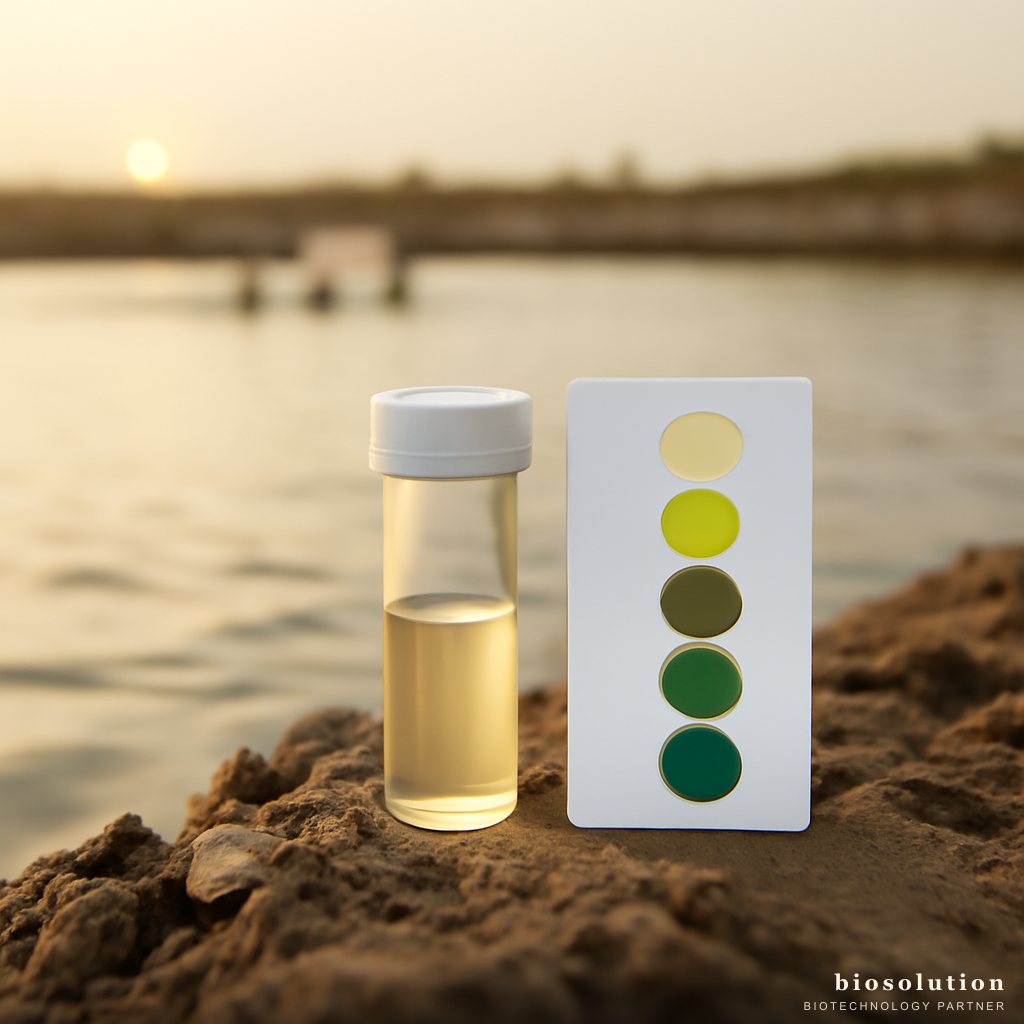
- Monitoring: Measure ammonia, nitrite, pH, and temperature regularly.
- Avoid antibiotics: Antibiotics can kill probiotic bacteria. If unavoidable, allow a 3-day gap after antibiotic application before probiotics.
Conclusion
Shrimp pond water quality, especially ammonia, is the key to successful intensive vaname shrimp farming. By implementing a probiotic-based ammonia management strategy tailored to each cultivation phase, farmers can maintain safe ammonia levels, suppress Vibrio, and increase SR by up to 15%. Vaname Shrimp Pond Probiotic Formula from Biosolution offers a complete solution with superior nitrifying and decomposer bacteria. For further consultation, contact our technical team via WhatsApp.
FAQ
What is the main cause of high ammonia in shrimp ponds?
The main cause is uneaten feed and shrimp feces that decompose. In intensive systems, high organic load causes rapid ammonia accumulation. Other factors such as high pH (>8.5) and high temperature (>32°C) also increase ammonia toxicity.
What is the correct probiotic dose to lower ammonia?
The standard dose is 5 L per hectare every 7-10 days. If ammonia levels are already high, it can be increased to 7 L per hectare or use a special emergency formula. Routine application is more effective than a single large dose.
Are probiotics safe for shrimp?
Yes, the bacteria used such as Bacillus subtilis, Nitrosomonas, and Nitrobacter are non-pathogenic and safe for shrimp. Probiotics actually improve shrimp health by suppressing pathogenic bacteria and improving water quality.
Can probiotics reduce the frequency of water changes?
Yes, with probiotics effectively breaking down ammonia and organic matter, the need for water exchange can be reduced by up to 30%. This saves pumping costs and reduces the risk of introducing pathogens from new water.
When is the best time to apply probiotics?
Morning or evening when water temperature is not too hot (28-30°C). Avoid application during heavy rain or when aeration is turned off. Ensure probiotics are evenly distributed with the help of water currents.