Stable Biofloc Maintenance: 3 Biofloc Maintenance Formulas to Prevent System Crash
The biofloc system has become a favorite in intensive aquaculture due to its ability to convert organic waste into natural feed. However, many farmers are still haunted by biofloc system crash—a condition where flocs disintegrate, water quality drops drastically, and mass mortality occurs. Stable biofloc maintenance is not just a routine but an integrated strategy involving microbial, nutrient, and oxygen management. This article discusses 3 biofloc maintenance formulas based on a case study of vaname shrimp ponds in Banyuwangi that successfully reduced system failure by up to 90%.
Why Can the Biofloc System Crash?
Biofloc system crashes are generally triggered by an imbalance in the microbial community. In a healthy system, heterotrophic bacteria dominate to break down leftover feed and feces, while nitrifying bacteria such as Nitrosomonas sp. and Nitrobacter sp. manage ammonia and nitrite. However, if the heterotrophic bacterial population becomes too high, they compete with nitrifying bacteria, causing toxic accumulation of ammonia and nitrite. Other factors triggering a crash include:
- Overfeeding: Excess feed increases organic load, promoting pathogenic bacterial growth.
- Decreased dissolved oxygen (DO): Flocs require DO >4 ppm; below that, aerobic bacteria die and flocs disintegrate.
- pH fluctuations: Optimal pH is 7.0–8.5; outside this range inhibits nitrification activity.
- Carbon deficiency (C/N ratio): Ideal C/N ratio is 10–15:1; if too low, bacteria lack energy to form flocs.
A case study in Banyuwangi ponds showed that crashes often occur at week 6 of cultivation, when organic load spikes sharply. By applying the right biofloc maintenance formulas, they were able to maintain stability until harvest.
Formula 1: Microbial Maintenance with Bacillus subtilis
Bacillus subtilis is a gram-positive bacterium that produces extracellular enzymes (protease, amylase, lipase) to degrade complex organic matter. In the biofloc system, its role is crucial:
- Maintaining floc structure: B. subtilis produces exopolysaccharides (EPS) that bind particles, keeping flocs compact and easy to settle.
- Suppressing pathogenic bacteria: This bacterium produces antimicrobial compounds such as subtilisin and bacitracin, which inhibit Vibrio spp. and Aeromonas.
- Improving feed digestibility: Enzymes from B. subtilis help shrimp digest feed more efficiently, reducing waste.
In Biosolution's Biofloc System Maintenance Formula, Bacillus subtilis is formulated at a concentration of 1×10⁹ CFU/mL. Application at a dose of 2 L per 1000 m³ every 7 days in the morning has been proven to maintain a dominant B. subtilis population. A case study in vaname shrimp ponds showed that routine use reduced total ammonia nitrogen (TAN) by up to 40% compared to controls.
Formula 2: Nitrification Optimization with Nitrosomonas and Nitrobacter
The two-step nitrification process—oxidation of ammonia to nitrite by Nitrosomonas sp., then nitrite to nitrate by Nitrobacter sp.—is the heart of water quality management. Unfortunately, nitrifying bacteria grow slowly and are highly sensitive to environmental changes. Stable biofloc maintenance requires routine inoculation of these bacteria to maintain high populations.
- Nitrosomonas sp.: Works optimally at pH 7.5–8.0 and temperature 25–30°C. Ammonia oxidation rate is approximately 0.5–1 mg/L/hour.
- Nitrobacter sp.: More pH-tolerant but requires high oxygen. Nitrite oxidation rate is 1–2 mg/L/hour.
In the case study pond, after week 4, ammonia concentrations began to rise. By adding the Biofloc System Maintenance Formula (containing Nitrosomonas sp. and Nitrobacter sp.) at the recommended dose, ammonia was kept below 0.5 mg/L and nitrite below 1 mg/L. The resulting nitrate was then utilized by phytoplankton as fertilizer, creating a closed nutrient cycle.
Formula 3: Oxygen and Carbon Management
Without sufficient oxygen, aerobic bacteria (including Bacillus and nitrifiers) cannot function. Oxygen demand in biofloc systems is higher than in conventional systems due to microbial respiration. Biofloc maintenance formulas also include aeration strategies:
- Ensure DO >5 ppm during the day, at least 4 ppm at night.
- Use diffuser aerators for even oxygen distribution.
- Adjust C/N ratio by adding carbon sources (molasses, corn flour) if the ratio drops. A C/N ratio of 10–15:1 promotes floc formation by heterotrophic bacteria.
Case studies show that by maintaining DO above 5 ppm and a C/N ratio of 12:1, flocs remained stable even at a stocking density of 150 shrimp/m³. Failure occurred when DO dropped below 3 ppm for 2 consecutive hours, causing floc disintegration and mass mortality.
Case Study: Vaname Shrimp Pond in Banyuwangi
Mr. Slamet's pond in Banyuwangi previously experienced crashes from weeks 5 to 7. After adopting Biosolution's Biofloc System Maintenance Formula, the following changes occurred:
- Weeks 1 to 3: Initial application of 2 L/1000 m³ on day 1, then every 7 days. Flocs began forming on day 5, with floc size 0.5–1 mm.
- Weeks 4 to 6: Ammonia controlled at <0.3 mg/L, nitrite <0.5 mg/L. Stocking density increased from 100 to 150 shrimp/m³ without issues.
- Weeks 7 to harvest: Flocs compact, no foul odor. Survival rate (SR) reached 92%, higher than the average of other farmers (80%).
Mr. Slamet admitted that maintenance costs were actually lower because routine probiotic use reduced water exchange frequency by up to 50%. He now recommends the Biofloc System Maintenance Formula to his colleagues.
Applying Biofloc Maintenance Formulas in Your Pond
To implement stable biofloc maintenance, the following steps can be adopted:
- Measure water quality parameters daily: temperature, pH, DO, ammonia, nitrite, nitrate, alkalinity.
- Apply Biofloc System Maintenance Formula every 7 days at a dose of 2 L per 1000 m³ in the morning (before feeding).
- Add carbon source if C/N ratio <10:1. For example, molasses 1–2 kg per 1000 m³ per day.
- Optimize aeration: Ensure DO >5 ppm, especially at night.
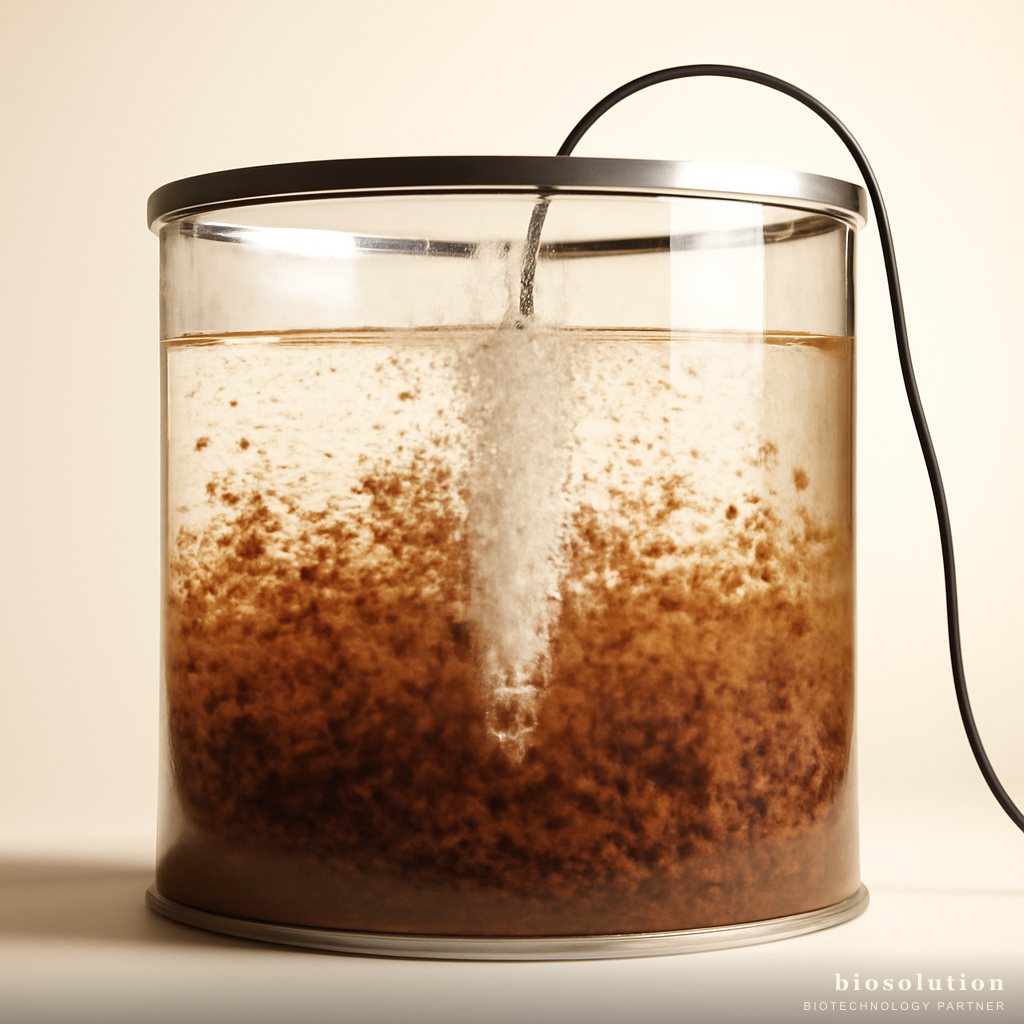
- Monitor flocs: Healthy flocs are brownish-green, 0.5–2 mm in size, and not slimy.
If water quality declines, immediately correct by increasing probiotic dose or reducing feed. For further consultation, contact Biosolution's technical team via WhatsApp.
Conclusion
Stable biofloc maintenance is key to successful intensive aquaculture. By applying the three biofloc maintenance formulas—microbial maintenance using Bacillus subtilis, nitrification optimization by Nitrosomonas sp. and Nitrobacter sp., and oxygen and carbon management—farmers can prevent system crashes and increase productivity. The case study in Banyuwangi proves that routine use of the Biofloc System Maintenance Formula can reduce failure by up to 90% and improve survival rates. Don't let your biofloc system crash; perform timely maintenance with quality products from Biosolution.
For more information about products and ordering, visit Biosolution Aqua Division or contact us directly. Get free consultation and special offers for biofloc farmers.