Stable Biofloc Maintenance: 5 Biofloc Maintenance Formulas to Prevent System Crashes
Stable biofloc maintenance is a major challenge for active biofloc farmers. A poorly managed biofloc system is prone to crashes—a condition where flocs disintegrate, water quality drops drastically, and operational costs skyrocket. In this article, we will thoroughly explore proven effective biofloc maintenance strategies, compare costs between chemical and microbial approaches, and introduce the Biofloc System Maintenance Formula from Biosolution as a superior solution.
Why Is Stable Biofloc Maintenance Crucial?
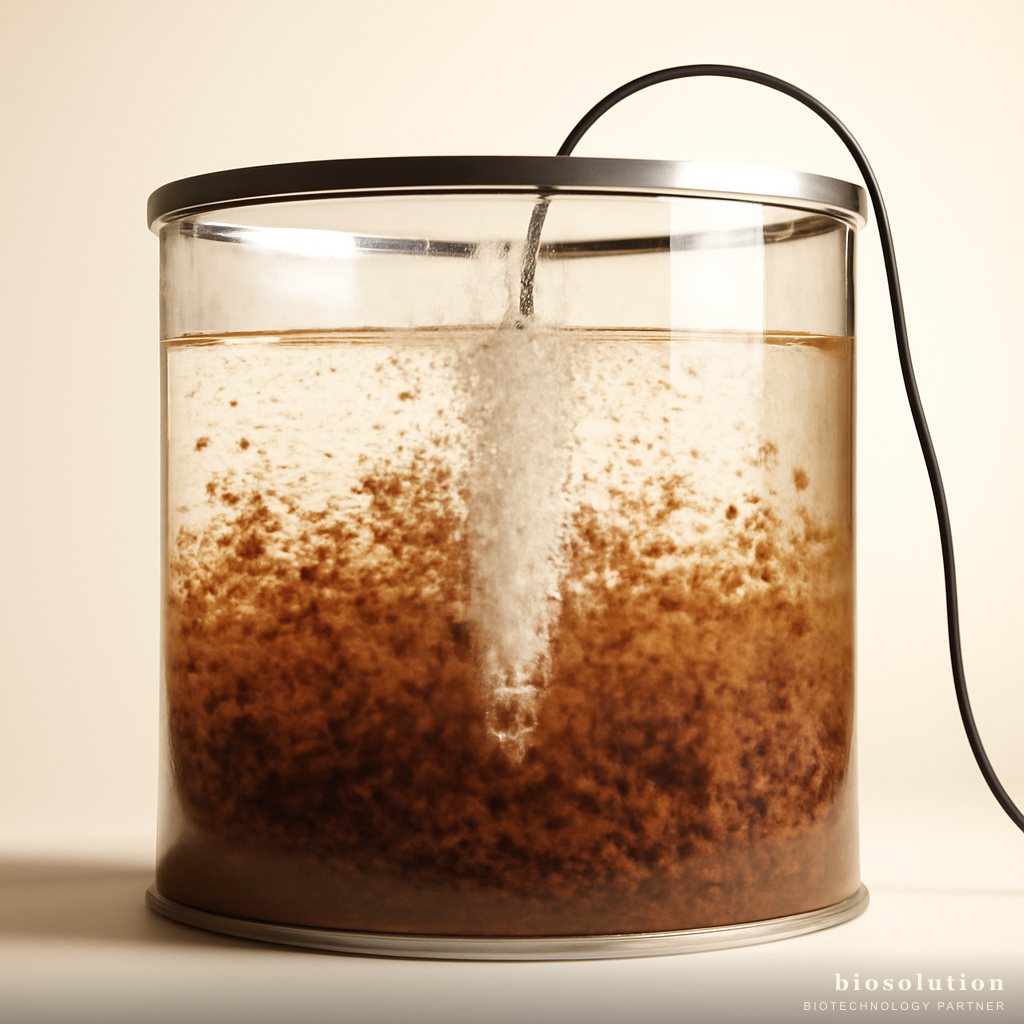
The biofloc system relies on a balance between heterotrophic bacteria (floc formers) and autotrophic bacteria (nitrifiers). Stable flocs act as a factory for processing organic waste and ammonia, as well as natural feed for shrimp or fish. Without stable biofloc maintenance, flocs can clump excessively, become oxygen-deprived, or experience dominance by one type of bacteria. The consequences:
- System crash: Flocs disintegrate, water becomes turbid, and ammonia spikes.
- Mass mortality: Fish/shrimp become stressed and die.
- High costs: Complete water replacement, reapplication of probiotics, and production loss.
Therefore, routine maintenance is a non-negotiable long-term investment.
Cost Comparison: Chemical vs. Microbial for Biofloc Maintenance
Chemical Approach
Conventional methods use chemicals such as chlorine, formalin, or antibiotics to control pathogenic bacteria and suppress bacterial populations. Costs include:
- Chemical purchase: IDR 50,000–100,000 per application for a 1000 m³ pond.
- Labor: Manual application and more frequent water quality monitoring.
- Risks: Pathogen resistance, chemical residues in products, and death of beneficial bacteria.
- Frequency: Every 3–5 days.
Average monthly cost: IDR 500,000–1,000,000 for a 1000 m³ pond.
Microbial Approach
Uses bacterial probiotics such as Bacillus subtilis, Nitrosomonas sp., and Nitrobacter sp. contained in the Biofloc System Maintenance Formula. Costs:
- Probiotic purchase: IDR 200,000–300,000 per liter, dosage 2 L per 1000 m³, applied every 7 days.
- Labor: Simpler, just spread in the morning.
- Risks: Minimal, as beneficial bacteria naturally suppress pathogens.
- Frequency: Every 7 days.
Average monthly cost: IDR 800,000–1,200,000 for a 1000 m³ pond.
Analysis: Nominally, microbial costs are slightly higher. However, when calculating total cost of ownership (TCO), microbial is cheaper because:
- No water replacement costs due to crashes.
- No losses from mass mortality.
- Better product quality (residue-free).
With stable biofloc maintenance using microbes, farmers can maintain high stocking densities without worrying about crashes.
5 Biofloc Maintenance Formulas for Stability and Crash Prevention
1. Routine Water Quality Monitoring
Key parameters to check daily: pH (7–8), temperature (28–32°C), dissolved oxygen (>4 mg/L), and floc volume (Imhoff cone 10–30 mL/L). Too many flocs (>30 mL) indicate overfeeding; too few (<10 mL) indicate carbon or bacteria deficiency. With this data, you can adjust probiotic and feed dosages.
2. Periodic Probiotic Application
Probiotic bacteria like Bacillus subtilis degrade organic matter and produce enzymes that keep flocs crumbly. Meanwhile, Nitrosomonas sp. and Nitrobacter sp. oxidize ammonia to nitrate, preventing toxin buildup. The Biofloc System Maintenance Formula contains these three bacteria in optimal concentrations. Dosage: 2 L per 1000 m³ every 7 days, applied in the morning when oxygen is high.
3. Proper Feed Management
Excess feed is the main cause of unstable flocs. Calculate feeding rate based on biomass and ensure efficient feed conversion ratio (FCR). Use feed with 25–30% protein to reduce ammonia load. If flocs start clumping, reduce feed by 10–20% for 2–3 days.
4. Optimal Aeration and Circulation
Sufficient aeration (1–2 HP per 1000 m³) maintains dissolved oxygen and prevents floc settling. Position aerators to avoid dead zones. Water circulation ensures even probiotic distribution throughout the pond.
5. Crash Prevention and Handling
Early crash symptoms: floc disintegration, foul odor, ammonia >1 ppm. Quick steps:
- Stop feeding for 12–24 hours.
- Increase aeration.
- Apply double-dose probiotic (4 L per 1000 m³).
- If necessary, add molasses 1–2 ppm as a carbon source.
With these five formulas, stable biofloc maintenance is no longer a dream.
Case Study: Effectiveness of Biofloc Maintenance Formula in the Field
A bioflok farmer in East Java applied the Biofloc System Maintenance Formula to a 1000 m³ vaname shrimp pond. Previously, they used weekly chlorine and experienced crashes every 2 months. After switching to probiotics, within 3 months:
- Floc volume consistently at 15–20 mL/L.
- Ammonia remained <0.5 ppm.
- Stocking density of 200 shrimp/m³ survived without mass mortality.
- Maintenance costs dropped 30% due to no water replacement.
These results prove that stable biofloc maintenance with microbes is more efficient and sustainable.
Conclusion
Stable biofloc maintenance is a profitable investment. Cost comparison shows that the microbial approach is more cost-effective in the long run compared to chemicals, especially by preventing system crashes. By implementing the 5 biofloc maintenance formulas—routine monitoring, periodic probiotic application, feed management, optimal aeration, and crash prevention—farmers can maintain high productivity with controlled costs.
For maximum results, use products containing superior bacteria such as Bacillus subtilis, Nitrosomonas sp., and Nitrobacter sp.. Consult your needs with the Biosolution team to get appropriate dosage and application schedule recommendations.
FAQ
1. What is the main cause of biofloc crash?
Crashes are usually caused by overfeeding, insufficient aeration, or dominance of pathogenic bacteria. Unstable flocs can disintegrate within 1–2 days if not promptly addressed.
2. How much does biofloc maintenance with probiotics cost per month?
For a 1000 m³ pond, probiotic costs are around IDR 800,000–1,200,000 per month, depending on the brand. However, this cost is lower than losses from crashes.
3. Can probiotics be replaced with chemicals?
Yes, but the risks of residues and resistance are higher. Probiotics are safer for the environment and cultured products.
4. When is the best time to apply probiotics?
Morning (6:00–8:00 AM) when dissolved oxygen is high and temperature is still low, so bacteria are more active.
5. How to know if flocs are stable?
Use an Imhoff cone: floc volume of 10–30 mL/L after 15–20 minutes of settling. The supernatant water is clear, odorless, and ammonia <1 ppm.