Stable Biofloc Maintenance: 6 Biofloc Maintenance Formulas to Prevent System Crash
The biofloc system offers feed efficiency and high stocking density, but its vulnerability lies in stable biofloc maintenance. Without proper care, flocs can collapse, leading to mass mortality. This article discusses six biofloc maintenance formulas tailored to cultivation phases, supported by Biosolution's superior probiotics to maintain system stability.
Why Is Stable Biofloc Maintenance Crucial?
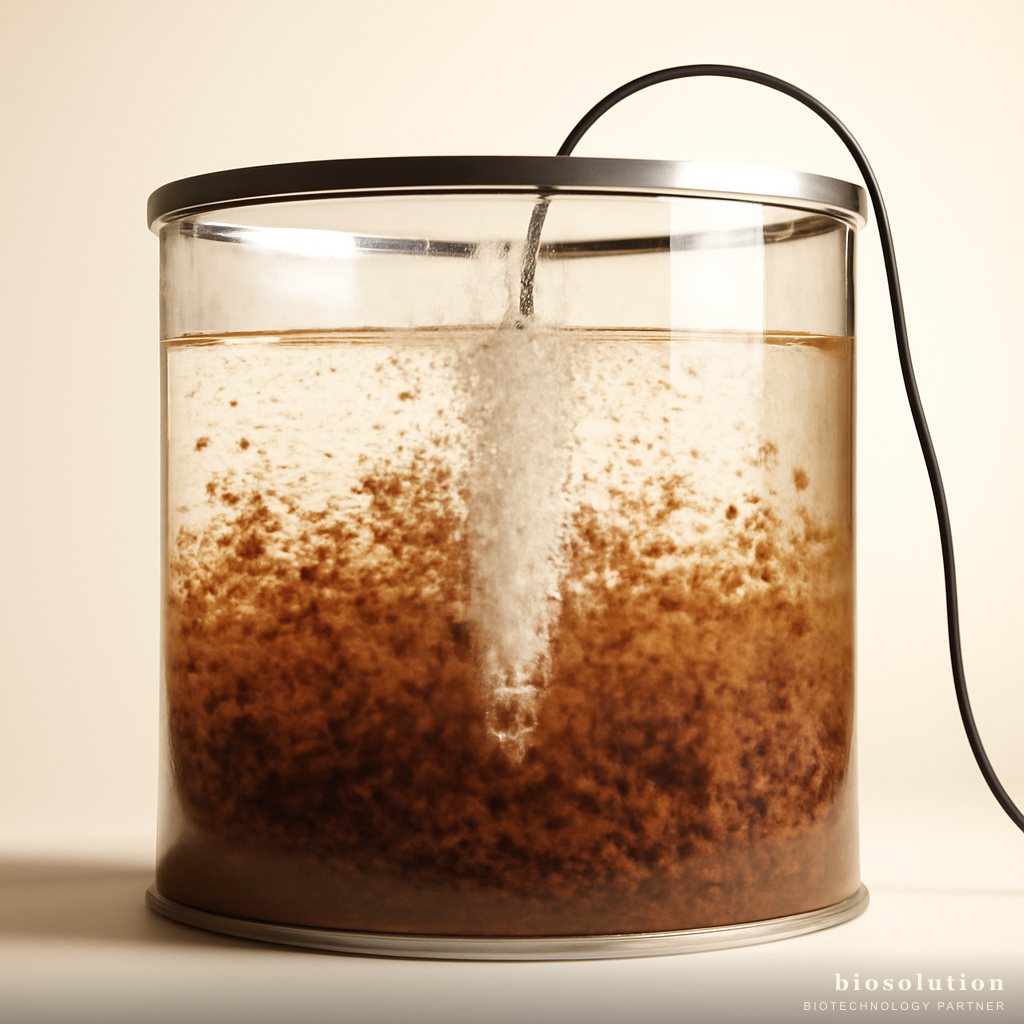
The biofloc system relies on a microbial community to process nitrogen waste and provide natural feed. If the balance is disrupted—for example, due to excess organic matter, oxygen deficiency, or pH fluctuations—flocs can crash. Stable biofloc maintenance means keeping water parameters within optimal ranges, ensuring heterotrophic and nitrifying bacteria work synergistically. Data shows that with routine maintenance, stocking density can be maintained up to 200 fish/m³ without water quality deterioration. Read also: initial guide to biofloc system.
1. Initial Phase: Inoculation and Floc Formation
In the first week, the main target is to form mature flocs. Use a carbon source such as molasses or tapioca flour with a C/N ratio of 15:1. Biofloc Maintenance Formula from Biosolution contains Bacillus subtilis which helps accelerate floc formation and suppress pathogenic bacteria. Initial dose: 2 L per 1000 m³, applied in the morning. Ensure sufficient aeration (DO > 4 mg/L) to support aerobic bacterial growth.
2. Growth Phase: Maintaining Floc Stability
After flocs are formed (day 7 to day 30), the focus shifts to stable biofloc maintenance by controlling the rate of solid accumulation. Remove bottom sludge every 3-4 days. Apply probiotics routinely every 7 days at a maintenance dose of 2 L/1000 m³. Nitrosomonas sp. and Nitrobacter sp. in this formula accelerate nitrification, converting ammonia into safer nitrate. Ammonia and nitrite should be maintained < 1 mg/L.
3. Grow-Out Phase: Managing High Organic Load
When stocking density is high and feed increases, the organic load surges. The risk of crash is highest in this phase. Key strategy: increase probiotic application frequency to every 5 days if necessary. Bacillus subtilis will degrade leftover feed and feces, reducing sludge accumulation. Monitor total suspended solids (TSS) ideally at 100-300 mg/L. If TSS > 500 mg/L, immediately increase aeration and reduce feed. See Biofloc Maintenance Formula product.
4. Harvest Phase: Stabilization Before and After
Approaching harvest, maintain water quality to avoid fish stress. Reduce feed 3-5 days prior. Continue probiotic application to keep flocs active. After harvest, do not immediately empty the pond; perform stable biofloc maintenance by adding a high dose of probiotics (3 L/1000 m³) to accelerate system recovery if it will be reused. A study from FAO emphasizes the importance of post-harvest management to prevent water quality decline in the next cycle (FAO Biofloc Guidelines).
5. Monitoring Key Parameters
Parameters to monitor daily:
- Ammonia (NH3): < 0.5 mg/L
- Nitrite (NO2): < 1 mg/L
- pH: 7.0-8.5
- Alkalinity: > 100 mg/L CaCO3
- Floc volume (settleable solids): 10-30 mL/L in Imhoff cone
If floc volume > 50 mL/L, it indicates flocs are too dense and at risk of anaerobic conditions. Reduce feed and increase aeration. If < 10 mL/L, add carbon and probiotics. Nitrosomonas and Nitrobacter are very sensitive to low pH; maintain alkalinity by adding dolomite lime if necessary.
6. Handling and Preventing Crash
Crash is characterized by clumped flocs, turbid water, and fish mortality. Emergency steps:
- Stop feeding temporarily.
- Maximize aeration.
- Apply double dose of probiotics (4 L/1000 m³) from Biofloc Maintenance Formula.
- Perform heavy sludge siphoning.
For long-term prevention, schedule probiotic application consistently. Bacillus subtilis produces enzymes that degrade polysaccharides, keeping flocs fluffy and not clumped. Free consultation with Biosolution team for specific recommendations.
Conclusion
Stable biofloc maintenance requires a proactive approach according to cultivation phases. With the six formulas above—from inoculation, growth, grow-out, harvest, monitoring, to crash handling—farmers can minimize failure risk. Probiotic support such as Bacillus subtilis, Nitrosomonas sp., and Nitrobacter sp. from Biosolution ensures the biofloc system remains productive throughout the cycle. For optimal results, use Biofloc Maintenance Formula routinely and monitor parameters diligently.
FAQ
Q: What is the probiotic dosage for stable biofloc maintenance? A: The maintenance dose is 2 L per 1000 m³ every 7 days. If organic load is high, increase frequency to every 5 days. Apply in the morning so bacteria are active in waste processing.
Q: What causes biofloc crash? A: Main causes are overfeeding, insufficient aeration, pH fluctuations, or excessive sludge accumulation. This disrupts the balance of aerobic and anaerobic bacteria, causing flocs to clump and ammonia levels to rise sharply.
Q: How do I know the ideal floc volume? A: Use an Imhoff cone. Take a water sample, let it settle for 15-30 minutes. Ideal floc volume is 10-30 mL/L. If > 50 mL/L, reduce feed and increase aeration. If < 10 mL/L, add carbon and probiotics.
Q: Can probiotics be used together with disinfectants? A: It is not recommended. Disinfectants like chlorine or formalin will kill probiotic bacteria. Allow at least 48 hours after disinfectant application before adding probiotics.
Q: When is the best time to apply probiotics? A: In the morning when water temperature starts to rise and dissolved oxygen is high. Avoid midday heat or night because bacterial activity is lower. Routine application every 7 days keeps the bacterial population dominant.